
About Elsie Tu
Lived 1913 – 2015 (aged 102). Elsie Tu was a British politician, social activist, missionary and teacher.
Elsie Tu (; ; 2 June 1913 – 8 December 2015), known as Elsie Elliott in her earlier life, was a British-born Hong Kong social activist, elected member of the Urban Council of Hong Kong from 1963 to 1995, and member of the Legislative Council of Hong Kong from 1988 to 1995.
Born and raised in Newcastle upon Tyne, England, Tu moved to Hong Kong in 1951 following a period as a missionary in China. She became known for her strong antipathy towards colonialism and corruption, as well as for her work for the underprivileged. She took the main role in the 1966 Kowloon riots when she opposed the Star Ferry fare increase which later turned into riots and faced accusations of inciting the disorder. She died in Hong Kong on 8 December 2015, at the age of 102.
Early life Tu was born into the working-class family of John and Florence Hume on 2 June 1913 in Newcastle upon Tyne, the second child of four. After attending Benwell Secondary Girls' School and Heaton Secondary School, she went on to study at Armstrong College, a forerunner of Newcastle University, graduating in 1937 with a Bachelor of Arts. From 1937 to 1947 she was a schoolteacher in Halifax, where, during the Second World War, she was a Civil Defence volunteer.
Hume converted to Christianity in 1932 during her first year at university. In 1946 she married William Elliott, and went with him to China as a missionary with an organisation called the Christian Missions in Many Lands in 1947, and stationed in Yifeng. Hume was among the last group of missionaries moving from Nanchang to Hong Kong after the Chinese Communist Party took power in 1949 and expelled all foreign missionaries from the mainland China. She lived in an illegal apartment in a squatter community in Wong Tai Sin area, known as Kai Tak New Village. She soon learned about corruption because squatters had to pay triad gangs protection money.
Shocked by the poverty and injustices there, and due to her sympathy for the situation of Hong Kong society, Elsie became disenchanted with her husband's rigid Protestant faith and the refusal of their church, the Plymouth Brethren, to become involved in social issues. Elsie left the Plymouth Brethren when she stood up in the assembly in Hong Kong in 1955. She returned to Hong Kong alone to carry on her education work. She divorced her husband and lived for a time in a kitchen in a Kowloon Walled City tenement.
In 1954, she founded and worked in Mu Kuang English School for poor children in an old army tent at a squatter area near Kai Tak. She started with 30 pupils in the tent. For a year, she lived on little else but bread and water until being employed at the Hong Kong Baptist College, teaching English, English literature and French. She also met her colleague, Andrew Tu Hsueh-kwei in the school, who became her husband 30 years later. The Mu Kuang English School is now situated on Kung Lok Road in Kwun Tong, serving 1,300 children of Hong Kong's low-income families. She remained as the school principal until 2000.
Political career
Early involvement Elliott was shocked by the injustices she perceived in Hong Kong when she first arrived. However, her church did not permit social activism. After she left the church, she felt like she was "starting [her] new life at the age of 43, with a mission on earth for human beings, and not mansion in heaven for [her]self." She wrote to The Guardian, deploring the long working hours, low wages and primitive working conditions experienced by Chinese people in Hong Kong. Her letter was quoted during debate in the UK Parliament. A controversy ensued, resulting in labour reform in Hong Kong. Elliott was also appalled to find child labour officially recognised and accepted in Hong Kong.
Urban Councillor Becoming politically active, Elliott was elected for the first time to the Urban Council in 1963, a body dealing with local district matters such as public health, recreation, culture, food hygiene, hawking and markets. Its membership was partially publicly elected and partially appointed. It was also the only elected office in the colony at the time. Brook Bernacchi's Reform Club was seeking a woman candidate and Elliott ran. At that time, the Reform Club and the Civic Association, the two quasi-opposition parties in the Urban Council formed a join ticket for the four seats in the council to push for constitutional reform in the colony. She later left the club and ran as an independent in the re-election in 1967. One of the prerequisites for becoming an Urban Councillor at that time was a knowledge of English, the only official language. Elliott thought this unfair and lobbied, with Councillor Denny Huang and others, for years to have Chinese recognised as an official language.
Elliott meeting with Labour MP John Rankin during her delegation to London in May 1966. Elliott became vice-chairman of the Urban Council with Gerry Forsgate as chairman in 1986. Until her defeat in 1995, she had always been re-elected to the Urban Council with the highest votes. She was also the spokeswoman for the United Nations Association of Hong Kong, which advocated self-government in the colony in the 1960s. In 1966, Elliott went to London and met with politicians including Secretary of State for the Colonies Frederick Lee and Members of Parliament, seeking a Royal Commission of Inquiry into Hong Kong on the colony's economic inequality, corruption in the colonial government and self-government for Hong Kong as seen in other British colonies. She also invited some Members of Parliament to visit Hong Kong and joined the delegations of elected Urban Councillors to London in 1979 to discuss the proposed constitutional changes for Hong Kong. The increase in fare was approved in March 1966 by the Transport Advisory Committee, where the only vote opposing was Elliott's. Inspired by Elliot's actions, on 4 April 1966, a young man named So Sau-chung began a hunger strike protest at the Star Ferry Terminal in Central with his black jacket upon which he had hand-written the words "Hail Elsie", "Join hunger strike to block fare increase". So was soon arrested and more protests were sparked which eventually turned into the Kowloon riots in April 1966. Elliott faced smear attacks from the pro-government media and was called to an official inquiry, portraying her as the instigator of the riots and naming it the "Elliott riot".
Elliott fought for gay rights. She urged the government to decriminalise homosexuality, as had been done in the United Kingdom in 1967, but was told that the locals would object. She appealed directly to Governor MacLehose, who also supported gay rights, but he echoed the same sentiment that the community would oppose decriminalisation. In September 1979 she appealed to Sir Yuet-keung Kan, but he and others continued to block reform.
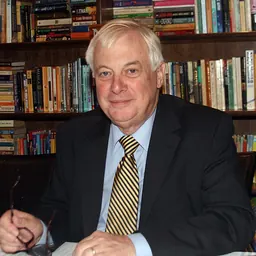
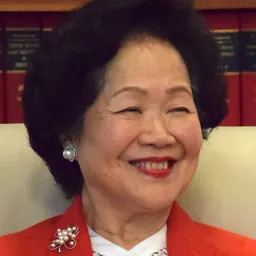
In the period leading up to Hong Kong's return to Chinese sovereignty, Tu became an advocate of slower pace in democratisation as preferred by the Chinese government, which markets it as "gradual pace", as opposed to many democrats who advocate faster-pace democratisation such as Emily Lau and Martin Lee. She opposed the last Governor Chris Patten's electoral reform, questioning the British refusal to give Hong Kong democracy for decades but then advancing such reforms only in the final years of its "disgraceful colonial era" in which Hong Kong "never had any democracy to destroy". The controversy over Article 23 sparked the 1 July Protest of 2003 with a record turnout of more than 500,000 demonstrators. The legislation had been promoted by Regina Ip, Secretary for Security. When the latter ran in the 2007 Legislative Council by-election against democrat Anson Chan who was the former Chief Secretary for Administration, Tu publicly endorsed the Beijing-supported Ip.
In 2013, she criticised the widening income disparity in Hong Kong and "rich men who seem to have no conscience", expressing sympathy for striking dock workers against billionaire Li Ka-shing's Hutchison Whampoa.
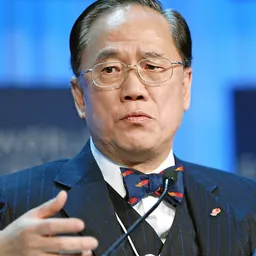
Tu turned 100 in June 2013. For her 100th birthday, Mu Kuang alumni established the Elsie Tu Education Fund in her honour. All three Chief Executives Leung Chun-ying and his two predecessors Tung Chee-hwa and Donald Tsang were among the pallbearers at the funeral of Tu on 20 December. A cremation ceremony was held at the Cape Collinson Crematorium in Chai Wan after the funeral and Tu's ashes were buried with the remains of her husband, Andrew Tu.
Family and marriages Tu's father, John Hume, originally a grocer's assistant, was sent to fight in the First World War in Europe when she was one. He was gassed in the trenches and suffered as a result for the rest of his life. Tu noted that her father had a profound influence on her conscience when he told her his experiences during the war. He had a hatred of war and compassion for all people. He became an agnostic and interested in politics. Her family discussed about the hypocrisy of religions, about Marxism and the rights of workers and about sports. Her left-leaning world-view influenced by her father made Tu decided that "I could at least be good and useful in life" in her youth.
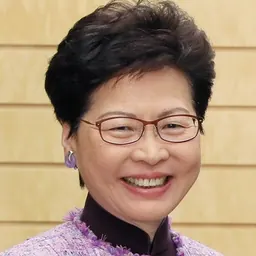
Back in Hong Kong she met her second husband, Andrew Tu Hsueh-kwei, who had come to Hong Kong from Inner Mongolia in the 1950s. They became working partners at the Mu Kuang English School, with Andrew teaching the Chinese language and Elliott teaching all other Form 1 subjects. In spite of cultural and language differences, she found that Andrew's ideas took her back to the days of sharing with her father. In 1985, 30 years after the two teachers met, they finally got married when Elsie was 71 and Andrew was 63. The couple remained married until Andrew died in 2001. Chief Secretary Carrie Lam said her acquaintance with Tu started in her university days when she was a student participating in social actions led by Tu, who she described as an exemplary champion of social justice who commanded respect for her valiant words and deeds.
Awards Tu received numerous honours in recognition of her services to Hong Kong. In 1975, she was awarded the Ramon Magsaysay Award for Government Service. She was made a Commander of the Order of the British Empire (CBE) in 1977 for her work against corruption. In 1997, she was among the first recipients of the Grand Bauhinia Medal (GBM), the highest honour in the SAR award system.
A number of honorary degrees were also conferred on her. She received an honorary doctoral degree in Social Science from the University of Hong Kong in 1988 and both honorary doctoral degrees in Laws from the Hong Kong Polytechnic University and in Social Science from the Open Learning Institute of Hong Kong in 1994. From Armstrong College (later to become Newcastle University) of Durham University where she graduated, she received honorary doctoral degrees in Civil Law in 1996 from both universities.
Don’t just read it —
keep it.
Full-length biographies made to live with: read them, listen on the way to work, watch them tonight.
- E-book
- Audio
- Video
Instant download · yours to keep · every purchase keeps this site free
Important facts
People in Elsie Tu's life
Named in this biography and alive at the same time



Related people
Same field, nearest in time





Contemporaries
People whose lives overlapped Elsie Tu's


Frequently asked questions
Who was Elsie Tu?
Hong Kong politician and social activist (1913-2015)
When was Elsie Tu born?
Elsie Tu was born on 2 June 1913 in Newcastle upon Tyne.
When did Elsie Tu die?
Elsie Tu died on 8 December 2015 in Kwun Tong.
What was Elsie Tu's occupation?
Elsie Tu was a politician, social activist, missionary and teacher.
What nationality was Elsie Tu?
Elsie Tu was British.
Sources & further reading
Cite this page
APA: Biography.guide. (2026). Elsie Tu. https://biography.guide/elsie-tu/
MLA: "Elsie Tu." Biography.guide, https://biography.guide/elsie-tu/.
Chicago: "Elsie Tu." Biography.guide. https://biography.guide/elsie-tu/.
Data last updated: 2026-09-27 · Spot an error? Report a correction.
Page generated 2026-09-27 05:17 UTC