
About Moses Jacob Ezekiel
Lived 1844 – 1917 (aged 72). Moses Jacob Ezekiel was an American sculptor and artist.
Moses Jacob Ezekiel, also known as Moses "Ritter von" Ezekiel (October 28, 1844 – March 27, 1917), was an American sculptor who lived and worked in Rome for the majority of his career. Ezekiel was "the first American-born Jewish artist to receive international acclaim". Ezekiel was an ardent supporter, in both his writings and in his works, of the Lost Cause view of the American Civil War (which he had fought in), asserting that he had "never fought for slavery, but for states' rights and for free trade." In a eulogy, President Warren Harding described him as "a great Virginian, a great artist, a great American, and a great citizen of world fame."
He was a cadet at the Virginia Military Institute (VMI) and served in the Confederate Army during the American Civil War, including at the Battle of New Market. and a "proud Southerner", The monument was removed on December 20, 2023; on August 5, 2025, it was announced that the monument would be reinstated.
Early life Ezekiel was born in Richmond, Virginia, the son of Jacob Ezekiel (1812–1899), an Ashkenazi Jew. His mother, Catherine de Castro Ezekiel, was Sephardic. His grandparents had emigrated from Holland in the early 1800s, settling first in Philadelphia and later in Richmond. Jacob moved to Richmond in 1834, entering the dry-goods business with first one, then another brother-in-law.
The seventh child, Moses had three brothers and eight sisters, (He may have had four brothers and nine sisters.)
Virginia Military Institute and the Civil War Ezekiel's most famous work, the Confederate Memorial at Arlington National Cemetery in Virginia. When Fort Sumter was fired upon and Virginia seceded, Ezekiel enrolled in the Virginia Military Institute in Lexington, Virginia, He was Corporal of the Guard that accompanied the coffin of Stonewall Jackson (a Virginia Military Institute instructor) at his burial in Lexington in 1863. He moved in with his parents in Cincinnati in 1868; his parents had moved there, where their oldest daughter Hannah lived, after losing their business in Richmond to fire.
In Cincinnati he began the study of sculpture He was admitted into the Society of Artists, Berlin, and at age 29 was the first foreigner to win the Michael Beer Prix de Rome, for a bas relief entitled Israel. The prize of $1,000 provided for two years of study in Rome, but he traveled to Rome by way of the United States, where he had not been for five years, "He dressed like a dandy and spent extravagantly on entertaining friends, clients, and potential clients." and many visitors left descriptions of it.
Among the visitors to his studio were:
Gabriele d'Annunzio After 30 years, the government "demand[ed] the possession of this part of the ruins as an adjunct to the National Roman Museum. On leaving there he was given by the municipal authorities the Tower of Belisarius on the Pincian Hill overlooking the Borghese Gardens, which furnished him a home for the rest of his years, while he took a studio and work rooms in the Via Fausta and just off the Piazza del Popolo." when Moses was 14. Her mother was Isabella, a "beautiful mulatto housemaid" of his father.
Isabella visited Moses in Rome with Alice, but returned shortly thereafter. Moses never refers to Alice in his Memoirs, and there is no record of any other contact between them.
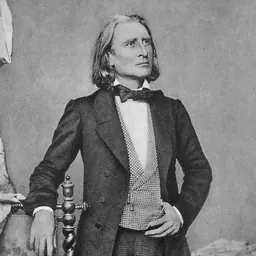
In 1872, in Berlin, he met Fedor Encke (1851–1926), the "illegitimate grandson of King Friedrich Wilhelm II of Prussia." The pair "traveled together often and socialized with Europe's elites, including Hungarian composer Franz Liszt, French actress Sarah Bernhardt and Queen Margherita of Italy."
Biographer Peter Adam Nash, in The Life and Times of Moses Jacob Ezekiel, describes Ezekiel as homosexual, but Nash does not produce any direct evidence for this; Nash's assumption is made from his research of Ezekiel's papers and of their social and historical context. Samantha Baskind's book about Ezekiel, based on six years of archival research and study, does not find any evidence to substantiate this assertion.
In 1904, he was presented the New Market Cross of Honor at VMI by the Government of Virginia as one of the 294 cadets who fought at the Battle of New Market.
Grave Ezekiel's grave on the north side of the Confederate Memorial at Arlington National Cemetery. Ezekiel died in his studio in Rome, Italy during the First World War, and was temporarily entombed there. In 1921, he was reinterred at the foot of his Confederate Memorial in Section 16 of Arlington National Cemetery. The inscription on his grave reads "Moses J. Ezekiel Sergeant of Company C Battalion of Cadets of the Virginia Military Institute."
Legacy Critical assessments Compared to Michelangelo in 1876, After noting the awards he received during his life, Sue Eisenfeld wrote in 2018:
, plans were under way to remove the statue from Arlington, with plans to relocate it to the New Market Battlefield State Historical Park. Ezekiel had a personal link to the New Market site as he fought for the Confederacy and was wounded at this battlefield.
Works
In the early 1880s, Ezekiel created eleven larger-than-life sized statues of famous artists. These were installed in niches on the façade of the Corcoran Gallery of Art's original building (later the Smithsonian's Renwick Gallery). In the early 1960s, they were removed to the Norfolk Botanical Garden in Norfolk, Virginia.
Among his other works was a memorial at VMI, Virginia Mourning Her Dead (1903), for which he declined payment. His never-built statue of Johns Hopkins, founder of Johns Hopkins University, was to have been over 15 feet (4.6 m) high, with a "colossal" bust of Hopkins, in bronze, 21⁄2 times life size. His most important statues are huge, and in one case he claimed that it was the largest statue ever made.
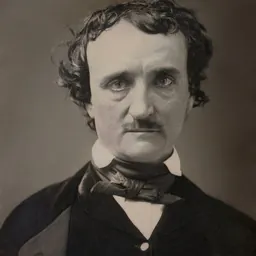
Lists of Ezekiel's works are found in the introduction to his Memoirs, there was a campaign to restore them. Spinoza statuette (1883), Hebrew Union College, donated by the artist for fundraising. Mrs. Andrew Dickson White (Mary Amanda Outwater) (1889), Sage Chapel, Cornell University Christopher Columbus (1892), Arrigo Park, Chicago, Illinois. Bronze, "faced with gold mosaic". Commissioned for the 1893 World's Columbian Exposition (Chicago World's Fair), which Ezekiel attended. Placed over the entrance to the Columbus Memorial building. Jesse Seligman (1895) Thomas Jefferson (1901), Louisville Metro Hall, Louisville, Kentucky. A 1910 replica is at the University of Virginia, Charlottesville, Virginia. Virginia Mourning Her Dead (1903), Virginia Military Institute, Lexington, Virginia. "Colossal." A 1912 replica at the VMI in Lexington, Virginia (moved in 2020) Southern, at the Confederate Cemetery on Johnson's Island, Ohio, a 1910 commission from the United Daughters of the Confederacy. John Warwick Daniel, (c. 1913), Lynchburg, Virginia. Confederate Memorial (1914), Arlington National Cemetery, Arlington, Virginia. Edgar Allan Poe (Ezekiel's last work), 1915, Wyman Park, Baltimore, Maryland Neptune, date and location unknown, for Nettuno, Italy. Napoleon of St. Helena, statue in Rome, Italy. Edgar Allan Poe (1917), University of Baltimore, Baltimore, Maryland.
Reliefs Israel, 1873 (Skirball Museum, Los Angeles) Jacob Ezekiel, the artist's father, 1874 (Skirball Museum, Los Angeles) Catherine Ezekiel, the artist's mother, 1874 (Skirball Museum, Los Angeles)
Busts Bust of Friedrich Hassaurek Robert E. Lee (1886), Virginia Military Institute Museum Isaac Mayer Wise, Hebrew Union College, Cincinnati Goldwin Smith, 1906, Uris Library, Cornell University Head of Anthony J. Drexel (1905), Drexel University, Philadelphia, Pennsylvania Bust of General Robert E. Lee Bust of Percy Bysshe Shelley in the Keats-Shelley Memorial House, Piazza di Spagna, Rome Bust of Franz Liszt. Bust of Jessica (1880), Smithsonian American Art Museum, Washington, DC. Bust of Judith (c. 1880), Cincinnati Art Museum, Cincinnati, Ohio. In 1888 he completed a bust of Hopkins professor Charles D. Morris. Bust of Thomas Jefferson (1888), United States Capitol, Washington, DC. Christ in the Tomb ) Faith (1877), Peabody Institute, Baltimore, Maryland. Marcus Aurelius (1903) Marcus Junius Brutus (1903) Bust of Governor Andrew Gregg Curtin (1912), Smith Memorial Arch, West Fairmount Park, Philadelphia, Pennsylvania. Andrew Dickson White, Uris Library, Cornell University Mary Outwater White, Uris Library, Cornell University
Virginia Military Institute has two boxes of Ezekiel papers. "Included is correspondence to Virginia Military Institute Superintendent Edward West Nichols and others, 1867 – 1917, some relating to the design of the Battle of New Market memorial sculpture Virginia Mourning Her Dead; pen and ink sketches by Ezekiel (ca. 67 items); the typed manuscript of Ezekiel's autobiography, Memoirs from the Baths of Diocletian, and miscellaneous printed material." Ezekiel's Memoirs, a fundamental source, were unknown until they were rediscovered in the Hebrew Union Archives by the two rabbis, who after much editorial work, prepared them for publication in 1975. They were called "gossipy" but "readable" in a review.
Some additional material is in the archives of Congregation Beth Ahabah, of Richmond, It is also described in Mary Agnes Tincker's The Jewel in the Lotus; "the opening pages depict the studio of Salathiel, the sculptor, the original of which character in the novel was Moses Ezekiel."
A poem about his Israel was written by Pietschmann, of Berlin.
Gabriele d'Annunzio wrote a poem, "To Moie Ezekiel," in 1887.
A description of his studio by Lilian V. de Bosis was published in the May 1891 issue of 'kTye Esquiline.
Don’t just read it —
keep it.
Full-length biographies made to live with: read them, listen on the way to work, watch them tonight.
- E-book
- Audio
- Video
Instant download · yours to keep · every purchase keeps this site free
Important facts
People in Moses Jacob Ezekiel's life
Named in this biography and alive at the same time


Related people
Same field, nearest in time


Contemporaries
People whose lives overlapped Moses Jacob Ezekiel's

Frequently asked questions
Who was Moses Jacob Ezekiel?
American sculptor (1844-1917)
When was Moses Jacob Ezekiel born?
Moses Jacob Ezekiel was born on 28 October 1844 in Richmond.
When did Moses Jacob Ezekiel die?
Moses Jacob Ezekiel died on 27 March 1917 in Rome.
What was Moses Jacob Ezekiel's occupation?
Moses Jacob Ezekiel was a sculptor and artist.
What nationality was Moses Jacob Ezekiel?
Moses Jacob Ezekiel was American.
Sources & further reading
· Wikipedia: Moses Jacob Ezekiel
· DBpedia: Moses Jacob Ezekiel
Cite this page
APA: Biography.guide. (2026). Moses Jacob Ezekiel. https://biography.guide/moses-jacob-ezekiel/
MLA: "Moses Jacob Ezekiel." Biography.guide, https://biography.guide/moses-jacob-ezekiel/.
Chicago: "Moses Jacob Ezekiel." Biography.guide. https://biography.guide/moses-jacob-ezekiel/.
Data last updated: 2026-09-26 · Spot an error? Report a correction.
Page generated 2026-09-27 05:15 UTC