
About Jacob Ezekiel
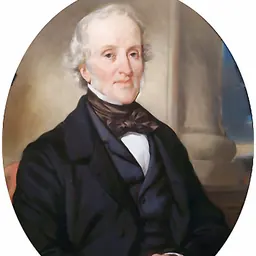
Lived 1812 – 1899 (aged 86–87). Jacob Ezekiel was a businessperson.
Jacob Ezekiel (June 28, 1812 – May 16, 1899) was an American merchant and leader of the Jewish community in antebellum Richmond, Virginia. In Cincinnati after the Civil War, he was for many years Secretary of the Board of Hebrew Union College. He was a charter member of B'nai B'rith, the first national Jewish organization in the United States. According to his son Moses, he was a good writer and a well-read man, "a man of cultivation", who possessed the complete works of Maimonides. He was the father of Moses Jacob Ezekiel (1844–1917).
Background Jacob's grandfather, Eleazar Joseph Israel, was a sofer (Jewish scribe); a Torah he copied is owned by synagogue Mikveh Israel in Philadelphia. Joseph had an elder sister, Martha, born in Holland, and a younger sister Adeline. His mother died when he was six, and he continued growing under the care of his uncle, Michael E. Cohen, The apprenticeship completed, he set up a book-binding business in Baltimore (1833–34), where he founded the Hebrew Benevolent Society of Baltimore. In 1834 he moved to Richmond, following his father, who had already moved there.
In Richmond In Richmond, on June 10, 1835, he married Catherine Myers Castro (February 28, 1819 – July 11, 1891), a Sephardic Jew born in Amsterdam, Holland, who came to the United States only four years previously, at the age of twelve. then he was in the business alone. Census records show that in 1850 Jacob owned a female of 55 and four males (69, 19, 12, 11), but none in 1860. He also was a cotton merchant. Later becoming Treasurer as well, he held that office until his departure from Richmond thirty years later. "In 1849 Ezekiel secured the enactment of a law by which religious organizations were invested with the rights of incorporated institutions."
Jacob's "business houses having been burnt", he found it advisable to leave Richmond. whose stated "object" was "to organize a white man's party". On April 8, 1868, the family moved as a group to Cincinnati, where his daughter Hannah Workum, wife of wealthy businessman Levi J. Workum, in the wholesale liquor business, had been living for some years. )
In Cincinnati Cincinnati at the time of Jacob's move there (1868) was the intellectual capital of American Judaism. Seat of the oldest Jewish congregation west of the Appalachian Mountains, in number of Jews it was second only to New York City. The first Jewish Hospital was there. The second Jewish newspaper in the history of the United States, The Israelite, had been published there since 1854. (The Asmonean, 1849–1858, was the first.) A Jewish printer, to become Bloch Publishing, was there as well. Efforts to create an association of all synagogues were centered there, and in 1873 the Union of American Hebrew Congregations came into existence. Finally, efforts were underway to create a Jewish university, including a rabbinical school; Hebrew Union College opened in 1875. The Manischevitz Company, which automated the manufacture of matzos and made them square, came slightly later, in 1888, and in 1889 the Central Conference of American Rabbis. From the beginning, the College solicited book donations, and it soon owned the largest collection of Jewish books in the world, today (2019) surpassed only by the National Library of Israel. There is a fourteen-page printed catalog of the books Ezekiel donated to the college in 1892.
At the center of this activity was America's most famous and controversial rabbi of the day, Isaac Meyer Wise, who was founder and editor of The Israelite and rabbi of the B'nai Yeshurun congregation from 1854 until his death in 1900. Ezekiel had written to Wise in 1855, expressing an interest in Wise's new and unsuccessful Zion Collegiate Institute project, After moving to Cincinnati, Ezekiel became Secretary of the Board and Treasurer of Hebrew Union College, the new institution, fulfilling the functions of registrar, from its inception almost until his death.
In Cincinnati, Ezekiel again worked in the dry-goods business, according to the 1870 Census. He became a member of the Kahal Kadosh Bene (or Benai) Israel, whose rabbi was Max Lilienthal, "Corresponding Editor" of The Israelite. At the time of his golden wedding anniversary in 1885, his residence was described as "palatial". He had thirteen living children, thirty-nine grandchildren, and one great-grandchild.
Writings
Archival material The American Jewish Archives, in Cincinnati, contains "Correspondence and scrapbooks covering the activities of Jacob Ezekiel and family. Included is material covering Hebrew Union College, Union of American Hebrew Congregations, and Hebrew Benevolent Society of Baltimore, Maryland; articles by Herbert T. Ezekiel; and Jacob Ezekiel's copybooks (1842). Correspondents include Isaac M. Wise, Marcus Jastrow, Frederick De Sola Mendes, and Henry Berkowitz."
Don’t just read it —
keep it.
Full-length biographies made to live with: read them, listen on the way to work, watch them tonight.
- E-book
- Audio
- Video
Instant download · yours to keep · every purchase keeps this site free
Important facts
People in Jacob Ezekiel's life
Named in this biography and alive at the same time

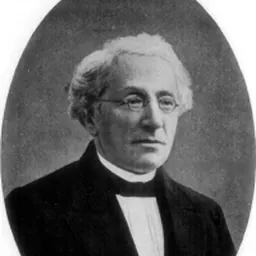
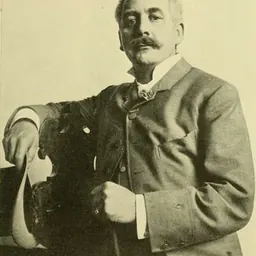

Related people
Same field, nearest in time

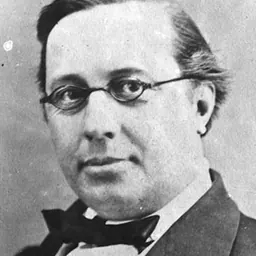

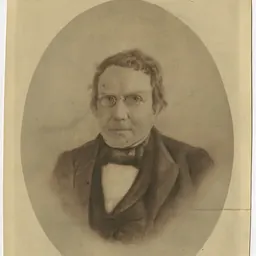
Contemporaries
People whose lives overlapped Jacob Ezekiel's





Frequently asked questions
Who was Jacob Ezekiel?
(1812-1899)
When was Jacob Ezekiel born?
Jacob Ezekiel was born in 1812.
When did Jacob Ezekiel die?
Jacob Ezekiel died in 1899.
What was Jacob Ezekiel's occupation?
Jacob Ezekiel was a businessperson.
Sources & further reading
Cite this page
APA: Biography.guide. (2026). Jacob Ezekiel. https://biography.guide/jacob-ezekiel/
MLA: "Jacob Ezekiel." Biography.guide, https://biography.guide/jacob-ezekiel/.
Chicago: "Jacob Ezekiel." Biography.guide. https://biography.guide/jacob-ezekiel/.
Data last updated: 2026-09-20 · Spot an error? Report a correction.
Page generated 2026-09-27 05:13 UTC