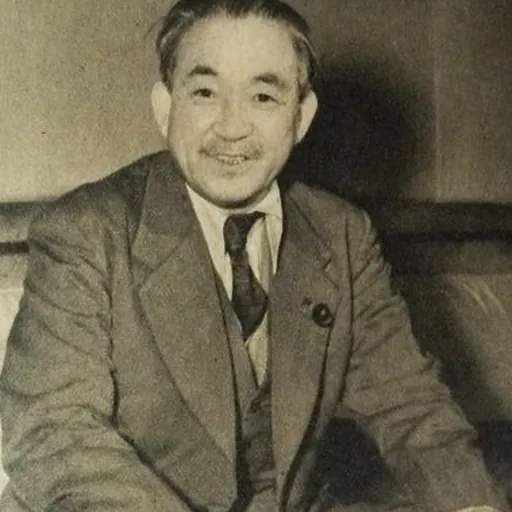
About Mosaburō Suzuki
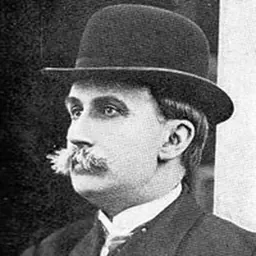
Lived 1893 – 1970 (aged 77). Mosaburō Suzuki was a Japanese politician and journalist.
was a Japanese journalist, essayist, and socialist politician who served nine terms in the House of Representatives. He was the first chairman of the Left Socialist Party of Japan (1951–1955) and later the second chairman of the reunified Japan Socialist Party (1955–1960).
Born into poverty in Gamagōri, Aichi, Suzuki worked various odd jobs before graduating from Waseda University in 1916. As a newspaper reporter he covered the Siberian Intervention, an experience that reinforced his lifelong opposition to militarism. After the socialists reunited in 1955 he served as chairman of the unified JSP until his resignation in 1960 following the formation of the Democratic Socialist Party. In later years he continued to push the party leftward, opposed structural-reform theories, and established a socialist library that was later donated to the Museum of Modern Japanese Literature.
He then became a journalist, working for the Hōchi Shimbun, Taishō Nichinichi Shimbun and Tokyo Nichi Nichi Shimbun (predecessor of the Mainichi Shimbun), mainly in the economics section. In 1918 he was sent as a special correspondent to Siberia, where he witnessed military intrigues surrounding the Siberian Intervention; this experience strengthened his lifelong opposition to militarism.
The two socialist parties reunited that year to form a united front against the emerging right-wing conservative Liberal Democratic Party, but the issue of whether or not to participate in the Anpo protests reignited the left-right tension within the Socialist Party. In 1960, right-wing leader Suehiro Nishio left the party and formed the Democratic Socialist Party. Taking responsibility for the party split, Suzuki resigned as chairman.
During the 1960s, Suzuki gradually pressed the Socialist Party to the left, but it continued to languish as Japan's economic recovery sped up. He retired from politics in 1967. Thereafter, he collected socialist literature and other materials, establishing a "Socialist Library" which he later donated to the Museum of Modern Japanese Literature.
In later years he moved further left, opposed Saburō Eda’s structural-reform theory, visited China in 1962, and helped draft the party’s “Road to Socialism in Japan”. He retired from electoral politics before the 1967 general election. He collected socialist literature, establishing the “Shakai Bunko” (Socialist Library), which was later donated to the Museum of Modern Japanese Literature.
Don’t just read it —
keep it.
Full-length biographies made to live with: read them, listen on the way to work, watch them tonight.
- E-book
- Audio
- Video
Instant download · yours to keep · every purchase keeps this site free
Important facts
People in Mosaburō Suzuki's life
Named in this biography and alive at the same time

Related people
Same field, nearest in time






Contemporaries
People whose lives overlapped Mosaburō Suzuki's


Frequently asked questions
Who was Mosaburō Suzuki?
Japanese politician
When was Mosaburō Suzuki born?
Mosaburō Suzuki was born on 7 February 1893 in Gamagōri-shi.
When did Mosaburō Suzuki die?
Mosaburō Suzuki died on 7 May 1970 in Tokyo.
What was Mosaburō Suzuki's occupation?
Mosaburō Suzuki was a politician and journalist.
What nationality was Mosaburō Suzuki?
Mosaburō Suzuki was Japanese.
Sources & further reading
Cite this page
APA: Biography.guide. (2026). Mosaburō Suzuki. https://biography.guide/mosaburo-suzuki/
MLA: "Mosaburō Suzuki." Biography.guide, https://biography.guide/mosaburo-suzuki/.
Chicago: "Mosaburō Suzuki." Biography.guide. https://biography.guide/mosaburo-suzuki/.
Data last updated: 2026-09-22 · Spot an error? Report a correction.
Page generated 2026-09-27 05:10 UTC