
About Saburō Eda
Lived 1907 – 1977 (aged 69). Saburō Eda was a Japanese politician.
was a Japanese party politician, prominent in the postwar period, who served two terms in the Member of the House of Councillors and four terms in the Member of the House of Representatives, and rose to become the Secretary General and Acting Chairman of the Japan Socialist Party in the early 1960s. Eda's optimistic "Eda Vision" of a broad-based, moderate form of socialism briefly won acclaim from the Japanese mass media before being beaten back by hardliners in the left wing of the party. He was the father of Japanese politician Satsuki Eda.
Prewar and wartime activities Eda was born in Fukuwatari Village, Kume District, Okayama Prefecture. His father, Matsujirō Eda, ran an udon and soba noodle manufacturing and wholesaling business and was also a minor political leader in the local branch of the Minseitō Party. In 1931, while a student at Tokyo University of Commerce (present-day Hitotsubashi University), Eda suffered from a bout of pleurisy and returned home for treatment. Back in Okayama, Eda became heavily involved in the local farmer's movement. Dropping out of university, he joined the National Masses Party, a conglomeration of farmer's and proletarian working class political parties. In 1937, he was elected and served one term in the Upper House of the Okayama Prefectural Assembly. However, in 1938, he was arrested along with approximately 400 other prominent leftists as part of the "Popular Front Incident" and imprisoned for two years. Released in 1940, he was given to understand that his presence was not welcomed in the metropole, so he left Japan proper to find work in Japanese-occupied China.
Postwar politics Returning to Japan after the end of World War II, Eda joined the newly formed Japan Socialist Party (JSP) in 1946. Affiliated with the left wing of the party, Eda sided with the Left Socialists when the Party split in two in 1948. In 1950, Eda was elected to the House of Councillors, where he would serve two terms. In 1955, the two halves of the JSP reunited, and in 1957, Eda became a member of the party's Central Executive Committee, as well as head of its Agricultural Bureau.
In 1958, Eda was named chairman of the JSP's Party Organizing Committee. Thereafter, Eda won the loyalty of a large number of the party's grassroots activists by initiating a number of reforms to modernize the party's organizational structure and improve the general treatment of lower-level party activists. Drawing upon the buzzword "structural reform" promoted by the Italian Communist Party under Palmiro Togliatti, Eda promoted his reformist ideas for the JSP under the label "structural reform" (構造改革, kōzō kaikaku).
In September 1959, when Right Socialist leader Suehiro Nishio expressed the heretical view that the JSP was "a broad-based party of the people" rather than a party based exclusively in the urban working class, Eda hinted at his own centrist leanings when he responded that, "The JSP is a class-based party in as much as it seeks to reform capitalist society and construct a socialist society, but it is a broad-based people's party in the sense that it is fighting for the benefit of the majority of the people and not to encourage the egoism of the working class." The "structural reform" platform drew inspiration from the recently concluded Anpo protests against the U.S.-Japan Security Treaty, which had achieved massive size and forced the resignation of conservative prime minister Nobusuke Kishi. Eda and his allies viewed these protests as having been an unalloyed success in having allowed the JSP to play a leading role in fomenting a mass movement. Eda's "structural reform" platform called for a combination of parliamentary pressure tactics and Anpo-style extra-parliamentary mass movements that would gradually move Japan toward socialism by forcing the government into a series of piecemeal concessions. Above all, Eda and his fellow structural reformers hoped to broaden the base of the JSP beyond a hard core of labor unionists, leftist student activists, and Marxist intellectuals to encompass people from many walks of life, in order to dramatically increase the party's potential supporters at the polls.
Leading the JSP into the general election in Asanuma's place, Eda appeared in the second televised election debate as the new party leader, and impressed audiences with his sunny demeanor and even-handed tone. The JSP's showing in the election was viewed as a success, as the party increased its number of seats in the National Diet, further cementing Eda's grip on power within the party.
"Eda Vision" of socialism In order to achieve his goal of broadening the base of the Japan Socialist Party, Eda sought to rebrand socialism using more straightforward language that would cut through complex Marxist jargon and offer a simple, optimistic vision to the Japanese people. To this end, he propounded his "New Vision of Socialism," better known in the Japanese media as the "Eda Vision" of socialism. The Eda vision was first proclaimed at a July 27, 1962 speech Eda gave National Conference of Socialist Party Regional Organizers in Nikko. In this speech, Eda famously proclaimed,
Socialism must be defined in sunny and cheerful terms that are easily understandable to the masses. I believe that “socialism” is that which allows human potential to blossom to its fullest extent. The main four accomplishments that humankind has achieved so far are America's high standard of living, the Soviet Union's thoroughgoing social welfare system, England's parliamentary democracy, and Japan's peace constitution. I believe that if we can integrate these, we can give birth to a broad-based socialism. At the 22nd Party Congress in November 1962, the left wing of the JSP revolted, and succeeded in persuading a majority of party members present to adopt an "Eda Vision Criticism Resolution" that renounced the "Eda Vision" as antithetical to core party principles. However, Eda could never overcome the undying animosity his "Eda Vision" had won him from his party's hardcore left wing.
In 1976, Eda lost his re-election bid and was booted from the Diet. Blaming his loss on his party's dogmatic, doctrinaire Marxism and desperate for reform, he attempted to resign from the JSP but the party refused to accept his resignation and voted to expel him instead. Thereafter, Eda formed a new political party, the Socialist Citizens Federation (later renamed the Socialist Democratic Federation) and ran for re-election to the Diet. However, Eda died suddenly of lung cancer on May 22, 1977. His son, Satsuki Eda, hastily ran in his place, and won the election.
Don’t just read it —
keep it.
Full-length biographies made to live with: read them, listen on the way to work, watch them tonight.
- E-book
- Audio
- Video
Instant download · yours to keep · every purchase keeps this site free
Important facts
People in Saburō Eda's life
Named in this biography and alive at the same time
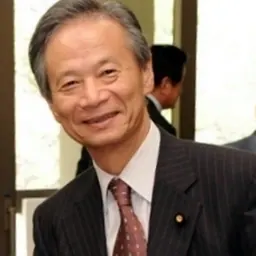
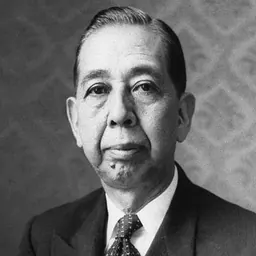

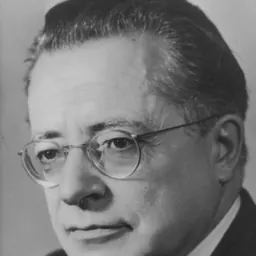
Related people
Same field, nearest in time






Contemporaries
People whose lives overlapped Saburō Eda's



Frequently asked questions
Who was Saburō Eda?
Japanese politician
When was Saburō Eda born?
Saburō Eda was born on 29 July 1907 in Kita-ku.
When did Saburō Eda die?
Saburō Eda died on 22 May 1977 in Tokyo.
What was Saburō Eda's occupation?
Saburō Eda was a politician.
What nationality was Saburō Eda?
Saburō Eda was Japanese.
Sources & further reading
Cite this page
APA: Biography.guide. (2026). Saburō Eda. https://biography.guide/saburo-eda/
MLA: "Saburō Eda." Biography.guide, https://biography.guide/saburo-eda/.
Chicago: "Saburō Eda." Biography.guide. https://biography.guide/saburo-eda/.
Data last updated: 2026-09-20 · Spot an error? Report a correction.
Page generated 2026-09-27 05:23 UTC