
About Morgan Morgan-Giles
Lived 1914 – 2013 (aged 98). Morgan Morgan-Giles was a British politician.
Rear-Admiral Sir Morgan Charles Morgan-Giles, (19 June 1914 – 4 May 2013) was a Royal Navy officer, decorated during the Second World War, who later served as a Conservative Member of Parliament. At the time of his death, he was the oldest living former member of the House of Commons.
Early life The eldest son of Francis Charles Morgan-Giles OBE, Naval architect and yacht designer, and Ivy Constance Morgan-Giles (née Carus-Wilson), Morgan-Giles' childhood was spent idyllically "messing around with boats" at Teignmouth, where his father had his boatyard. The family lived across the river at Shaldon, necessitating a short row across the Teign River several times a day. Morgan-Giles said that he could "row before he could walk".
Morgan-Giles' At Clifton he demonstrated his ability to work the system as he wanted to crew for his father in a sailing race, but was told that instead he must attend a cricket match between Clifton College and Tonbridge School. So he took the train to London, passed through the turnstile at Lord's Cricket Ground; straight in, round and out again, and took the train down to Ryde, on the Isle of Wight, where father and son entered the race, and won; this was the Prince of Wales Cup, one of the most prestigious National dinghy races of the year.
Early naval career Morgan-Giles joined the China Fleet as a midshipman at 18 in 1932, serving on a variety of ships, including Yangtze river patrol boats. He first sailed in the training cruiser to the West Indies and the Baltic. He was then appointed to the Australian destroyer before serving in , and on the China Station before returning home to join the torpedo school at . He was promoted to Torpedo Specialist in 1938.
Second World War During the Second World War, Morgan-Giles served on during the Norwegian Campaign in 1940, escorting Atlantic convoys, and took part in the Battle of Oran. In 1941, he was sent to the Suez Canal, where he was in charge of the anti-magnetic mine campaign. In April of that year, he acted as a liaison with the Royal Air Force using Wellington bombers as torpedo bombers. During his time with No. 201 Group RAF at Dekheila he survived three serious aeroplane crashes (one of which he was the sole survivor). Following a period of staff training at the Royal Naval College, Greenwich, Morgan-Giles was then sent to the Far East as Staff Officer Operations of Force W. There he accepted the Japanese surrender of Thailand.
George Medal Morgan-Giles was awarded the George Medal for "gallantry and undaunted devotion to duty" during bomb and mine disposal work while serving at HMS Nile, the naval base at Ras el-Tin Point, Alexandria. Morgan-Giles had been sent to help clear the ships from the harbour as quickly as possible, because they were loaded with explosive and ammunition, and (although unknown at the time) mustard gas. Whilst on board , helping to get move the ship out of the harbour to minimise losses, a bomb struck a nearby ammunition ship, and he was hurled the length of the deck, but was uninjured amongst the wreckage and fire. He was nevertheless able to climb onto an American Liberty ship, SS Lyman Abbott that was blocking the harbour exit. Once aboard, he found not a single man alive, and no power, therefore no method of weighing her anchor. He, and two other men that had joined him, were therefore forced to tamp explosive into the anchor chain, light the fuse and take cover. The explosion severed the cable, and they eventually managed to get the ship towed out of the way. It emerged after the war that Lyman Abbott had also had mustard gas on board. Had Lyman Abbott been hit whilst still inside Bari's harbour, the casualties from the mustard gas would likely have been extensive.
Post-war From 1945 to 1948 Morgan-Giles served in Ceylon, Cape Town, England, and Trieste. In 1950 he became the Captain of HMS Chieftain, then stationed in Malta. In 1953, he was promoted to Chief of Naval Intelligence, Far East. He became Captain (D) of the Dartmouth Training Squadron in 1957, then moved to HMS Vernon Torpedo School in 1958. He took command as Captain of , then Flagship of the Far East Fleet, in 1961. He was promoted to rear admiral in 1963, the same year he became President of Royal Naval College, Greenwich. He left the Royal Navy in January 1964 to stand for Parliament.
Parliamentary career Retiring from the Royal Navy in January 1964, Morgan-Giles stood for Parliament for the Conservative Party in his local constituency of Winchester at a by-election following the resignation of Peter Smithers (who had been appointed to the Council of Europe) and was elected a Member of Parliament on 14 May 1964. He is known to have regarded being an MP as a retirement occupation. – a sentence also used by Norman Tebbit about the in-fighting in the Conservative party during the 2016 United Kingdom European Union membership referendum.
Once, while still in hospital after a riding accident, Morgan-Giles wrote to James Callaghan, the then prime minister, of "the cold, silent, teeth-clenched fury" among servicemen about a pay review board, which "did not seem to know, in blunt nautical language, whether it's on its arse or elbow". He complained that Wrens only received threepence extra a day after four years' good service: "That is not much to give a girl for saying 'Yes, Sir' all day and then 'No, Sir' all night." Yet he opposed Wrens serving on warships because: "woman's eternal role is to create life and nurture it; a fighting man must be prepared to kill. Women do wonderful things for men but combat duty to defend us should not be one of them. Vive la difference." and was made Deputy Lieutenant of Hampshire in 1983. He also was awarded the Order of the Partisan Star (Yugoslavia) by Josip Broz Tito.
Family life Morgan-Giles married twice (both wives predeceasing him) and had six children by his first wife, Pamela Bushell, daughter of P.H. Bushell of Darling Point, Sydney, whom he married in 1946. He married secondly in 1968 Marigold Katherine Steel, daughter of Dr Percy Lowe OBE, a British scientist, and his wife the former Dorothy Mead-Waldo. He wrote an autobiography entitled The Unforgiving Minute. Morgan-Giles died aged 98 on 4 May 2013.
Don’t just read it —
keep it.
Full-length biographies made to live with: read them, listen on the way to work, watch them tonight.
- E-book
- Audio
- Video
Instant download · yours to keep · every purchase keeps this site free
Important facts
People in Morgan Morgan-Giles's life
Named in this biography and alive at the same time



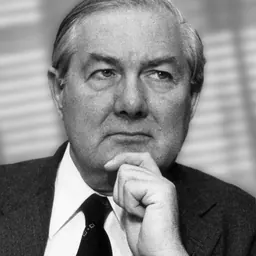


Related people
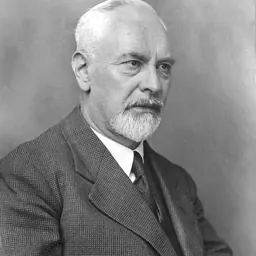
Same field, nearest in time





Contemporaries
People whose lives overlapped Morgan Morgan-Giles's

Frequently asked questions
Who was Morgan Morgan-Giles?
British naval officer and politician (1914-2013)
When was Morgan Morgan-Giles born?
Morgan Morgan-Giles was born on 19 June 1914 in Newton Abbot.
When did Morgan Morgan-Giles die?
Morgan Morgan-Giles died on 4 May 2013 in Bristol.
What was Morgan Morgan-Giles's occupation?
Morgan Morgan-Giles was a politician.
What nationality was Morgan Morgan-Giles?
Morgan Morgan-Giles was British.
Sources & further reading
· Wikipedia: Morgan Morgan-Giles
· DBpedia: Morgan Morgan-Giles
Cite this page
APA: Biography.guide. (2026). Morgan Morgan-Giles. https://biography.guide/morgan-morgan-giles/
MLA: "Morgan Morgan-Giles." Biography.guide, https://biography.guide/morgan-morgan-giles/.
Chicago: "Morgan Morgan-Giles." Biography.guide. https://biography.guide/morgan-morgan-giles/.
Data last updated: 2026-09-20 · Spot an error? Report a correction.
Page generated 2026-09-27 05:00 UTC