
About Lyman Abbott
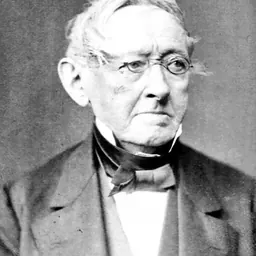
Lived 1835 – 1922 (aged 86). Lyman Abbott was an American theologian, writer, clergyman, pastor, lecturer and editing.
Lyman J. Abbott (December 18, 1835 – October 22, 1922) was an American Congregationalist theologian, editor, and author.
Biography Early years
Abbott was born at Roxbury, Massachusetts, on December 18, 1835, the son of the prolific author, educator and historian Jacob Abbott, and his mother being Harriet Vaughan. Abbott grew up in Farmington, Maine, and later in New York City. Abbott's ancestors were from England, and came to America roughly twenty years after Plymouth Rock.
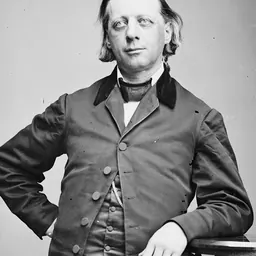
He graduated from the New York University in 1853, where he was a member of the Eucleian Society, studied law, and was admitted to the bar in 1856. Abbott soon abandoned the legal profession, however, and after studying theology with his uncle, John Stevens Cabot Abbott, was ordained a minister of the Congregational Church in 1860. He was married October 14, 1857, to Abby F. Hamlin, whose father Hannibal Hamlin (1809–1863) was the cousin of the politician Hannibal Hamlin of Boston, Mass. which he edited for six years. He was also the co-editor of The Christian Union with Henry Ward Beecher from 1876 to 1881. Abbott later succeeded Beecher in 1888 as pastor of Plymouth Church, Brooklyn. He also wrote the official biography of Beecher and edited his papers. and was an advocate of Theodore Roosevelt's progressivism for almost 20 years. He later adopted a pronouncedly liberal theology.
He was a pronounced Christian Evolutionist. In two of his books, The Evolution of Christianity and The Theology of an Evolutionist (1897), Abbott applied the concept of evolution in a Christian theological perspective. Although he objected to being called an advocate of Darwinism, he was an optimistic advocate of evolution, once saying "what Jesus saw, humanity is becoming."
Abbott was a religious figure of some public note and was called upon on October 30, 1897, to deliver an address in New York at the funeral of economist, Henry George. He ultimately resigned his pastorate in November 1898. which he edited, and because he was a member of the Army and Navy League. During World War I, he supported the government's war policies.
He received the degree D.D. from the University of the City of New York in 1879; from Harvard in 1891, from Yale in 1903, and LL.D. from Western Reserve in 1900. A brief tribute appeared in that issue, but the November 8th edition contained the official remembrance and tributes. Fifteen pages in that issue dealt with Abbott, and the publishers included "several long essays in Abbott's honor from close relatives, shorter tributes from friends and past associates, and blurbs from many American press companies."
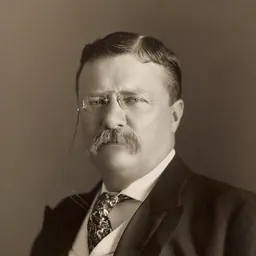
The many diverse and prominent author who contributed tributes "demonstrated the scope and magnitude of Lyman Abbott's influence within American religious and intellectual culture during his long career." Prominent examples include a re-published 1915 tribute from former United States president Theodore Roosevelt and articles from prestigious newspapers such as The New York Times and the New York Herald. Roosevelt praised Abbott for being "one of those men whose work and life give strength to all who believe in this country," and the New York Herald recalled Abbott's ability to "convey his valuable opinions to the entire intellectual public." Dr. Henry Sloane Coffin noted at a later memorial service, "Measured by the number of people he reached, Dr. Abbott was unquestionably the greatest teacher of religion of this generation."
Abbott's lasting influence and widespread appeal is readily apparent in later evaluations of his life. Abbott's one biographer, Ira V. Brown, confirmed Abbott's importance via "testimonials by the dozen," and added that Abbott "directly reached several hundred thousands of people" through his work as a "minister, lecturer, author, and editor." Abbott was "something of a national patriarch" by the time of his death, and according to Brown, he was "no less than a modern oracle" to thousands of followers. The magazine "was a prominent news source for Protestant ministers and laypeople all over the United States, demonstrating Abbott's lasting influence."
Works
Sermons of Henry Ward Beecher (Editor). (2 vols., 1868) Jesus of Nazareth (1869) Illustrated Commentary on the New Testament (4 vols., 1875) A Study in Human Nature (1885) What is Christianity? in: The Arena (1891) Life of Christ (1894) The Evolution of Christianity (1896) (Lowell Lectures, reissued by Cambridge University Press, 2009, ) The Theology of an Evolutionist (1897) Christianity and Social Problems (1897) Life and Letters of Paul (1898) The Life that Really is (1899) Why Go To Church? (1900) (Published in "The Day's Work Series" by L. C. Page) Problems of Life (1900) The Rights of Man (1901) Henry Ward Beecher (1903) The Other Room (1903) The Great Companion (1904) (New edition published September 1906) The Christian Ministry (1905) The Personality of God (1905) Industrial Problems (1905) "Impressions of a Careless Traveler" (1907) Christ's Secret of Happiness (1907) The Home Builder (1908) The Temple (1909) The Spirit of Democracy (1910) America in the Making (1911) (Yale Lectures on the Responsibility of Citizenship) Letters to Unknown Friends (1913) Reminiscences (1915) The Twentieth Century Crusade (1918) What Christianity Means to Me (1921)
Footnotes
Don’t just read it —
keep it.
Full-length biographies made to live with: read them, listen on the way to work, watch them tonight.
- E-book
- Audio
- Video
Instant download · yours to keep · every purchase keeps this site free
Important facts
Family & relationships
People in Lyman Abbott's life
Named in this biography and alive at the same time



Related people
Same field, nearest in time


Contemporaries
People whose lives overlapped Lyman Abbott's



Frequently asked questions
Who was Lyman Abbott?
American theologian, editor, author (1835–1922)
When was Lyman Abbott born?
Lyman Abbott was born on 18 December 1835 in Roxbury.
When did Lyman Abbott die?
Lyman Abbott died on 22 October 1922 in New York City.
What was Lyman Abbott's occupation?
Lyman Abbott was a theologian, writer, clergyman, pastor, lecturer and editing.
What nationality was Lyman Abbott?
Lyman Abbott was American.
Sources & further reading
Cite this page
APA: Biography.guide. (2026). Lyman Abbott. https://biography.guide/lyman-abbott/
MLA: "Lyman Abbott." Biography.guide, https://biography.guide/lyman-abbott/.
Chicago: "Lyman Abbott." Biography.guide. https://biography.guide/lyman-abbott/.
Data last updated: 2026-09-20 · Spot an error? Report a correction.
Page generated 2026-09-27 05:17 UTC