
About Mordecai Kaplan
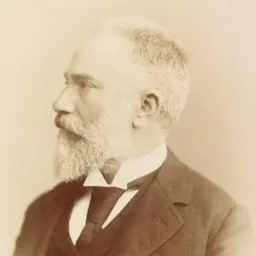
Lived 1881 – 1983 (aged 102). Mordecai Kaplan was a Russian and American essayist, rabbi, translator, philosopher, diarist and university teacher.
Mordecai Menahem Kaplan (; June 11, 1881 – November 8, 1983) was an American Conservative rabbi, writer, Jewish educator, professor, theologian-philosopher, activist, and religious leader who founded the Reconstructionist movement of Judaism with his son-in-law, Rabbi Ira Eisenstein. He has been described as a "towering figure" in the recent history of Judaism for his influential work in adapting it to modern society, contending that Judaism should be a unifying and creative force by stressing the cultural and historical character of the religion as well as theological doctrine. the son of Haya and Rabbi Israel Kaplan. Mordecai was brought over to New York in 1889, at the age of nine.
Career Kaplan was ordained at the Jewish Theological Seminary of America in 1902.
Not all of Kaplan's writings on the subject were consistent; his position evolved somewhat over the years, and two distinct theologies can be discerned with careful reading. The view more popularly associated with Kaplan is strict naturalism, à la John Dewey, which has been criticized as using religious terminology to mask a nontheistic (if not outright atheistic) position—one JTS colleague in the 1950s, Will Herberg, went so far as to compare it to the position of Charles Maurras toward the Catholic Church. A second strand of Kaplanian theology makes clear that God has ontological reality, a real and absolute existence independent of human beliefs, while rejecting classical theism and any belief in miracles. In 1973, he was one of the signers of the Humanist Manifesto II.
Personal life Kaplan was a prolific writer. In addition to his published works, he kept a journal from 1913 until the late 1970s, comprising 27 volumes, each with 350–400 handwritten pages. The journal is quite possibly the largest by a Jew, and may even be one of the most extensive on record.
Don’t just read it —
keep it.
Full-length biographies made to live with: read them, listen on the way to work, watch them tonight.
- E-book
- Audio
- Video
Instant download · yours to keep · every purchase keeps this site free
Important facts
People in Mordecai Kaplan's life
Named in this biography and alive at the same time




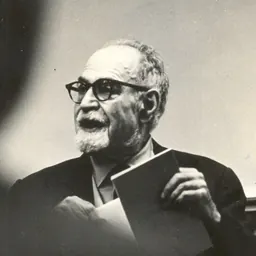

Related people
Same field, nearest in time
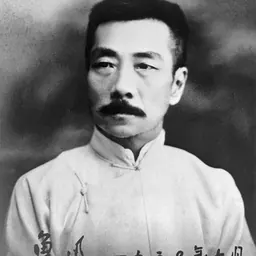

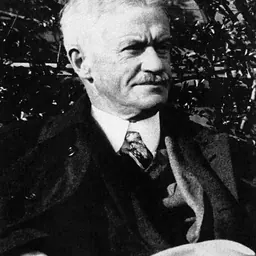


Contemporaries
People whose lives overlapped Mordecai Kaplan's


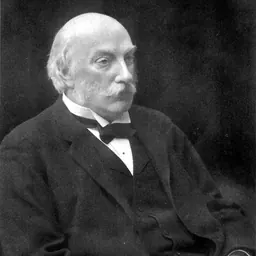

Frequently asked questions
Who was Mordecai Kaplan?
Lithuanian American rabbi (1881-1983)
When was Mordecai Kaplan born?
Mordecai Kaplan was born on 11 June 1881 in Švenčionys.
When did Mordecai Kaplan die?
Mordecai Kaplan died on 8 November 1983 in New York City.
What was Mordecai Kaplan's occupation?
Mordecai Kaplan was an essayist, rabbi, translator, philosopher, diarist and university teacher.
What nationality was Mordecai Kaplan?
Mordecai Kaplan was Russian and American.
Sources & further reading
Cite this page
APA: Biography.guide. (2026). Mordecai Kaplan. https://biography.guide/mordecai-kaplan/
MLA: "Mordecai Kaplan." Biography.guide, https://biography.guide/mordecai-kaplan/.
Chicago: "Mordecai Kaplan." Biography.guide. https://biography.guide/mordecai-kaplan/.
Data last updated: 2026-09-20 · Spot an error? Report a correction.
Page generated 2026-09-27 05:32 UTC