
About Charles Maurras
Lived 1868 – 1952 (aged 84). Charles Maurras was a French journalist, politician, poet, writer, philosopher and composer.
Charles-Marie-Photius Maurras (; ; 20 April 1868 – 16 November 1952) was a French author, politician, poet and critic. He was an organiser and principal philosopher of Action Française, a political movement that was monarchist, medievalist, conservative, corporatist, integralist, nationalist, traditionalist, and counter-revolutionary. Maurras also held anti-capitalist, anti-communist, anti-liberal, anti-Masonic, anti-Nazi, anti-Islam, anti-Protestant and antisemitic views. His ideas greatly influenced National Catholicism and integral nationalism, He explained his support for Vichy, writing: "As a royalist I never lost sight of the necessity of monarchy. But to enthrone the royal heir, the heritage had to be saved." After Vichy's collapse he was arrested and accused of complicity with the enemy. He has been described as the most important French conservative intellectual, and has directly influenced a large number of politicians, theorists, and writers on both the left and right. Maurras' legacy has remained controversial to this day. Critics have derided him as a "fascist icon", while supporters, including Georges Pompidou, have praised him as a prophet. Others, including Emmanuel Macron, have taken a nuanced approach, with Macron stating: "I fight all the antisemitic ideas of Maurras, but I find it absurd to say that Maurras must no longer exist."
Biography
Before the First World War
Maurras was born into a Provençal family, brought up by his mother and grandmother in a Catholic and monarchist environment. In his early teens, he became deaf. Like many other French politicians, he was affected greatly by France's defeat in the 1870 Franco-Prussian War. At this time Maurras was influenced by Orleanism, as well as German philosophy reviewed by Catholic thinker Léon Ollé-Laprune, an influence of Henri Bergson, and by the philosopher Maurice Blondel, one of the inspirations of Christian "modernists", who would later become his greatest opponents.
In 1890 Maurras approved Cardinal Lavigerie's call for the rallying of Catholics to the Republic, thus making his opposition not to the Republic in itself, but to "sectarian Republicanism".
In 1899, Maurras founded the review Action Française (AF), an offshoot of the newspaper created by Maurice Pujo and Henri Vaugeois the year preceding. It had a wide readership during the implementation of the 1905 law on the separation of Church and State. In 1899 he wrote a short notice in favour of monarchy, "Dictateur et roi" ("Dictator and King"), and then in 1900 his Enquête sur la monarchie (Investigations on Monarchy), published in the Legitimist mouthpiece La Gazette de France, which made him famous. Maurras also published thirteen articles in the newspaper Le Figaro during 1901 and 1902, as well as six articles between November 1902 and January 1903 in Edouard Drumont's anti-Semitic newspaper, La Libre Parole.
Many early members of the Action Française were practising Catholics, including Bernard de Vésins, the art historian Louis Dimier and the essayist Léon de Montesquiou. They helped Maurras develop the royalist league's pro-Catholic policies.
Maurras entered into a conflict with Paul Granier de Cassagnac editor of L'Autorite, and his brother Guy. The affair ended with a sword duel between Paul de Cassagnac and Charles Maurras which took place in Neuilly on 26 February 1912. Maurras was struck in the forearm, and his arm was seriously injured, which brought the combat to a close.
From the First World War to the end of the 1930s Maurras then endorsed France's entry into the First World War (even to the extent of supporting the thoroughly republican Georges Clemenceau) against the German Empire. During the war the Jewish businessman Emile Ullman was forced to resign from the board of directors of the Comptoir d'Escompte bank after Maurras accused him of being a German agent. He then criticised the Treaty of Versailles for not being harsh enough on the Germans and condemned Aristide Briand's policy of cooperation with Germany.
In 1925, he called for the murder of Abraham Schrameck, the Interior Minister of Paul Painlevé's Cartel des Gauches's (left-wing coalition) government, who had ordered the disarming of the far-right leagues. alongside the movement's official newspaper. This was a devastating blow to the movement. On 8 March 1927, AF members were prohibited from receiving the sacraments. Many of its members left (two Catholics who were forced to look for a different path in politics and life were the writers François Mauriac and Georges Bernanos) and it entered a period of decline.
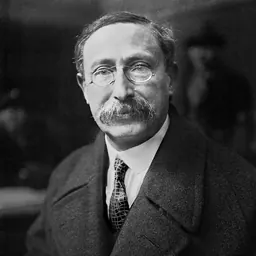
Maurras again voiced death threats against the President of the Council (prime minister) Léon Blum, organiser of the Popular Front, in the Action Française of 15 May 1936, emphasising his Jewish origins (he once called him an "old semitic camel"). Fearing communism, he joined the pacifists and praised the Munich Agreement of 1938, which the President of the Council Édouard Daladier had signed without any illusions. He also wrote in Action Française:
During the 1930s – especially after the 6 February 1934 crisis —many of Action Française members turned to fascism, including Robert Brasillach, Lucien Rebatet, Abel Bonnard, Paul Chack and Claude Jeantet. Most of them belonged to the staff of the fascist newspaper Je suis partout (I am everywhere).
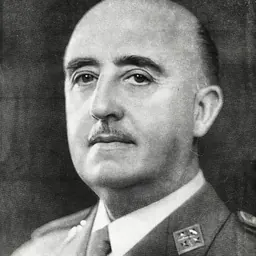
Influencing António de Oliveira Salazar's Estado Novo regime in Portugal, Maurras also supported Francisco Franco and, until spring 1939, Benito Mussolini's Fascist regime. Opposing Adolf Hitler because he was anti-German, Maurras himself criticised the racist policies of Nazism in 1936, and requested a complete translation of Mein Kampf – some passages had been censored in the French edition.
After his failure against Charles Jonnart in 1924 to be elected to the Académie française, he succeeded in entering the ranks of the "Immortals" on 9 June 1938, replacing Henri-Robert, winning by 20 votes against 12 to Fernand Gregh. He was received into the Academy on 8 June 1939 by the Catholic writer Henry Bordeaux. In the same year, Pope Pius XII repealed his predecessor's condemnation of the Action Française. While Maurras described Marshal Philippe Pétain as a "divine surprise", the statement is usually quoted without context; Maurras was referring specifically to Pétain having political talent as well as being a symbol of France, and there is no evidence of the remark until February 1941.
Vichy France's reactionary program of a Révolution Nationale (National Revolution) was fully approved of by Maurras, who inspired large parts of it. In La Seule France (1941) Maurras argued for a policy of France d'abord ("France First"), whereby France would restore itself politically and morally under Pétain, resolving what Maurras saw as the causes of France's defeat in 1940, before dealing with the issue of the foreign occupation. This position was contrasted to the attitude of the Gaullists, who fled France and continued the military struggle. Maurras savaged the pre-war French governments for taking an increasingly bellicose position vis-à-vis Germany at precisely the same time that these governments were weakening France, militarily, socially and politically, thereby making France's defeat during 1940 all but inevitable. Maurras also criticised the 1940 Law on the status of Jews for being too moderate. and he opposed both the "dissidents" in London and the collaborators in Paris and Vichy (such as Lucien Rebatet, Robert Brasillach, Pierre Laval or Marcel Déat). In 1943 the Germans planned to arrest Maurras.
A pre-war admirer of de Gaulle, who himself had been influenced by Maurras' integralism, Maurras then harshly criticised the General in exile. He later claimed he believed that Pétain was playing a "double game", working for an Allied victory in secret.
After the liberation of France Maurras was arrested in September 1944 together with his right-hand man Maurice Pujo, and indicted before the High Court of Lyon for "complicity with the enemy" on the basis of the articles he had published since the beginning of the war. At the end of the trial, during which there were many irregularities such as false dating or truncated quotations, Maurras was sentenced to life imprisonment and deprivation of civil liberties. He was automatically dismissed from the Académie française (a measure included in the ordinance of 26 December 1944).
Meanwhile, the Académie française declared his seat vacant, as it had for Pétain's, instead of expelling him as it did for Abel Hermant and Abel Bonnard.
Work Félibrige
A Provence-born author, Maurras joined Félibrige, a literary and cultural association founded by Frédéric Mistral and other Provençal writers to defend and promote Occitan languages and literature. The name of the association was derived from félibre, a Provençal word meaning pupil or follower.
Political thought
Maurras' political ideas were based on intense nationalism (what he described as "integral nationalism") and a belief in an ordered society based on strong government. These were the bases of his endorsement for both the French monarchy and the Roman Catholic Church.
He formulated an aggressive political strategy, which contrasted with the Legitimists' apathy for political action.
Antisemitism and anti-Protestantism were common themes in his writings. He believed that the Reformation, the Enlightenment and the eventual outcome of the French Revolution and Napoleonic Wars had all contributed to individuals valuing themselves more than the nation, with consequent negative effects on the latter, and that democracy, modernism and secular liberalism were only making matters worse.
Although Maurras advocated the revival of monarchy, in many ways, Maurras did not typify the French monarchist tradition. His endorsement of the monarchy and Catholicism was explicitly pragmatic, as he alleged that a state religion was the only way of maintaining public order. By contrast with Maurice Barrès, a theorist of a kind of Romantic nationalism based on the Ego, Maurras claimed to base his opinions on reason rather than on sentiment, loyalty, and faith.
Paradoxically, he admired the positivist philosopher Auguste Comte, like many of the Third Republic politicians he detested, with which he opposed German idealism. Whereas the Legitimist monarchists refused to engage in political action, retreating into an intransigently conservative Catholicism and a relative indifference to a modern world they believed was irredeemably wicked and apostate, Maurras was prepared to engage in political action, both orthodox and unorthodox (the Action Française's Camelots du Roi league frequently engaged in street violence with left-wing opponents, as well as Marc Sangnier's socialist Catholic Le Sillon). Maurras was twice convicted of inciting violence against Jewish politicians, and Léon Blum, the first Jewish French prime minister, nearly died from the injuries inflicted by associates of Maurras. His slogan was the phrase "La politique d'abord!" ("Politics first!"). Other influences included Frédéric Le Play, British empiricism, which allowed him to reconcile Cartesian rationalism with empiricism, but admired the Catholic Church for having allegedly concealed much of the Bible's "dangerous teachings". Maurras' interpretation of the Gospels and integralist teachings were fiercely criticised by many Catholic clergy. However, towards the end of his life, Maurras eventually converted from agnosticism to Catholicism.
Notwithstanding his religious unorthodoxy, Maurras gained a large following among French monarchists and Catholics, including the Assumptionists and the Orleanist pretender to the French throne, the comte de Paris, Philippe. Nonetheless, his agnosticism worried parts of the Catholic hierarchy, and in 1926 Pope Pius XI placed some of Maurras's writings on the Index of Forbidden Books
Legacy
Maurras was a major intellectual influence of integral nationalism, national Catholicism, Latin conservatism, and far-right movements. He and the Action Française influenced many people and movements including General Francisco Franco, José Antonio Primo de Rivera, António Sardinha, Leon Degrelle, the historian and journalist Álvaro Alcalá-Galiano y Osma and autonomist movements in Europe. The Christian Democrat Jacques Maritain was also close to Maurras before the papal condemnation of the AF in 1927,
The influence extended to Latin America, as in Mexico where Jesús Guiza y Acevedo
In 2017, Michael Crowley wrote that Steve Bannon, then chief strategist to U.S. President Donald Trump, "has also expressed admiration for the reactionary French philosopher Charles Maurras, according to French media reports confirmed by Politico."
Works 1889 : Théodore Aubanel 1891 : Jean Moréas 1894 : Le Chemin du Paradis, mythes et fabliaux 1896–1899 : Le voyage d'Athènes 1898 : L'Idée de la décentralisation 1899 : Trois idées politiques : Chateaubriand, Michelet, Sainte-Beuve 1900 : Enquête sur la monarchie 1901 : Anthinéa : d'Athènes à Florence (with Lettres des Jeux olympiques) 1902 : Les Amants de Venise, George Sand et Musset 1905 : L'Avenir de l'intelligence 1906 : Le Dilemme de Marc Sangnier 1910 : Si le coup de force est possible 1910 : Kiel et Tanger 1912 : La Politique religieuse 1914 : L'Action Française et la Religion Catholique 1915 : L'Étang de Berre 1916 : Quand les Français ne s'aimaient pas 1916–1918 : Les Conditions de la victoire, 4 volumes 1921 : Tombeaux 1922 : Inscriptions 1923 : Poètes 1924 : L'Allée des philosophes 1925 : La Musique intérieure 1925 : Barbarie et poésie 1927 : L'Action française et le Vatican 1927 : Lorsque Hugo eut les cent ans 1928 : Le prince des nuées 1928 : Un débat sur le romantisme 1928 : Vers un art intellectuel 1928 : L'Anglais qui a connu la France 1929 : Corps glorieux ou Vertu de la perfection 1929 : Promenade italienne 1929 : Napoléon pour ou contre la France 1930 : De Démos à César 1930 : Corse et Provence 1930 : Quatre nuits de Provence 1931 : Triptyque de Paul Bourget 1931 : Le Quadrilatère 1931 : Au signe de Flore 1932 : Heures immortelles 1932–1933 : Dictionnaire politique et critique, 5 volumes 1935 : Prologue d'un essai sur la critique 1937 : Quatre poèmes d'Eurydice 1937 : L'amitié de Platon 1937 : Jacques Bainville et Paul Bourget 1937 : Les vergers sur la mer 1937 : Jeanne d'Arc, Louis XIV, Napoléon 1937 : Devant l'Allemagne éternelle 1937 : Mes idées politiques 1937 : La Dentelle du Rempart 1940 : Pages africaines 1941 : Sous la muraille des cyprès 1941 : Mistral 1941 : La Seule France 1942 : De la colère à la justice 1943 : Pour un réveil français 1944 : Poésie et vérité 1944 : Paysages mistraliens 1944 : Le Pain et le Vin 1945 : Au-devant de la nuit 1945 : L'Allemagne et nous 1947 : Les Deux Justices ou Notre J'accuse 1948 : L'Ordre et le Désordre 1948 : Maurice Barrès 1948 : Une promotion de Judas 1948 : Réponse à André Gide 1949 : Au Grand Juge de France 1949 : Le Cintre de Riom 1950 : Mon jardin qui s'est souvenu 1950 : Le Mont de Saturne 1951 : Tragi-comédie de ma surdité 1951 : Vérité, justice, patrie (with Maurice Pujo) 1952 : À mes vieux oliviers 1952 : La Balance intérieure 1952 : Le Beau Jeu des reviviscences 1952 : Le Bienheureux Pie X, sauveur de la France 1953 : Pascal puni (published posthumously) 1958: Lettres de prison (1944–1952) (published posthumously) 1966: Lettres passe-murailles, correspondance échangée avec Xavier Vallat (1950–1952) (published posthumously)
English translations 2016: The Future of the Intelligentsia & For a French Awakening, Arktos Media.
Don’t just read it —
keep it.
Full-length biographies made to live with: read them, listen on the way to work, watch them tonight.
- E-book
- Audio
- Video
Instant download · yours to keep · every purchase keeps this site free
Important facts
more
PellissonPeople in Charles Maurras's life
Named in this biography and alive at the same time


Related people
Same field, nearest in time


Contemporaries
People whose lives overlapped Charles Maurras's



Frequently asked questions
Who was Charles Maurras?
French author, politician, poet, and critic (1868–1952)
When was Charles Maurras born?
Charles Maurras was born on 20 April 1868 in Martigues.
When did Charles Maurras die?
Charles Maurras died on 16 November 1952 in Saint-Symphorien.
What was Charles Maurras's occupation?
Charles Maurras was a journalist, politician, poet, writer, philosopher and composer.
What nationality was Charles Maurras?
Charles Maurras was French.
Sources & further reading
Cite this page
APA: Biography.guide. (2026). Charles Maurras. https://biography.guide/charles-maurras/
MLA: "Charles Maurras." Biography.guide, https://biography.guide/charles-maurras/.
Chicago: "Charles Maurras." Biography.guide. https://biography.guide/charles-maurras/.
Data last updated: 2026-09-20 · Spot an error? Report a correction.
Page generated 2026-09-27 05:21 UTC