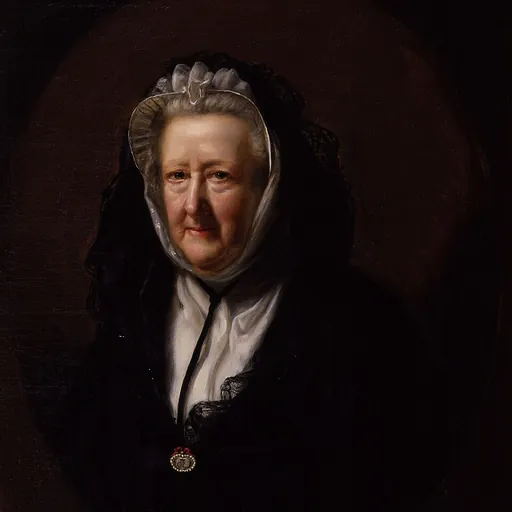
About Mary Delany
Lived 1700 – 1788 (aged 87). Mary Delany was a British botanical illustrator, painter, writer and botanist.
Mary Delany, earlier Mary Pendarves ( Granville; 14 May 1700 – 15 April 1788) was an English artist, letter-writer, and bluestocking, known for her "paper-mosaicks", botanic drawing, needlework and her lively correspondence.
Early life Mary Delany was born at Coulston, Wiltshire, the daughter of Colonel Bernard Granville by his marriage to Mary Westcombe, loyal Tory supporters of the Stuart Crown. She was a niece of George Granville, 1st Baron Lansdowne, her father's brother.
Mary had one older brother, Bernard (1699), known as Bunny; a younger brother Bevil, born between 1702 and 1706; and a sister, Anne (1707) who married John Dewes (D'Ewes).
When Mary was young, her parents moved the family to London, and she attended a school taught by a French refugee, Mademoiselle Puelle. Mary came into close contact with the Court when she was sent to live with her aunt, Lady Stanley, who was childless – the intention being that she would eventually become a maid of honour.
While living with Lady Stanley, Mary became learned in "English, French, history, music, needlework and dancing...". Mary's hopes to become a lady-in-waiting were dashed by Queen Anne's death in 1714, which led to a change in power, and a Hanoverian on the throne, supported by the Whigs. The Granvilles moved to a manor at Buckland in Gloucestershire, where they became isolated from English society. However, Mary was able to continue her education and her pursuit of paper cutting, which had developed at an early age.
Despite her lack of resources, widowhood provided new opportunities for Mrs Pendarves. Widows, unlike unmarried women, were able to move freely in society, and for the first time in her life, Mrs Pendarves was able to pursue her own interests without the oversight of any man. Perhaps because of her own unhappy marriage, she was not satisfied with the options available to women in the 18th century. She wrote: Why must women be driven to the necessity of marrying? a state that should always be a matter of choice! and if a young woman has not fortune sufficient to maintain her in the situation she has been bred to, what can she do, but marry?
After her first husband's death Mrs Pendarves spent time living with various relatives and friends. In the 1730s she leased a home in Upper Brook Street, from where she wrote some of her noted letters.
A wealthy friend, the Duchess of Portland, included Mary in her artistic and scientific "Hive" where she met Joseph Banks, the botanist, and she visited his home to see samples and drawings from his travels with Captain Cook. She bred plants, drew and portrayed with paper mosaics and needlework these exotic flora. and during their first year in the house, Patrick was made Dean of Down. Both husband and wife were interested in botany and gardening: After twenty-five years of marriage, most of it spent in Ireland, Dr Delany died in Bath, England, on 6 May 1768 at the age of 84, and Mrs Delany, now 68, found herself again a widow.
Later life
As a widow, Mary Delany spent even more of her time at Bulstrode, the home of her close friend, Margaret Bentinck, Dowager Duchess of Portland. The two shared an interest in botany, often going out to look for specific specimens. It was during her frequent stays at Bulstrode that Mary became acquainted with two well-known botanists of the time: Joseph Banks and Daniel Solander. This contact encouraged Mary's interest in botany and also developed the knowledge on which many of her flower paper-cuttings are based.
Mary Delany died on 15 April 1788. There is a memorial to her in St James's Church, Piccadilly.
Career as an artist
Mary Delany had always been an artist, but during her marriage to Dr Delany she had the time to hone her skills. She was also a gardener, and did needlework, drawing, and painting; but was best known for her paper-cutting:
"For these 'mosaicks' are coloured paper representing not only conspicuous details but also contrasting colours or shades of the same colour so that every effect of light is caught". She struck up a friendship with Letitia Bushe, a watercolourist and miniaturist, with whom she embarked on a number of artistic projects.
In 1771, a widow in her early 70s, Mary began working on decoupage, a fashion with ladies of the court. Her works were detailed and botanically accurate depictions of plants, using tissue paper and hand colouration. She created 985 of these works, calling them her "Paper Mosaiks ", from the age of 71 to 88, when her eyesight failed her.
"With the plant specimen set before her she cut minute particles of coloured paper to represent the petals, stamens, calyx, leaves, veins, stalk and other parts of the plant, and, using lighter and darker paper to form the shading, she stuck them on a black background. By placing one piece of paper upon another she sometimes built up several layers and in a complete picture there might be hundreds of pieces to form one plant. It is thought she first dissected each plant so that she might examine it carefully for accurate portrayal..."
Mary became well known, and donors began to send her flowers to cut. Her work can be seen in the Enlightenment Gallery at the British Museum. Upon her death, "The ten volumes of Mrs. Delany's Flora Delanica were inherited by Lady Llanover, the daughter of Georgina Mary Ann Port. Lady Llanover, who died in 1896 at the age of ninety-four, bequeathed these volumes to the British Museum..." they said of her paper-cutting, to have "...always desired that any curious or beautiful plants should be transmitted to Mrs Delany when in blossom."
By the 1780s, Mary had also become well acquainted with Georgiana Cavendish, Duchess of Devonshire, and Frances Burney (Madame D'Arblay) whom she frequently visited at her London home and at Windsor, and owed to her friendship her court appointment.
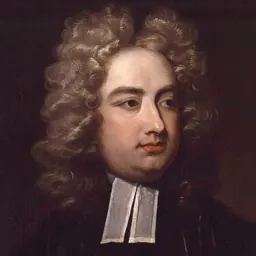
Mary had known many of the luminaries of her day, had corresponded with Jonathan Swift, Sir Joseph Banks, and Young, and left a detailed picture of polite English society of the 18th century in her six volumes of Autobiography and Letters (ed. Lady Llanover, 1861–1862). Burke calls her "a real fine lady, the model of an accomplished woman of former times".
Legacy
The Ulster Museum in Belfast holds an embroidered bedcover by Delany, one of the few complete pieces of embroidery made by her. Other pieces are described in letters, including pieces sewn with violets, auriculas, geraniums, poppies, Madonna lilies. Her own clothes were embroidered richly, including a ballgown probably designed for the birthday of Frederick, Prince of Wales, in 1751 with pinks, lily of the valley, winter jasmine, scent peas, love-in-a-mist, anemones, tulips, bluebells and forget-me-nots in accurate anatomical detail.
In 2022, the 'Mortimer Sackler' rose was renamed 'Mary Delany' by David Austin Roses in honour of the artist. The registration name of the rose is 'Ausorts'.
Gallery of Paper Mosaics
Don’t just read it —
keep it.
Full-length biographies made to live with: read them, listen on the way to work, watch them tonight.
- E-book
- Audio
- Video
Instant download · yours to keep · every purchase keeps this site free
Important facts
People in Mary Delany's life
Named in this biography and alive at the same time





Related people
Same field, nearest in time

Contemporaries
People whose lives overlapped Mary Delany's



Frequently asked questions
Who was Mary Delany?
English Bluestocking, artist, and letter-writer (1700-1788)
When was Mary Delany born?
Mary Delany was born on 14 May 1700 in Wiltshire.
When did Mary Delany die?
Mary Delany died on 15 April 1788 in Windsor.
What was Mary Delany's occupation?
Mary Delany was a botanical illustrator, painter, writer and botanist.
What nationality was Mary Delany?
Mary Delany was British.
Sources & further reading
Cite this page
APA: Biography.guide. (2026). Mary Delany. https://biography.guide/mary-delany/
MLA: "Mary Delany." Biography.guide, https://biography.guide/mary-delany/.
Chicago: "Mary Delany." Biography.guide. https://biography.guide/mary-delany/.
Data last updated: 2026-09-20 · Spot an error? Report a correction.
Page generated 2026-09-27 05:09 UTC