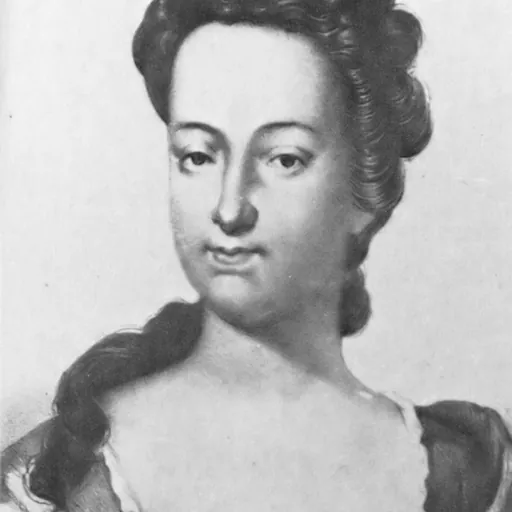
Elizabeth Blackwell
Scottish botanist, botanical illustrator and author
About Elizabeth Blackwell
Lived 1699 – 1758 (aged 58–59). Elizabeth Blackwell was a British botanical illustrator, botanist, scientific illustrator, writer, journalist and editor.
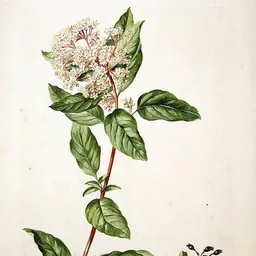
Elizabeth Blackwell (born 23 April 1699 in Aberdeen – 1758) was a botanical illustrator best known as the drawer and engraver of the plates for A Curious Herbal, published between 1737 and 1739. It illustrated medicinal plants in a reference work for the use of physicians and apothecaries.
Life
Elizabeth Simpson was the daughter of the painter Leonard Simpson. As a young woman, she was educated in art, music, and languages, and she would have received a substantial dowry from her father.
Simpson married Alexander Blackwell, as he was completing his education at Marischal College. Alexander continued his questionable decision-making in London. He became associated with a publishing firm and established his own printing house in 1730 despite not belonging to a guild or serving the required apprenticeship. Alexander was charged with flouting trade rules and heavily fined. These heavy fines and Alexander's lavish spending habits led to his subsequent stay in Highgate Prison for two years. Pages of written descriptions for each plant were added that included a physical description, growth habit, where and when the plant could be located, how each part could be used, and the other names for the plant provided by Blackwell’s husband.
The task of creating A Curious Herbal was immense and took a number of years to complete. A Curious Herbal, containing five hundred cuts of the most useful plants which are now used in the Practise of Physick, to which is added a short description of ye plants and their common uses in Physick was issued in weekly parts, each containing four plates and accompanying text over 125 weeks between 1737 and 1739. The first volume contained 250 plates and was published in 1737. The imprint read "London printed for Samuel Harding in St Martin’s Lane," and the new publication was announced in the Gentleman’s Magazine for July 1737. had been published and that "the whole 500 will be finished in eight months"; a dedication to Dr. John Johnstoun is dated 17 January 1739. The advertisement in The Country Journal closes with a warning against a spurious and base copy of the work sold by Samuel Harding. One such copy had been made by a group of printers and engravers who were prosecuted by Alexander for duplicating some of her plates. and her grave is at All Saints Church in Chelsea, London. Her name is one of four on a plaque in Chelsea Old Church commemorating Chelsea women distinguished by their learning and piety. She remained loyal to Alexander throughout, even sharing royalties with him from the sale of additional book rights.
A genus of plants named after her, Blackwellia, is of the class Dodecandria Pentagynia. There are six subspecies of Blackwellia: Blackwellia Panticulata, Blackwellia Glauca, Blackwellia Nipaulensis, Blackwellia Axillaris, Blackwellia Siralis, and Blackwellia Padifolia. These species are native to Réunion, Mauritius, Nepal, Madagascar, Peru, and China, respectively.
In the 1920s, playwright Constance Smedley wrote a play titled The Curious Herbal about Blackwell's work, though it has not been performed since the 1940s.
Reception
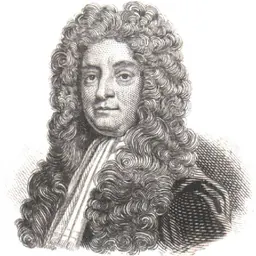
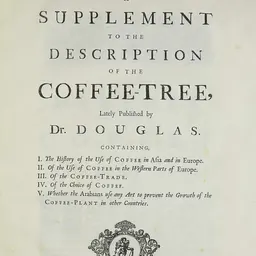
Blackwell presented a copy of her work to the Royal College of Physicians, who ‘so greatly approved of it that they not only made her a handsome present, but also gave her an ample testimonial, in writing, of their approbation of her work’. This present took the form of a commendation from Thomas Pellet, the President of the Royal College of Physicians, which appears in most copies of A Curious Herbal. The commendation is dated 1 July 1737 and features an engraving of Theophrastus and Dioscorides along with the coat of arms of the Royal College of Physicians. dismiss her contribution to botany as not particularly scientific, rather making an illustrated list of medicinal plants available to the medical profession and the more enlightened public of the time. During the preliminary stages of her work on A Curious Herbal, she submitted drawings to Sir Hans Sloane, president of the Royal Society in 1712, and Dr. Richard Mead, a notable physician, who encouraged her to pursue publication. She also gained the attention of Dr. James Douglas (1675 – 1742), the obstetrician, who considered her to be one of the hundred most famous women of history. The skill and diligence she displayed in engraving and hand-painting all the plates herself should also be remembered, as should her dedication to freeing her husband from debtor's prison." Preserved in the British Library's manuscript collections are several transactions made during 1737 and 1747 regarding the purchase of shares and a copyright deed to the herbal from the Blackwells by John Nourse.
Examples of Blackwell's work were included in ‘Print and Prejudice: Women Printmakers, 1700–1930’, an exhibition at the Victoria and Albert Museum in London, 2022 – 23. In 2023, Abbeville Press published the first modern edition of A Curious Herbal, featuring essays by Marta McDowell and Janet Stiles Tyson.
Publications A curious herbal: containing five hundred cuts, of the most useful plants, which are now used in the practice of physick engraved on folio copper plates, after drawings taken from the life / by Elizabeth Blackwell. To which is added a short description of the plants and their common uses in physick. (London, 1737 – 1739), her great herbal, which contained engravings drawn from specimens in the Chelsea Physic Garden Herbarium Blackwellianum emendatum et auctum, id est, Elisabethae Blackwell collectio stirpium :quae in pharmacopoliis ad medicum usum asseruantur, quarum descriptio et vires ex Anglico idiomate in Latinum conversae sistuntur figurae maximam partem ad naturale exemplar emendantur floris fructusque partium repraesentatione augentur et probatis botanicorum nominibus illustrentur. Cum praefatione Tit. Pl. D.D. Christophori Iacobi Trew; excudit figuras pinxit atque in aes incidit Nicolaus Fridericus Eisenbergerus ... By : Blackwell, Elizabeth, – Eisenberger, Nicolaus Friedrich, – Trew, Christoph Jacob, – Christiani de Launoy. – Io. Iosephi Fleischmanni. Publication : Norimbergae : Typis Io. Iosephi Fleischmanni, 1750 – 1773.online and download A Curious Herbal (2023) full-color facsimile edition, edited by Marta McDowell, published by Abbeville Press
Gallery
Don’t just read it —
keep it.
Full-length biographies made to live with: read them, listen on the way to work, watch them tonight.
- E-book
- Audio
- Video
Instant download · yours to keep · every purchase keeps this site free
Important facts
Family & relationships
People in Elizabeth Blackwell's life
Named in this biography and alive at the same time

Related people
Same field, nearest in time

Contemporaries
People whose lives overlapped Elizabeth Blackwell's



Frequently asked questions
Who was Elizabeth Blackwell?
Scottish botanist, botanical illustrator and author (1699-1758)
When was Elizabeth Blackwell born?
Elizabeth Blackwell was born on 23 April 1699 in City of London.
When did Elizabeth Blackwell die?
Elizabeth Blackwell died in 1758 in London.
What was Elizabeth Blackwell's occupation?
Elizabeth Blackwell was a botanical illustrator, botanist, scientific illustrator, writer, journalist and editor.
What nationality was Elizabeth Blackwell?
Elizabeth Blackwell was British.
Sources & further reading
· Wikipedia: Elizabeth Blackwell
· DBpedia: Elizabeth Blackwell (illustrator)
Cite this page
APA: Biography.guide. (2026). Elizabeth Blackwell. https://biography.guide/elizabeth-blackwell-botanical-illustrator/
MLA: "Elizabeth Blackwell." Biography.guide, https://biography.guide/elizabeth-blackwell-botanical-illustrator/.
Chicago: "Elizabeth Blackwell." Biography.guide. https://biography.guide/elizabeth-blackwell-botanical-illustrator/.
Data last updated: 2026-09-22 · Spot an error? Report a correction.
Portrait: Wikimedia Commons · author & licence
Page generated 2026-09-27 05:04 UTC