
About Hans Sloane
Lived 1660 – 1753 (aged 92). Hans Sloane was a British physician, botanist, ornithologist, zoologist, explorer and numismatist.
Society physician
Sloane started his own practice in 1689 at 3 Bloomsbury Place, London, One critic stated that he was merely interested in the collection of knick-knacks, and another called him the "foremost toyman of his time". Sir Isaac Newton described Sloane as "a villain and rascal" and "a very tricking fellow". Some believed that his true achievement was in making friends in high society and with important political figures, rather than in science. In 1716 Sloane was created a baronet, making him the first medical practitioner to receive a hereditary title. In 1719 he became president of the Royal College of Physicians, holding the office for sixteen years. In 1722 he was appointed physician-general to the army, and in 1727 first physician to George II.
He was elected president of Royal College of Physicians in 1719 and served in that role until 1735. He became secretary to the Royal Society in 1693, which led to the criticism of Sloane as a mere "virtuoso".
Aside from his service as Royal Physician, Sloane's true achievement during his time at the Royal Society was in acting as a conduit between the worlds of science, politics and high society.
Sloane's time in France at the beginning of his career later enabled him to fulfil the role of intermediary between British and French scientists, fostering the sharing of knowledge between the two countries at the height of the Age of Enlightenment. Notables from that period who visited Sloane to view his collection include the Swiss anatomist Albrecht von Haller, Voltaire, Benjamin Franklin and Carl Linnaeus. He had been introduced to the concept of inoculation by Lady Mary Wortley Montagu in the court of Queen Caroline.
The British Museum and Chelsea Physic Garden
Sloane's purchase of the manor of Chelsea, London, in 1712, provided the grounds for the Chelsea Physic Garden.
Over his lifetime, Sloane collected over 71,000 objects: books, manuscripts, drawings, coins and medals, plant specimens and others. His great stroke as a collector was to acquire in 1702 (by bequest, conditional on paying of certain debts) the cabinet of curiosities owned by William Courten, who had made collecting the business of his life.
When Sloane retired in 1741, his library and cabinet of curiosities, which he took with him from Bloomsbury to his house in Chelsea, had grown to be of unique value. He had acquired the extensive natural history collections of William Courten, Cardinal Filippo Antonio Gualterio, James Petiver, Nehemiah Grew, Leonard Plukenet, the Duchess of Beaufort, Adam Buddle, Paul Hermann, Franz Kiggelaer and Herman Boerhaave.
Death and legacy
In his final year, Sir Hans Sloane suffered from a disorder with some paralysis. —intentionally far less than the estimated value of the artefacts, contemporarily estimated at £50,000 or more according to some sources, and up to £80,000 or more by others. The bequest was accepted on those terms by an act passed the same year, and the collection, together with George II's royal library, and other objects. The Curators thought that only scholars and the upper class were allowed to see the collection, believing that learning was a privilege that only the upper class had.
A life-size statue of Sloane was erected in the town square of Killyleagh, the town in which he was born. The decision came as part of that year's wave of removals of monuments to those who had benefited from slavery. History Ireland contributor Tony Canavan, writing of the decision and observing the fact that the Sloane family had moved to Ireland from Scotland during the Plantation of Ulster (or, more correctly, during the Plantation of Antrim and Down), noted that "the fact that Sloane came from a Scots-Irish family who benefited from a different kind of plantation, following the expulsion of natives and the confiscation of their land, [which seemed] never to have been an issue".
Don’t just read it —
keep it.
Full-length biographies made to live with: read them, listen on the way to work, watch them tonight.
- E-book
- Audio
- Video
Instant download · yours to keep · every purchase keeps this site free
Important facts
People in Hans Sloane's life
Named in this biography and alive at the same time
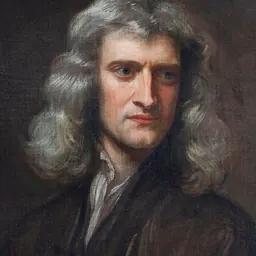
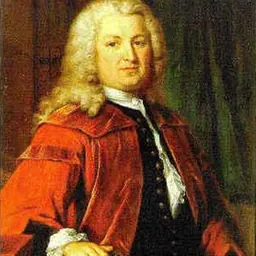
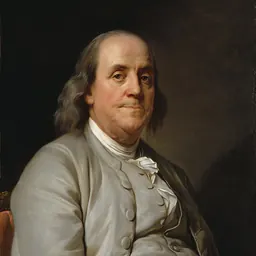

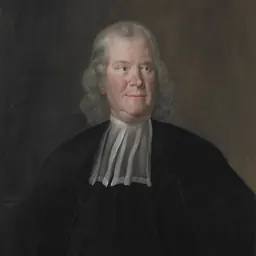
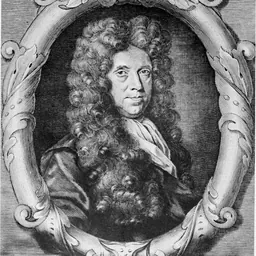


Related people
Same field, nearest in time

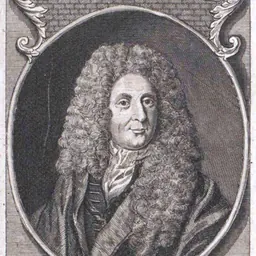

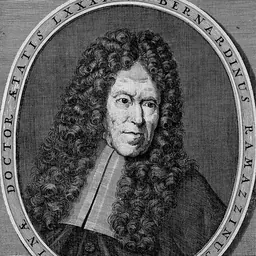
Contemporaries
People whose lives overlapped Hans Sloane's

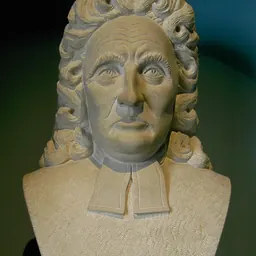


Frequently asked questions
Who was Hans Sloane?
Irish botanist, doctor, and collector (1660-1753)
When was Hans Sloane born?
Hans Sloane was born on 16 April 1660 in Killyleagh.
When did Hans Sloane die?
Hans Sloane died on 11 January 1753 in Chelsea.
What was Hans Sloane's occupation?
Hans Sloane was a physician, botanist, ornithologist, zoologist, explorer and numismatist.
What nationality was Hans Sloane?
Hans Sloane was British.
Sources & further reading
Cite this page
APA: Biography.guide. (2026). Hans Sloane. https://biography.guide/hans-sloane/
MLA: "Hans Sloane." Biography.guide, https://biography.guide/hans-sloane/.
Chicago: "Hans Sloane." Biography.guide. https://biography.guide/hans-sloane/.
Data last updated: 2026-09-25 · Spot an error? Report a correction.
Page generated 2026-09-27 05:10 UTC