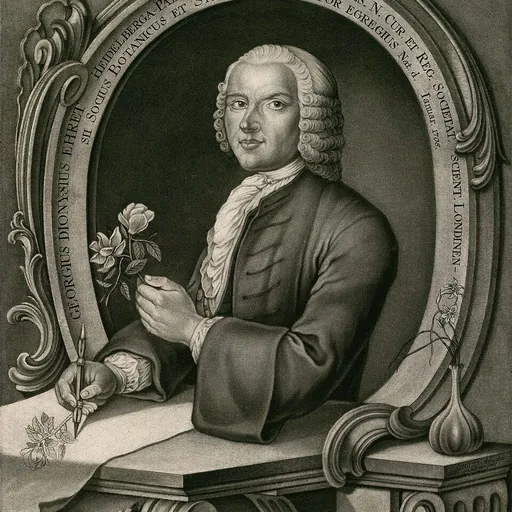
About Georg Dionysius Ehret
Lived 1708 – 1770 (aged 62). Georg Dionysius Ehret was a German botanical illustrator, painter, botanist, entomologist, scientific illustrator and visual artist, known for Botanical illustrator.
Georg Dionysius Ehret (30 January 1708 – 9 September 1770) was a German botanist and entomologist known for his botanical illustrations.
Life
Ehret was born in Germany to Ferdinand Christian Ehret, a gardener and competent draughtsman, and Anna Maria Ehret. Beginning his working life as a gardener's apprentice near Heidelberg, he became one of the most influential European botanical artists of all time. His first illustrations were in collaboration with Carl Linnaeus and George Clifford in 1735-1736. Clifford, a wealthy Dutch banker and governor of the Dutch East India Company was a keen botanist with a large herbarium. He had the income to attract the talents of botanists such as Linnaeus and artists like Ehret. Together at the Clifford estate, Hartecamp, which is located south of Haarlem in Heemstede near Bennebroek, they produced Hortus Cliffortianus in 1738, a masterpiece of early botanical literature.
As a result of exploitation by Johann Wilhelm Weinmann, Ehret finished only 500 plates of a 1,000 plate commission and moved to England, where he was promoted by Sir Hans Sloane, Dr Mead and the bluestocking Duchess of Portland. "While he did not slavishly imitate what he saw, neither did he allow his feeling for the color and design of flowers distract him from the fundamentals of plant structure," Wilfrid Blunt observed in The Art of Botanical Illustration. Ehret was in great demand. Engravings after his botanical paintings illustrated Mark Catesby's works on the flora and fauna of the New World. Engravings from his series Plantae et Papiliones Rariores, 1748-59, found their way onto Chelsea porcelain For Philip Miller he illustrated many of the more spectacular plants that were in cultivation in the Chelsea Physic Garden. Ehret was at the top of his profession in 1768 when the young botanist Joseph Banks returned from Labrador and Newfoundland with the botanical specimens that made his early reputation; it was to Ehret he turned for meticulous paintings on vellum.
Ehret's original art work may be found at the Natural History Museum in London, the Royal Botanic Gardens, Kew, The Royal Society, London, the Lindley Library at the Royal Horticultural Society, the Victoria and Albert Museum, at the University Library of Erlangen, the LuEsther T. Mertz Library of the New York Botanical Garden, and the Hunt Institute for Botanical Documentation in Pittsburgh, Pennsylvania.
The genus Ehretia was named in his honour. Works
Methodus plantarum sexualis (1736) Hortus nitidissimis (in 3 volumes, 1750-1786) The Natural History of Barbados,, Griffith Hughes, 1750. Plantae et papiliones rariores. This was published in parts from 1748 until 1759 in folio. The eighteen plates were engraved and hand-colored by Ehret himself. Most display a combination of one or more species of plants and of butterflies. Illustrations for Plantae selectae by Christoph Jakob Trew. Another copy of Plantae selectae at Missouri Botanical Gardens. Illustrations for "The Gardeners Dictionary" by Philip Miller, Seventh Edition, 1756-1759 (also reprinted in the Eighth, 1768), 16 plates Illustrations for Hortus Kewensis by William Aiton (in 3 volumes, 1789) Illustrations for Patrick Browne's spectacular The Civil and Natural History of Jamaica in three parts published in 1756.
Don’t just read it —
keep it.
Full-length biographies made to live with: read them, listen on the way to work, watch them tonight.
- E-book
- Audio
- Video
Instant download · yours to keep · every purchase keeps this site free
Important facts
People in Georg Dionysius Ehret's life
Named in this biography and alive at the same time




Related people
Same field, nearest in time
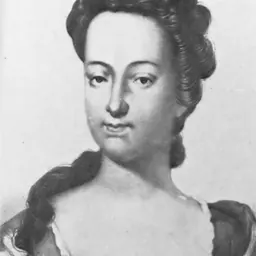
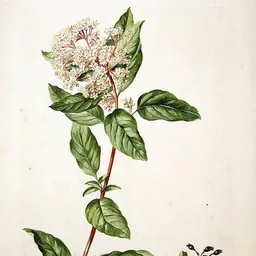

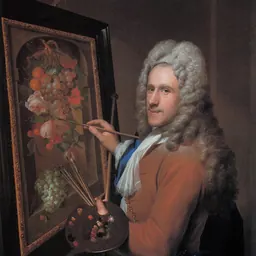

Contemporaries
People whose lives overlapped Georg Dionysius Ehret's

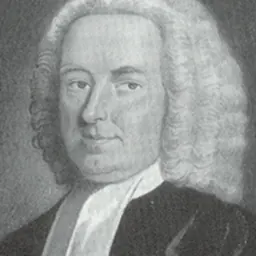

Frequently asked questions
Who was Georg Dionysius Ehret?
German scientist and illustrator (1708-1770)
When was Georg Dionysius Ehret born?
Georg Dionysius Ehret was born on 30 January 1708 in Heidelberg.
When did Georg Dionysius Ehret die?
Georg Dionysius Ehret died on 9 September 1770 in London.
What was Georg Dionysius Ehret's occupation?
Georg Dionysius Ehret was a botanical illustrator, painter, botanist, entomologist, scientific illustrator and visual artist.
What was Georg Dionysius Ehret known for?
Georg Dionysius Ehret was known for Botanical illustrator.
What nationality was Georg Dionysius Ehret?
Georg Dionysius Ehret was German.
Sources & further reading
· Wikipedia: Georg Dionysius Ehret
· DBpedia: Georg Dionysius Ehret
Cite this page
APA: Biography.guide. (2026). Georg Dionysius Ehret. https://biography.guide/georg-dionysius-ehret/
MLA: "Georg Dionysius Ehret." Biography.guide, https://biography.guide/georg-dionysius-ehret/.
Chicago: "Georg Dionysius Ehret." Biography.guide. https://biography.guide/georg-dionysius-ehret/.
Data last updated: 2026-09-23 · Spot an error? Report a correction.
Portrait: Wikimedia Commons · author & licence
Page generated 2026-09-27 05:07 UTC