
About Philip Miller
Lived 1691 – 1771 (aged 79–80). Philip Miller was a British botanist, horticulturist, gardener, non-fiction writer and scientific collector.
The Gardeners Dictionary: Containing the Methods of Cultivating and Improving the Kitchen, Fruit and Flower Garden. Philip Miller FRS (1691 – 18 December 1771) was an English botanist and gardener of Scottish descent. Miller was chief gardener at the Chelsea Physic Garden for nearly 50 years from 1722, and wrote the highly popular The Gardeners Dictionary.
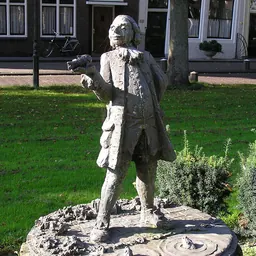
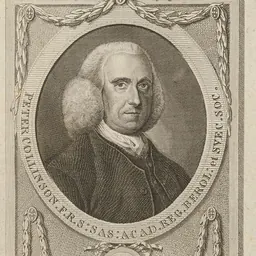
Life Born in Deptford or Greenwich, Miller was chief gardener at the Chelsea Physic Garden from 1722 until he was pressured to retire shortly before his death. According to the botanist Peter Collinson, who visited the physic garden in July 1764 and recorded his observation in his commonplace books, Miller "has raised the reputation of the Chelsea Garden so much that it excels all the gardens of Europe for its amazing variety of plants of all orders and classes and from all climates..." He wrote The Gardener's and Florists Dictionary or a Complete System of Horticulture (1724) and The Gardener's Dictionary containing the Methods of Cultivating and Improving the Kitchen Fruit and Flower Garden, which first appeared in 1731 in an impressive folio and passed through eight expanding editions in his lifetime and was translated into Dutch by Job Baster.
Botanical work Miller corresponded with other botanists, and obtained plants from all over the world, many of which he cultivated for the first time in England and is credited as their introducer. His knowledge of living plants, for which he was elected a Fellow of the Royal Society, was unsurpassed in breadth in his lifetime. He trained William Aiton, who later became head gardener at Kew, and William Forsyth, after whom Forsythia was named. The Duke of Bedford contracted him to supervise the pruning of fruit trees at Woburn Abbey and the care of his prized collection of American trees, especially evergreens, which were grown from seeds that, on Miller's suggestion, had been sent in barrels from Pennsylvania, where they had been collected by John Bartram. Through a consortium of sixty subscribers, 1733–66, the contents of Bartram's boxes introduced such American trees as Abies balsamea and Pinus rigida into English gardens.
Miller was reluctant to use the new binomial nomenclature of Carl Linnaeus, preferring the classifications of Joseph Pitton de Tournefort and John Ray at first. Linnaeus, nevertheless, applauded Miller's Gardeners Dictionary, The conservative Scot actually retained a number of pre-Linnaean binomial signifiers discarded by Linnaeus but which have been retained by modern botanists. He only fully changed to the Linnaean system in the edition of The Gardeners Dictionary of 1768, though he had already described some genera, such as Larix and Vanilla, validly under the Linnaean system earlier, in the fourth edition (1754).
Miller sent the first long-strand cotton seeds, which he had developed, to the new British American colony of Georgia in 1733. They were first planted on Sea Island, off the coast of Georgia, and hence derived the name of the finest cotton, Sea Island Cotton.
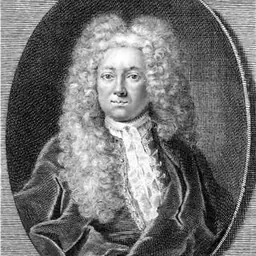
The presumed portrait, engraved by C.J. Maillet and affixed to the posthumous French edition of Miller's Gardeners Dictionary, 1787, shows the wrong Miller, John Frederick Miller, son of the London-based Nuremberg artist Johann Sebastian Müller. No authentic portrait is known.
Miller's two sons worked under him; one, Charles, became the first head of the Cambridge University Botanic Garden.
Don’t just read it —
keep it.
Full-length biographies made to live with: read them, listen on the way to work, watch them tonight.
- E-book
- Audio
- Video
Instant download · yours to keep · every purchase keeps this site free
Important facts
People in Philip Miller's life
Named in this biography and alive at the same time



Related people
Same field, nearest in time


Contemporaries
People whose lives overlapped Philip Miller's


Frequently asked questions
Who was Philip Miller?
British botanist (1691-1771)
When was Philip Miller born?
Philip Miller was born in 1691 in Greenwich.
When did Philip Miller die?
Philip Miller died on 18 December 1771 in Chelsea.
What was Philip Miller's occupation?
Philip Miller was a botanist, horticulturist, gardener, non-fiction writer and scientific collector.
What nationality was Philip Miller?
Philip Miller was British.
Sources & further reading
Cite this page
APA: Biography.guide. (2026). Philip Miller. https://biography.guide/philip-miller/
MLA: "Philip Miller." Biography.guide, https://biography.guide/philip-miller/.
Chicago: "Philip Miller." Biography.guide. https://biography.guide/philip-miller/.
Data last updated: 2026-09-20 · Spot an error? Report a correction.
Page generated 2026-09-27 05:20 UTC