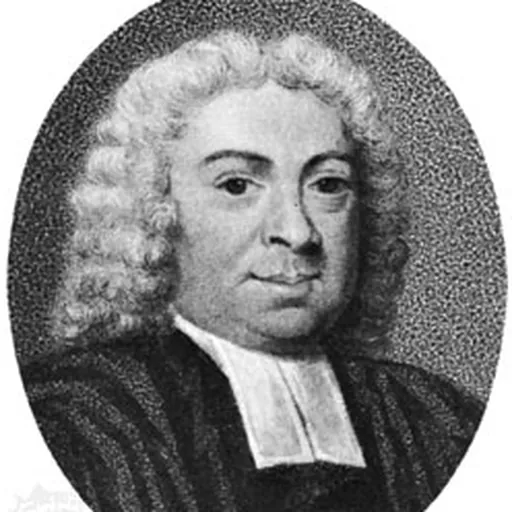
About Johann Jacob Dillenius
Lived 1684 – 1747 (aged 62). Johann Jacob Dillenius was a British and German botanist, pteridologist, bryologist, university teacher, mycologist and botanical collector.
Johann Jacob Dillen Dillenius (1684 – 2 April 1747) was a German botanist. He is known for his Hortus Elthamensis ("Eltham Garden") on the rare plants around Eltham, London, and for his Historia muscorum ("History of Mosses"), a natural history of lower plants including mosses, liverworts, hornworts, lycopods, algae, lichens and fungi.
Biography
Dillenius was born at Darmstadt and was educated at the University of Giessen, earlier the family name had been changed from Dillen to Dillenius. In 1721, at the instance of the botanist William Sherard (1659–1728), he moved to England. In 1734 Dillenius was appointed Sherardian professor of botany at Oxford, in accordance with the will of Sherard, who at his death in 1728 left the university £3000 for the endowment of the chair, as well as his library and herbarium, all on the condition that Dillenius should be appointed the first professor.
Dillenius died at Oxford, of apoplexy. His manuscripts, books and collections of dried plants, with many drawings, were bought by his successor at Oxford, Dr. Humphry Sibthorp (1713–1797), and ultimately passed into the possession of Oxford University. For an account of his collections preserved at Oxford, see The Dillenian Herbaria, by G. Claridge Druce (Oxford, 1907). It remained a standard reference for British botanists until the appearance of Carl Linnaeus's Species Plantarum in 1761.
Hortus Elthamensis
In 1732 he published Hortus Elthamensis, a substantial catalogue in two volumes of some 400 plants growing at Eltham, London, in the collection of Sherard's younger brother, James (1666—1738), who, after making a fortune as an apothecary, devoted himself to gardening and music. For this work Dillenius himself drew and engraved 324 plates, containing 417 figures of the plants. The book was described by Linnaeus, who spent a month with him at Oxford in 1736, and afterwards dedicated his Critica Botanica to him, as opus botanicum quo absolutius mundus non vidit, "a botanical work of which the world has not seen one more authoritative". Linnaeus later named a genus of tropical tree Dillenia in his honour. He acknowledged the help of George Charles Deering. They had met at John Martyn's club for botanists, and had studied fungi together.
Honours
In 1753, Carl Linnaeus in his Species Plantarum published Dillenia, a genus of flowering plants in the family Dilleniaceae, native to tropical and subtropical regions of southern Asia, Australasia, and the Indian Ocean islands, both genus and family named in Dillenius's honour.
In 1997, the Spanish botanist Gerardo Antonio Aymard Corredor published Neodillenia, a genus of flowering plants from South America belonging to the family Dilleniaceae, named in Dillenius's honour.
Selected publications
also on Gallica
Facsimile edition 1973 , Ray Society, London. With introduction by William T. Stearn.
Don’t just read it —
keep it.
Full-length biographies made to live with: read them, listen on the way to work, watch them tonight.
- E-book
- Audio
- Video
Instant download · yours to keep · every purchase keeps this site free
Important facts
People in Johann Jacob Dillenius's life
Named in this biography and alive at the same time





Related people
Same field, nearest in time

Contemporaries
People whose lives overlapped Johann Jacob Dillenius's

Frequently asked questions
Who was Johann Jacob Dillenius?
German botanist (1684-1747)
When was Johann Jacob Dillenius born?
Johann Jacob Dillenius was born on 12 December 1684 in Darmstadt.
When did Johann Jacob Dillenius die?
Johann Jacob Dillenius died on 2 April 1747 in Oxford.
What was Johann Jacob Dillenius's occupation?
Johann Jacob Dillenius was a botanist, pteridologist, bryologist, university teacher, mycologist and botanical collector.
What nationality was Johann Jacob Dillenius?
Johann Jacob Dillenius was British and German.
Sources & further reading
· Wikipedia: Johann Jacob Dillenius
· DBpedia: Johann Jacob Dillenius
Cite this page
APA: Biography.guide. (2026). Johann Jacob Dillenius. https://biography.guide/johann-jacob-dillenius/
MLA: "Johann Jacob Dillenius." Biography.guide, https://biography.guide/johann-jacob-dillenius/.
Chicago: "Johann Jacob Dillenius." Biography.guide. https://biography.guide/johann-jacob-dillenius/.
Data last updated: 2026-09-20 · Spot an error? Report a correction.
Page generated 2026-09-27 05:10 UTC