
About George Granville
Lived 1666 – 1735 (aged 68). George Granville was a poet, playwright, politician and writer.
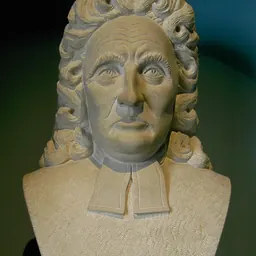
George Granville, 1st Baron Lansdowne PC (9 March 1666 – 29 January 1735), of Stowe, Cornwall, was an English Tory politician who sat in the English and British House of Commons from 1702 until 1712, when he was raised to the peerage as Baron Lansdown and sat in the House of Lords. He was Secretary at War during the Harley ministry from 1710 to 1712, but became a prominent Jacobite after 1714. He was also a noted poet and made a name for himself with verses composed on the visit of Mary of Modena, then Duchess of York, while he was at Cambridge in 1677. He was also a playwright, following in the style of John Dryden.
Origins Granville was the son of Bernard Granville, the fourth son of Sir Bevil Grenville (1596–1643) of Bideford in Devon and Stowe in the parish of Kilkhampton in Cornwall, a heroic Royalist commander in the Civil War. (The family changed the spelling of its name in 1661 from "Grenville" to "Granville", following the grant of the titles Baron Granville and Earl of Bath). His uncle was John Granville, 1st Earl of Bath (1628–1701) whose half-first-cousin was George Monck, 1st Duke of Albemarle, who both played leading roles in the restoration of the monarchy to King Charles II in 1660. He was heir male of William Granville, 3rd Earl of Bath (1692–1711), the 19-year-old son of his first cousin Charles Granville, 2nd Earl of Bath (1661–1701), lord of the manors of Bideford in Devon and of Stowe, Kilkhampton, Cornwall. These connections guaranteed that Granville began life as a staunch Tory, which would develop into an adherence to Jacobitism later in his life.
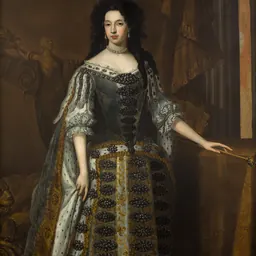
Career Granville was sent to France at the age of ten with his tutor, William Ellis, who was a proponent of passive resistance and later a servant of James II at Saint-Germain. He entered Trinity College, Cambridge in 1677. Among his productions while there were poems welcoming Mary of Modena when she visited the university. In 1682, he went to Paris with his brother Sir Bevill Granville, where they studied fencing, riding, dancing, mathematics and military science. He stayed in France until 1687, accumulating a £500 debt. He then lived in England at his mother's house at Marr, near Doncaster. His early interests were literary and by the mid-1690s he had befriended John Dryden and begun to write plays.
After the fall of the Godolphin government, Granville became MP for Cornwall at the 1710 British general election, and on 28 September 1710 he was made Secretary at War. In this capacity, he oversaw the passage of important bills on munitions and recruitment. However, his experience in the Tory government was marked by family and legal strife. He was the heir male to the senior line of the Granville family following the death without progeny in 1711 of his cousin William Granville, 3rd Earl of Bath. He was not in succession to the earldom and was in recognition raised to the peerage on 1 January 1712 as Baron Lansdown of Bideford in the Peerage of Great Britain and vacated his seat in the House of Commons. He was one of Harley's Dozen created at once to change the political balance in the Whig-dominated Lords. He expended time and money in an ultimately futile effort to secure the title of Earl of Bath. Despite some success, his tenure in the War Office was marred by accusations of corruption and expensive contested elections. He was made a Privy Counsellor in 1712. In 1714 Queen Anne was succeeded by the Hanoverian King George I, who favoured the Whigs. Almost all the Tories who held office under Anne were dismissed, including Lord Lansdown. Embittered, he began a secret correspondence with the Jacobite Old Pretender "James III". On 6 October 1721 James, who refused to recognise his peerage "Baron Lansdown" bestowed by Queen Anne, created him "Lord of Lansdown"," Viscount [ ]" and "Earl of Bath" in the Jacobite Peerage of England, with remainder to his heirs male. On 3 November 1721 James created him "Duke of Albemarle", "Marquis Monck and Fitzhemmon", "Earl of Bath", "Viscount Bevel", and "Baron Lansdown of Bideford" in the Jacobite Peerage of England, which supposed titles had no legal validity in the Kingdom of Great Britain. One of these titles referred to his family's supposed descent (officially confirmed to the 1st Earl of Bath by warrant of King Charles II in 1661 ) from Richard I de Grenville (d.post 1142) of Neath Castle, one of the Twelve Knights of Glamorgan and a brother and follower of Robert FitzHamon the Norman conqueror of Glamorgan. The titles Monck and Albemarle referred to the fact that the 1st Earl of Bath had been granted reversion of his cousin Monck's Dukedom of Albemarle, should the Duke have died without male progeny.
Works George Granville Lansdowne, Baron (1732). A letter to the author of Reflexions historical and political : Occasioned by a treatise In Vindication of General Monk, and Sir Richard Granville, &c. By the Right Honourable George Granville, Lord Lansdowne. London : Printed for J. Tonson in the Strand; And L. Gilliver in Fleetstreet, MDCCXXXII. George Granville Lansdowne, Baron (1779-1780).The poetical works : of the Right Hon. Geo. Granville, Lord Landsdowne. With the life of the author.Edinburg : At the Apollo Press, by the Martins. George Granville Lansdowne, Baron. Select poems of George Granville, Lord Lansdowne. With a life of the author.Works of the British poets ... v. 17, p. -203 George Granville Lansdowne, Baron (1736). The genuine works in verse and prose, of the Right Honourable George Granville, Lord Lansdowne.London : Printed for J. and R. Tonson, at Shakespear's Head in the Strand, and L. Gilliver, J. Clarke, at Homer's Head in Fleetstreet, MDCCXXXVI George Granville Lansdowne, Baron (1807).The poetical works of George Granville, Lord Landsdowne [sic] : with the life of the author. Printed for Cadell and Davies ... and Samuel Bagster. George Granville Lansdowne, Baron (1785).Ode to Lansdown-hill, with notes, mostly relative to the Granville family : to which are added, two letters of advice from George lord Lansdown, anno MDCCXI, to William Henry earl of Bath.London : Printed by J. Nichols, for W. Randall, Pall-Mall George Granville Lansdowne, Baron (1732). A letter to the author of Reflexions historical and political, occasioned by a treatise in vindication of General Monk and Sir Richard Granville, &c.London : Printed for J. Tonson ..., and L. Gilliver. George Granville Lansdowne, Baron (1736).The genuine works in verse and prose.London : Tonson.
Don’t just read it —
keep it.
Full-length biographies made to live with: read them, listen on the way to work, watch them tonight.
- E-book
- Audio
- Video
Instant download · yours to keep · every purchase keeps this site free
Important facts
People in George Granville's life
Named in this biography and alive at the same time



Related people
Same field, nearest in time



Contemporaries
People whose lives overlapped George Granville's



Frequently asked questions
Who was George Granville?
1st Baron Lansdowne
When was George Granville born?
George Granville was born on 9 March 1666 in London.
When did George Granville die?
George Granville died on 29 January 1735 in Hanover Square.
What was George Granville's occupation?
George Granville was a poet, playwright, politician and writer.
Sources & further reading
· DBpedia: George Granville, 1st Baron Lansdowne
Cite this page
APA: Biography.guide. (2026). George Granville. https://biography.guide/george-granville/
MLA: "George Granville." Biography.guide, https://biography.guide/george-granville/.
Chicago: "George Granville." Biography.guide. https://biography.guide/george-granville/.
Data last updated: 2026-09-20 · Spot an error? Report a correction.
Page generated 2026-09-27 05:22 UTC