
About Mark Raymond Harrington
Lived 1882 – 1971 (aged 88). Mark Raymond Harrington was an American anthropologist and archaeologist.
Mark Raymond Harrington (July 6, 1882 – June 30, 1971) was curator of archaeology at the Southwest Museum from 1928 to 1964 and discoverer of ancient Pueblo structures near Overton, Nevada, and Little Lake, California.
Early life Harrington knew early the rigors and fascinations of academic life. The son of Rose Martha Smith Harrington and Mark Walrod Harrington, a professor of astronomy at the University of Michigan who also held appointments in botany, zoology, and geology, he spent his childhood roaming the area around Ann Arbor, Michigan, his hometown, learning tribal languages from Indian friends and, when his family moved to Mount Vernon, New York, excavating and collecting local artifacts, thus feeding an early and lifelong interest in Native American culture.
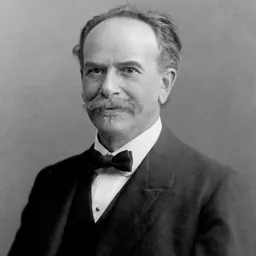
Education and archaeological career When his father's poor health and mental illness forced him to drop out of school, Harrington took some of his finds to Frederic Ward Putnam, then the curator in anthropology at the American Museum of Natural History in New York City. Putnam hired Harrington as an apprentice field archaeologist, a post that eventually allowed him to attend Columbia University, where he studied under the celebrated anthropologist Franz Boas. In 1904, Harrington married Alma V. Cocks. He earned a bachelor of science degree in 1907 and a Master of Arts in anthropology in 1908. That same year, he went to work for George Gustav Heye, the collector of Native American artifacts who later established the Museum of the American Indian in New York City. Harrington spent three years collecting artifacts and documenting tribes in the East and Midwest for Heye. He was assistant curator at the University of Pennsylvania Museum from 1911 to 1915.
In 1912, Harrington met Mabel Dodge Luhan and introduced her and a group of friends to peyote during an impromptu "ceremony" at her apartment in Greenwich Village. Among the participants were anarchist Hutchins Hapgood and his wife, Harrington's cousin, author Neith Boyce Hapgood. This incident became legendary in counterculture circles.
In 1915, Harrington found Patana Cave and native Taíno villagers on eastern Cuba while conducting fieldwork. Later in the 1950s, '60s, and '70s, he brought anthropologists to record the skeletal structure, blood type, and other physical attributes of the villagers.
In 1917, Harrington married Anna Alexander Johns, with whom he had a son, Johns Heye Harrington, born September 5, 1918, and given Anna's maiden name with his middle name recognizing George Gustav Heye. Harrington spent the next 13 years working for Heye as an archaeologist, ethnologist, field collector, and curator in Arkansas, Tennessee, Missouri, Oklahoma, Nevada, Texas, Cuba, and Ecuador.
Beginning in 1925, Harrington made some of his most significant discoveries, ancient dwellings of Pueblo Indians and their precursors, known as “the Basketmakers,” in Nevada. One find was a set of 46 structures, the largest of which contained 100 rooms. Harrington estimated the earliest occupiers to have been there around 1500 BC. More recent studies have determined the artifacts from the site to be much more recent, from between 500 BC to 300 BC. Some of the stone and adobe dwellings appeared to have been made by Pueblo Indians, whose antiquity he also overestimated. Later study showed them to be from 700 to 1150 AD. Excavators also found dung along with other parts of the skeleton. Harrington came to the controversial conclusion that humans and the ground sloth had existed at the same time and dated them to 8500 BC. Later studies showed he was in the correct range for the animal bones, but badly mistaken about the human artifacts, which were dated to 900-400 BC. His dating for another site at Tule Springs, near Las Vegas, has equally been called into question. Harrington found a spear point in an apparent fire pit alongside the bones of several ancient animals, which led him to assert in a published article that they were contemporaries and that the site was between 10,000 and 25,000 years old. More recent scrutiny has put his dating in doubt, however.
In 1947, Harrington learned from a friend of an ancient site located about 160 miles northeast of Los Angeles that contained artifacts attributed to the Pinto Culture, believed to have existed in the area as early as 3000 BC. Harrington excavated the location—dubbed the Stahl site for the composer Willy Stahl, its discoverer—for at least the next two years. During this time, on September 20, 1948, Edna died. He married a third time, to author Marie Toma Walsh, on April 23, 1949. Harrington published his report on the Stahl site in 1957.
Harrington retired from the Southwest Museum in 1964. He died in 1971 and is buried at the San Fernando Mission Cemetery in Mission Hills.
Publications Certain Caddo Sites in Arkansas. Indian Notes and Monographs. New York: Museum of the American Indian, Heye Foundation, 1920* “The Ozark Bluff-Dwellers.” American Anthropologist 26 (January–March 1924):1–21. Religion and ceremonies of the Lenape. New York: Museum of the American Indian, Heye Foundation, 1921. "Lovelock Cave." University of California Publication in American Archaeology and Ethnology (1929) : 25(1); Loud, Llewellyn, and M.R. Harrington The Ozark Bluff-Dwellers. Indian Notes and Monographs 12. New York: Museum of the American Indian, Heye Foundation, 1960. “Reminiscences of an Archeologist.” The Masterkey 36, no. 2 (1962):138–142. Dickon among the Lenape Indians. Bell, 1938. Abridged as a Puffin Story Book: Dickon Among the Indians, 1949. The Iroquois Trail: Dickon among the Onondagas and Senecas.
Don’t just read it —
keep it.
Full-length biographies made to live with: read them, listen on the way to work, watch them tonight.
- E-book
- Audio
- Video
Instant download · yours to keep · every purchase keeps this site free
Important facts
People in Mark Raymond Harrington's life
Named in this biography and alive at the same time



Related people
Same field, nearest in time

Contemporaries
People whose lives overlapped Mark Raymond Harrington's




Frequently asked questions
Who was Mark Raymond Harrington?
American archaeologist
When was Mark Raymond Harrington born?
Mark Raymond Harrington was born on 6 July 1882 in Ann Arbor.
When did Mark Raymond Harrington die?
Mark Raymond Harrington died on 30 June 1971 in San Fernando.
What was Mark Raymond Harrington's occupation?
Mark Raymond Harrington was an anthropologist and archaeologist.
What nationality was Mark Raymond Harrington?
Mark Raymond Harrington was American.
Sources & further reading
· Wikipedia: Mark Raymond Harrington
· DBpedia: Mark Raymond Harrington
Cite this page
APA: Biography.guide. (2026). Mark Raymond Harrington. https://biography.guide/mark-raymond-harrington/
MLA: "Mark Raymond Harrington." Biography.guide, https://biography.guide/mark-raymond-harrington/.
Chicago: "Mark Raymond Harrington." Biography.guide. https://biography.guide/mark-raymond-harrington/.
Data last updated: 2026-09-20 · Spot an error? Report a correction.
Page generated 2026-09-27 05:28 UTC