
Mark Walrod Harrington
American astronomer and meteorologist
About Mark Walrod Harrington
Lived 1848 – 1926 (aged 78). Mark Walrod Harrington was an American astronomer, meteorologist and botanist.
Mark Walrod Harrington (August 18, 1848 – September 10, 1926) was an American scientist who studied and published works in multiple disciplines, including botany, astronomy, meteorology, and geology. He was the first chief of the United States Weather Bureau, and later served as the 11th president of the University of Washington. Considered a prominent scientist in the late 19th century, he knew a half-dozen languages. His academic achievements were overshadowed, however, by his disappearance in 1899, when he left home one day and was not heard from for many years. His wife and son located him in 1908 at a psychiatric hospital in New Jersey where he had been admitted as patient John Doe No. 8.
Biography Born in Sycamore, Illinois, Harrington was the son of James Harrington and Charlotte Walrod Harrington. In 1874, he married Rose Martha Smith, with whom he had two sons, the first of whom died in 1876. Their second son, Mark Raymond Harrington, was born in 1882 and became a well-known archaeologist.
From 1879 to 1891, Harrington was professor of astronomy and director of the Detroit Observatory of the University of Michigan in Ann Arbor. During this time, he published an astronomical observation recorded by Johan Ludvig Emil Dreyer as NGC 7040 in the New General Catalogue. He founded The American Meteorological Journal in 1884, of which he published the first seven volumes.
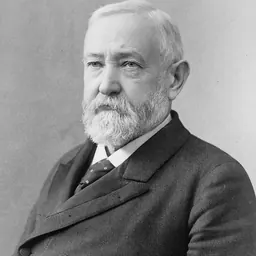
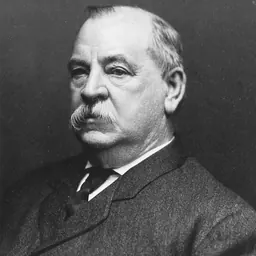
In 1891, Harrington was appointed by President Benjamin Harrison as the first chief of the United States Weather Bureau, after it became a civilian agency under the United States Department of Agriculture. He served in this role until 1895, when he was ousted by Secretary of Agriculture J. Sterling Morton, who convinced newly inaugurated President Grover Cleveland to let him fire Harrington.
In 1895, he was elected president of the University of Washington, succeeding Thomas Milton Gatch. He remained in this office until 1897.
Harrington left his home one evening in 1899 and disappeared for about 10 years, with his wife and son having no idea of his whereabouts. Then, in 1908, his son came across a newspaper article about a mysterious man who was admitted to the State Asylum for the Insane at Morristown, in Morris Plains, New Jersey. This man, known as John Doe No. 8, turned out to be the elder Harrington. He never left the institution and died there on September 10, 1926.
Don’t just read it —
keep it.
Full-length biographies made to live with: read them, listen on the way to work, watch them tonight.
- E-book
- Audio
- Video
Instant download · yours to keep · every purchase keeps this site free
Important facts
People in Mark Walrod Harrington's life
Named in this biography and alive at the same time


Related people
Same field, nearest in time


Contemporaries
People whose lives overlapped Mark Walrod Harrington's




Frequently asked questions
Who was Mark Walrod Harrington?
American astronomer and meteorologist
When was Mark Walrod Harrington born?
Mark Walrod Harrington was born on 18 August 1848 in Sycamore.
When did Mark Walrod Harrington die?
Mark Walrod Harrington died on 10 September 1926 in Morris Plains.
What was Mark Walrod Harrington's occupation?
Mark Walrod Harrington was an astronomer, meteorologist and botanist.
What nationality was Mark Walrod Harrington?
Mark Walrod Harrington was American.
Sources & further reading
· Wikipedia: Mark Walrod Harrington
· DBpedia: Mark Walrod Harrington
Cite this page
APA: Biography.guide. (2026). Mark Walrod Harrington. https://biography.guide/mark-walrod-harrington/
MLA: "Mark Walrod Harrington." Biography.guide, https://biography.guide/mark-walrod-harrington/.
Chicago: "Mark Walrod Harrington." Biography.guide. https://biography.guide/mark-walrod-harrington/.
Data last updated: 2026-09-20 · Spot an error? Report a correction.
Page generated 2026-09-27 05:33 UTC