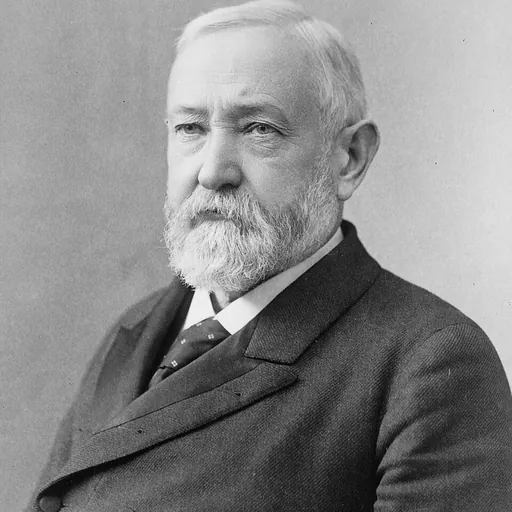
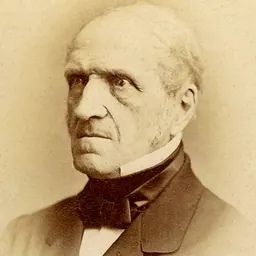
Benjamin Harrison
President of the United States, 1889-1893
About Benjamin Harrison
Lived 1833 – 1901 (aged 67). Benjamin Harrison was an American politician, military officer, lawyer, statesperson, writer and jurist.
Benjamin Harrison (August 20, 1833 – March 13, 1901) was the 23rd president of the United States, serving from 1889 to 1893. He was a member of the Harrison family of Virginia—a grandson of the ninth president, William Henry Harrison, and a great-grandson of Benjamin Harrison V, a Founding Father. A Union army veteran and a Republican, he defeated Democratic Party incumbent Grover Cleveland to win the presidency in the 1888 United States presidential election by winning the Electoral College while losing the popular vote. He was defeated by Cleveland in the 1892 United States presidential election, becoming the first president to be succeeded in office by his predecessor.
Harrison was born on a farm by the Ohio River and graduated from Miami University in Oxford, Ohio. After moving to Indianapolis, he established himself as a prominent local attorney, Presbyterian church leader, and politician. During the American Civil War, he served in the Union Army as a colonel, and was confirmed by the U.S. Senate as a brevet brigadier general of volunteers in 1865. Harrison unsuccessfully ran for governor of Indiana in 1876. In 1881, the Republican-controlled Indiana General Assembly elected Harrison to a six-year term in the Senate, where he served from 1881 to 1887.
Hallmarks of Harrison's administration were unprecedented economic legislation, including the McKinley Tariff, which imposed historic protective trade rates, and the Sherman Antitrust Act. Harrison also facilitated the creation of the national forest reserves through an amendment to the Land Revision Act of 1891. During his administration six western states were admitted to the Union. In addition, Harrison substantially strengthened and modernized the U.S. Navy and conducted an active foreign policy. His proposals to secure federal education funding as well as voting rights enforcement for African Americans were unsuccessful.
Due in large part to surplus revenues from the tariffs, federal spending reached $1 billion for the first time during his term. The spending issue in part led to the Republicans' defeat in the 1890 midterm elections. Cleveland defeated Harrison for reelection in 1892, due to the growing unpopularity of high tariffs and high federal spending. Harrison returned to private life and his law practice in Indianapolis. In 1899, he represented Venezuela in its British Guiana boundary dispute with the United Kingdom. Harrison traveled to the court in Paris as part of the case and after a brief stay returned to Indianapolis. He died at his home in Indianapolis in 1901 of complications from influenza.
Early life and education Harrison was born on August 20, 1833, in North Bend, Ohio, the second of Elizabeth Ramsey (Irwin) and John Scott Harrison's ten children. His ancestors included immigrant Benjamin Harrison, who arrived in Jamestown, Virginia, c. 1630 from England. Harrison was of entirely English ancestry, all of his ancestors having emigrated to America during the early colonial period. thumb Harrison Harrison was a grandson of U.S. president William Henry Harrison and a great-grandson of Benjamin Harrison V, a Virginia planter who signed the Declaration of Independence and succeeded Thomas Nelson Jr. as governor of Virginia.
Harrison was seven years old when his grandfather was elected U.S. president, but he did not attend the inauguration. His family was distinguished, but his parents were not wealthy. John Scott Harrison, a two-term U.S. congressman from Ohio, spent much of his farm income on his children's education. Despite the family's modest resources, Harrison's boyhood was enjoyable, much of it spent outdoors fishing or hunting.
Harrison's early schooling took place in a log cabin near his home, but his parents later arranged for a tutor to help him with college preparatory studies. Fourteen-year-old Benjamin and his older brother, Irwin, enrolled in Farmer's College near Cincinnati, Ohio, in 1847. He attended the college for two years and while there met his future wife, Caroline "Carrie" Lavinia Scott. She was a daughter of John Witherspoon Scott, who was the school's science professor and also a Presbyterian minister.
Harrison transferred to Miami University in Oxford, Ohio, in 1850, and graduated in 1852. He joined the Phi Delta Theta fraternity, which he used as a network for much of his life. He was also a member of Delta Chi, a law fraternity that permitted dual membership. the same year he sold property he had inherited after the death of an aunt for $800 , and used the funds to move with Caroline to Indianapolis, Indiana. Harrison began practicing law in the office of John H. Ray in 1854 and became a crier for the federal court in Indianapolis, for which he was paid $2.50 per day. He also served as a Commissioner for the U.S. Court of Claims. Harrison became a founding member and first president of both the University Club, a private gentlemen's club in Indianapolis, and the Phi Delta Theta Alumni Club. Harrison and his wife became members and assumed leadership positions at Indianapolis's First Presbyterian Church.
Having grown up in a Whig household, Harrison initially favored that party's politics, and joined the Republican Party shortly after its formation in 1856 and campaigned on behalf of Republican presidential candidate John C. Frémont. In 1857 Harrison was elected Indianapolis city attorney, a position that paid an annual salary of $400 .
In 1858, Harrison entered into a law partnership with William Wallace to form the law office of Wallace and Harrison. In 1860, he was elected reporter of the Indiana Supreme Court. Harrison was an active supporter of the Republican Party's platform and served as Republican State Committee's secretary. After Wallace, his law partner, was elected county clerk in 1860, Harrison established a new firm with William Fishback, Fishback and Harrison. The new partners worked together until Harrison entered the Union Army after the start of the American Civil War.
American Civil War Harrison during the Battle of Resaca leading the 70th Indiana, May 1864; Harrison was a colonel at the time.
In 1862, President Abraham Lincoln issued a call for more recruits for the Union Army; Harrison wanted to enlist, but worried about how to support his young family. While visiting Governor Oliver Morton, Harrison found him distressed over the shortage of men answering the latest call. Harrison told the governor, "If I can be of any service, I will go."
Morton asked Harrison if he could help recruit a regiment, although he would not ask him to serve. Harrison recruited throughout northern Indiana to raise a regiment. Morton offered him the command, but Harrison declined, as he had no military experience. He was initially commissioned as a captain and company commander on July 22, 1862. Morton commissioned Harrison as a colonel on August 7, 1862, and the newly formed 70th Indiana was mustered into federal service on August 12, 1862. Once mustered, the regiment left Indiana to join the Union Army at Louisville, Kentucky.
Atlanta campaign For much of its first two years, the 70th Indiana performed reconnaissance duty and guarded railroads in Kentucky and Tennessee. In May 1864, Harrison and his regiment joined General William T. Sherman's Atlanta campaign in the Army of the Cumberland and moved to the front lines. On January 2, 1864, Harrison was promoted to command the 1st Brigade of the 1st Division of the XX Corps. He commanded the brigade at the battles of Resaca, Cassville, New Hope Church, Lost Mountain, Kennesaw Mountain, Marietta, Peachtree Creek, and Atlanta. When Sherman's main force began its March to the Sea, Harrison's brigade was transferred to the District of Etowah and participated in the Battle of Nashville. While encamped near Nashville, during a particularly cold winter, Harrison prepared coffee and brought it to his freezing men at night; his constant catchphrase as he took lead of his men was: "Come on, boys!" Harrison earned a reputation as a strong leader and an officer who did not abandon his soldiers in battle.
Resaca
At the Battle of Resaca on May 15, 1864, Harrison faced Confederate Captain Max Van Den Corput's artillery battery, which occupied a position "some eighty yards in front of the main Confederate lines". Sherman, renewing his assault on the center of the Confederate lines begun the previous day, was halted by Corput's four-gun, parapet-protected artillery battery; the battery was well placed to bedevil the Union ranks, and became "the center of a furious struggle". Leading the 70th Indiana Infantry Regiment, Harrison massed his troops in a ravine opposite Corput's position, along with the rest of Brigadier General William Thomas Ward's brigade. At Peachtree Creek, Harrison's brigade comprised the 102nd, 105th, and 129th Illinois Infantry Regiments, the 79th Ohio Infantry Regiment, and his 70th Indiana Regiment; his brigade deployed in about the center of the Union line, engaging Major General William Wing Loring's Mississippi division and Alabama troops from General Alexander Stewart's corps. In his report after the battle, Harrison wrote that "at one time during the fight", with his ammunition dangerously depleted, he sent his acting assistant inspector-general Captain Scott and others to cut "cartridge-boxes from the rebel dead within our lines" and distribute them to his soldiers. According to Harrison's report, the losses from his brigade were "very slight" compared with those of Confederate forces. He thought this was because of battlefield topography, writing: "I believe, that the enemy, having the higher ground, fired too high." Harrison later supported the creation of an Atlanta National Military Park, which would have included "substantial portions" of the Peachtree battlefield, writing in 1900: "The military incidents connected with the investment and ultimate capture of Atlanta are certainly worthy of commemoration and I should be glad to see the project succeed."
Surrender of Atlanta and promotion After the conclusion of the Atlanta Campaign on September 2, 1864, Harrison was among the initial Union forces to enter the surrendered city of Atlanta; General Sherman opined that Harrison served with "foresight, discipline and a fighting spirit". After the Atlanta Campaign, Harrison reported to Governor Morton in Indiana for special duty, and while there he campaigned for the position of Indiana's Supreme Court Reporter and for President Lincoln's reelection; after the election he left for Georgia to join Sherman's March to the Sea, but instead was "given command of the 1st Brigade at Nashville". Harrison led the brigade at the Battle of Nashville in December, in a "decisive" action against the forces of General John Bell Hood. Notwithstanding his memorable military achievements and the praise he received for them, Harrison held a dim view of war. According to historian Allan B. Spetter, he thought "war was a dirty business that no decent man would find pleasurable".
Several weeks after the Battle of Nashville, Harrison "received orders to rejoin the 70th Indiana at Savannah, Georgia, after a brief furlough in Indianapolis", but he caught scarlet fever and was delayed for a month, and then spent "several months training replacement troops in South Carolina". Harrison was promoted because of his success at the battles of Resaca and Peachtree Creek. He finally returned to his old regiment the same day that news of Lincoln's assassination was received. In the Senate, Harrison achieved passage of his Dependent Pension Bill, only to see it vetoed by President Grover Cleveland. His efforts to further the admission of new western states were stymied by Democrats, who feared that the new states would elect Republicans to Congress.
In 1885 the Democrats redistricted the Indiana state legislature, which resulted in an increased Democratic majority in 1886, despite a statewide Republican majority. In 1887, largely as a result of the Democratic gerrymandering of Indiana's legislative districts, Harrison was defeated for reelection. After a deadlock in the state senate, the state legislature eventually chose Democrat David Turpie as Harrison's successor in the Senate. Harrison returned to Indianapolis and resumed his law practice, but stayed active in state and national politics. A year after his senatorial defeat, Harrison declared his candidacy for the Republican presidential nomination; he dubbed himself a "living and rejuvenated Republican", a reference to his lack of a power base. After he wrote several letters denying any interest in the nomination, his supporters divided among other candidates, Senator John Sherman of Ohio foremost among them. Others, including Chauncey Depew of New York, Russell Alger of Michigan, and Harrison's old nemesis Walter Q. Gresham—now a federal appellate court judge in Chicago—also sought the delegates' support at the 1888 Republican National Convention. Harrison "marshaled his troops" to stop Gresham from gaining control of the Indiana delegation while simultaneously presenting himself "as an attractive alternative to Blaine". Proceedings began with an announcement of the party platform; Lincoln was extolled as the "first great leader" of the Republican Party and an "immortal champion of liberty and the rights of the people". Republican presidents Grant, Garfield, and Arthur were likewise acknowledged with "remembrance and gratitude". The "fundamental idea of the Republican party" was declared to be "hostility to all forms of despotism and oppression", and the Brazilian people were congratulated for their recent abolition of slavery. The tariff was later to become the "main issue of the campaign" in 1888. After New York switched to Harrison's column, he gained the needed momentum for victory. He brought the forest reservations total to 22 million acres in his term. Harrison was also the first to give a prehistoric Indian ruin, Casa Grande in Arizona, federal protection.
Labor policy Various reforms affecting labor were carried out during Harrison's administration. An Act was passed in 1891 relating to convict labor that prohibited, as one study noted, "work outside the prison enclosure or machine production of commodities". The same year, the first federal legislation governing safety standards and inspection practices in America's coal mines was enacted. In 1892, Congress allocated $20,000 to the Commissioner of Labor "to make a full investigation relative to what is known as the slums of cities" with a population of 200,000 or more in 1890. In August that year, an eight-hour workday was introduced for all mechanics and laborers working for the federal government, along with subcontractors or contractors of public works projects. A Railway Safety Appliance Act introduced the next year included various provisions designed to protect railway workers from harm.
Native American policy
During Harrison's administration, the Lakota, who had been forcibly confined to reservations in South Dakota, grew restive under the influence of Wovoka, a medicine man, who encouraged them to participate in a spiritual movement known as the Ghost Dance. Though the movement called for the removal of white Americans from indigenous lands, it was primarily religious in nature, a fact that many in Washington did not understand; assuming that the Ghost Dance would increase Lakota resistance to U.S. government, they ordered the American military to increase its presence on the reservations. On December 29, 1890, the U.S. Army's 7th Cavalry Regiment perpetrated a massacre of over 250 Lakota at the Pine Ridge Indian Reservation near Wounded Knee Creek after a botched attempt to disarm the reservation's inhabitants. American soldiers buried the massacre's victims, many of them women and children, in mass graves.
In response to the massacre, Harrison directed Major-General Nelson A. Miles to investigate and ordered 3,500 U.S. troops to be deployed to South Dakota, which suppressed the Ghost Dance movement. The massacre has been widely considered the last major engagement of the American Indian Wars. Harrison's general policy on Native Americans in the United States was to encourage their assimilation into white society and, despite the massacre, he believed the policy to have been generally successful. This policy, known as the allotment system and embodied in the Dawes Act, was favored by liberal reformers at the time, but eventually proved detrimental to Native Americans as they sold most of their land at low prices to white speculators.
Technology and naval modernization
During Harrison's time in office, the United States was continuing to experience advances in science and technology. A recording of his voice is the earliest extant recording of a president while he was in office. That was originally made on a wax phonograph cylinder in 1889 by Gianni Bettini.
Political views Harrison has been described by various observers as a conservative, and was nicknamed the "Conservative President". Herbert Hoover once called Calvin Coolidge "a real conservative, probably the equal of Benjamin Harrison". But Harrison was not an advocate of laissez-faire. He believed that government had a vital role to play in bringing about social and economic justice, once saying: "The Republican theory has been all along that it was right to so legislate as to provide work, employment, comfort to the American workingman. We believe that the National Government has a duty in this respect, as well as the city council and the board of county commissioners."
Despite having supported the annexation of Hawaii, Harrison grew to oppose further imperialism under President McKinley. In response to the Foraker Act, which put tariffs on Puerto Rico despite its being part of the United States, Harrison said:
Harrison believed in the right of workers to earn a living wage, while also advocating a social security fund providing coverage for old age, accidents, and sickness. As he proclaimed in an 1890 speech:
Death In February 1901, Harrison developed what was thought to be influenza (then called "grippe"), which later proved to be pneumonia. He was treated with steam vapor inhalation and oxygen, but his condition worsened. Harrison died from pneumonia at his home in Indianapolis on March 13, 1901, at the age of 67. His last words were reported to be, "Are the doctors here? Doctor, my lungs...". Harrison's remains are interred in Indianapolis's Crown Hill Cemetery, next to the remains of his first wife, Caroline. After her death in 1948, Mary Dimmick Harrison, his second wife, was buried beside him.
Historical reputation and memorials
Historian Charles W. Calhoun credited Harrison for innovative legislation in antitrust, monetary policy and tariffs. Historians have often given Secretary of State Blaine credit for foreign-policy initiatives, but Calhoun argues that Harrison was even more responsible for the success of trade negotiations, the buildup of the steel Navy, overseas expansion, and emphasis on the American role in dominating the Western Hemisphere through the Monroe Doctrine. The major weakness Calhoun sees was that the public and indeed the grassroots Republican Party was not fully prepared for this onslaught of major activity. The Democrats scored a sweeping landslide in 1890 by attacking the flagship legislation, especially the McKinley tariff, because it would raise the cost of living of the average American family. McKinley himself was defeated for reelection.
According to historian R. Hal Williams, Harrison had a "widespread reputation for personal and official integrity". Closely scrutinized by Democrats, Harrison's reputation was largely intact when he left the White House. Having an advantage few 19th-century presidents had, Harrison's own party, the Republicans, controlled Congress, while his administration actively advanced a Republican program of a higher tariff, moderate control of corporations, protecting African American voting rights, a generous Civil War pension, and compromising over the controversial silver issue. Historians have not raised "serious questions about Harrison's own integrity or the integrity of his administration".
Following the Panic of 1893, Harrison became more popular in retirement. Scholars have argued that his economic policies contributed to the Panic of 1893. His legacy among historians is scant. Homer E. Socolofsky and Allan B. Spetter write, "general accounts of his period inaccurately treat Harrison as a cipher", adding that recently "historians have recognized the importance of the Harrison administration—and Harrison himself—in the new foreign policy of the late nineteenth century. The administration faced challenges throughout the hemisphere, in the Pacific, and in relations with the European powers, involvements that would be taken for granted in the twenty-first century."
Calhoun wrote in 2005 that while Harrison's presidency belongs to the 19th century, it "clearly pointed the way" to the modern presidency that emerged under William McKinley. The bipartisan Sherman Antitrust Act Harrison signed into law remains in effect and was the most important legislation the 51st Congress passed. Harrison's support for African American voting rights and education were the last significant attempts to protect civil rights until the 1930s. His tenacity in foreign policy was emulated by politicians such as Theodore Roosevelt.
Many have praised Harrison's commitment to the voting rights of African Americans, his work ethic, and his integrity, but scholars and historians generally rank him and other post-Reconstruction era presidents as average, due in part to not having served during a major war.
Harrison was memorialized on several postage stamps. The first was a 13-cent stamp issued on November 18, 1902, with his engraved likeness modeled after a photo his widow provided. The statue is on the south edge of University Park, facing the Birch Bayh Federal Building and United States Courthouse across New York Avenue.
In 1951, Harrison's home was opened to the public as a library and museum. It had been used as a dormitory for a music school from 1937 to 1950.
Don’t just read it —
keep it.
Full-length biographies made to live with: read them, listen on the way to work, watch them tonight.
- E-book
- Audio
- Video
Instant download · yours to keep · every purchase keeps this site free
Important facts
Family & relationships
People in Benjamin Harrison's life
Named in this biography and alive at the same time



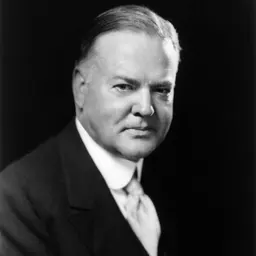
Related people
Same field, nearest in time

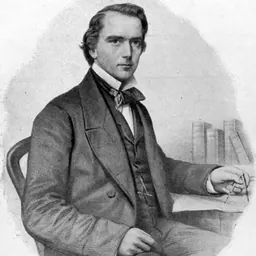



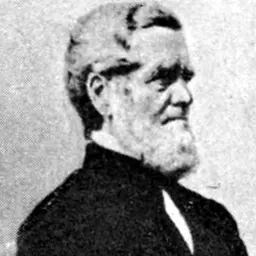
Contemporaries
People whose lives overlapped Benjamin Harrison's
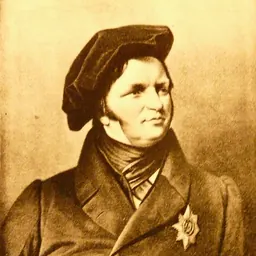


Frequently asked questions
Who was Benjamin Harrison?
President of the United States, 1889-1893 (1833–1901)
When was Benjamin Harrison born?
Benjamin Harrison was born on 20 August 1833 in North Bend.
When did Benjamin Harrison die?
Benjamin Harrison died on 13 March 1901 in Indianapolis.
What was Benjamin Harrison's occupation?
Benjamin Harrison was a politician, military officer, lawyer, statesperson, writer and jurist.
What nationality was Benjamin Harrison?
Benjamin Harrison was American.
Sources & further reading
· Wikipedia: Benjamin Harrison
Cite this page
APA: Biography.guide. (2026). Benjamin Harrison. https://biography.guide/benjamin-harrison/
MLA: "Benjamin Harrison." Biography.guide, https://biography.guide/benjamin-harrison/.
Chicago: "Benjamin Harrison." Biography.guide. https://biography.guide/benjamin-harrison/.
Data last updated: 2026-09-20 · Spot an error? Report a correction.
Portrait: Wikimedia Commons · author & licence
Page generated 2026-09-27 05:31 UTC