
About Maria Grabar-Passek
Lived 1893 – 1975 (aged 82). Maria Grabar-Passek was a Russian scientist, translator, philologist, classical scholar and classical studies.
Maria Evgenyevna Grabar-Passek (, born Passek, 28 October 1893, Yuryev – 23 December 1975, Moscow) was a Soviet classical philologist and translator of ancient Greek and Latin literature. From 1946 she worked at the Institute of World Literature in Moscow, and she taught the postwar generation of Russian classicists that included Mikhail Gasparov and Aza Takho-Godi.
Life Grabar-Passek grew up in Yuryev, where her father taught Roman law and served as elected rector of the university. On her mother's side she was a niece of the writer Alexander Amfiteatrov. She finished the Moscow higher courses for women in 1917 and that spring married her father's colleague Vladimir Grabar, the elder brother of the painter Igor Grabar. The couple settled in Moscow in 1922.
Classics were out of fashion in the young Soviet state, so for two decades Grabar-Passek earned her living teaching German, first at Moscow military academies and then, until the mid 1950s, at the language courses of the Soviet Foreign Ministry. In December 1945 she translated passages from Alfred Rosenberg's The Myth of the Twentieth Century and other Nazi racial writings for the Soviet prosecutors at the Nuremberg trials, and was decorated with the Order of the Red Banner of Labour.
Her verse translation of Theocritus, begun in the early 1920s at the urging of Yevgeny Tarle, came out with Moschus and Bion in 1958 and is still the standard Russian text. She edited and part-translated Cicero. Speeches (1962), Late Greek Prose (1960) and Alexandrian Poetry (1972), and put Pindar, Callimachus, Claudian and Ausonius into Russian. The 1972 anthology inspired David Samoylov's poem "Imitation of Theocritus", dedicated to her memory.
Gasparov reprinted his memoir of her in Zapisi i vypiski (2001), placing her among the teachers who had formed him.
Don’t just read it —
keep it.
Full-length biographies made to live with: read them, listen on the way to work, watch them tonight.
- E-book
- Audio
- Video
Instant download · yours to keep · every purchase keeps this site free
Important facts
People in Maria Grabar-Passek's life
Named in this biography and alive at the same time
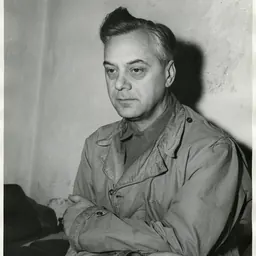
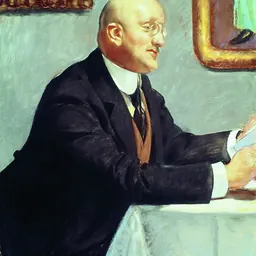
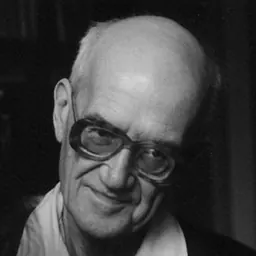

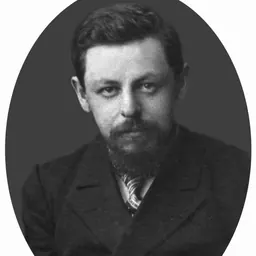

Related people
Same field, nearest in time
Contemporaries
People whose lives overlapped Maria Grabar-Passek's


Frequently asked questions
Who was Maria Grabar-Passek?
Russian philologist and translator (1893-1975)
When was Maria Grabar-Passek born?
Maria Grabar-Passek was born on 28 October 1893 in Tartu.
When did Maria Grabar-Passek die?
Maria Grabar-Passek died on 23 December 1975.
What was Maria Grabar-Passek's occupation?
Maria Grabar-Passek was a scientist, translator, philologist, classical scholar and classical studies.
What nationality was Maria Grabar-Passek?
Maria Grabar-Passek was Russian.
Sources & further reading
· Wikipedia: Maria Grabar-Passek
· DBpedia: Maria Evgenyevna Grabar-Passek
Cite this page
APA: Biography.guide. (2026). Maria Grabar-Passek. https://biography.guide/maria-grabar-passek/
MLA: "Maria Grabar-Passek." Biography.guide, https://biography.guide/maria-grabar-passek/.
Chicago: "Maria Grabar-Passek." Biography.guide. https://biography.guide/maria-grabar-passek/.
Data last updated: 2026-09-20 · Spot an error? Report a correction.
Page generated 2026-09-27 05:31 UTC