
About Vladimir Grabar
Lived 1865 – 1956 (aged 91). Vladimir Grabar was an Austrian and Russian legal scholar and jurist.
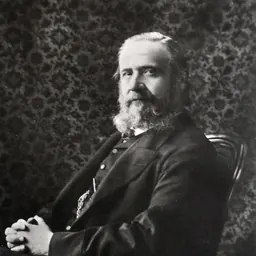
Vladimir Emmanuilovich Grabar (10 (22) January 1865, Vienna — 26 November 1956, Моscow) — was a Russian and Soviet jurist. The brother of painter Igor Grabar, and the husband of philologue and translator Maria Grabar-Passek. He is one of the leading specialists in international law of the pre-revolutionary and post-Revolutionary Soviet period. Grabar was held a number of leading posts during his impressive and broad career, including: professor of international law, academician, dean, legal advisor to the Imperial Russian government and the Soviet state, internationally recognized jurist and historian. His academic and professional career encompassed the last decades of the Russian empire and the first four decades of the Soviet period. His most notable work on the history of international law in Russia (1647-1917) guaranteed a visible place not only in the Russian legal academy but also abroad.
Early life Grabar was born on 10/22 January 1865 in Vienna, Austria at a home located on Währinger Hauptstrasse, 214, during the rise of European national movements. Grabar's maternal grandfather (Adolf Dobryansky) was one of the leaders of the Carpatho-Rusyns, striving for incorporation of Galician Ruthenia (East Galicia, Carpathian Ruthenia and Bukovina) into a unified Russian empire. Dobryansky gave all of his children and grandchildren Russian names, Olga, Vladimir and Igor. Grabar's parents devoted themselves to revolutionary work and were persecuted by the Austro-Hungarian authorities (see The Case of Olga Grabar). His father, Emanuel Ivanovich Grabar ( - 1910)- was a volunteer in the militia of Lajos Kossuth. Thereafter, Emanuel Grabar obtained a legal education in the Hungarian University at Pest and was admitted to the bar. In 1869, he was elected as a deputy to the Hungarian parliament to represent the Hungarian-Russian district of Máramaros County. For some time, Emanuel Grabar published the satirical journal The Owl «Сова», successfully publishing six editions prior to being censored and abolished by the government. The persecution led to the family's emigration in 1871. At first the family immigrated to Italy, where over the course of three years the children had a personal tutor in the form of a patriarch Terletsky, serving the colony of Carpathian emigrants. Afterwards, the family immigrated along with the colony to Paris. In 1876, Emanuel Grabar arrived in Russia and began teaching under the pseudonym Khrabrov (Храбров), specializing in modern languages, first in Egorevsk, then in Ryazan, followed by Izmail, and finally Tartu (1893–1918 ), where he was appointed the deputy rector of the university.
Don’t just read it —
keep it.
Full-length biographies made to live with: read them, listen on the way to work, watch them tonight.
- E-book
- Audio
- Video
Instant download · yours to keep · every purchase keeps this site free
Important facts
People in Vladimir Grabar's life
Named in this biography and alive at the same time
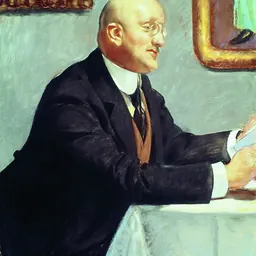
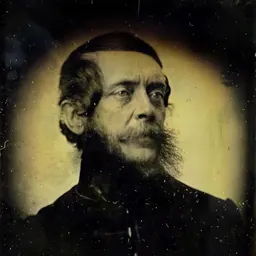

Related people
Same field, nearest in time



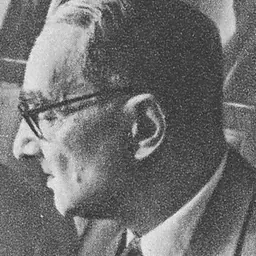
Contemporaries
People whose lives overlapped Vladimir Grabar's


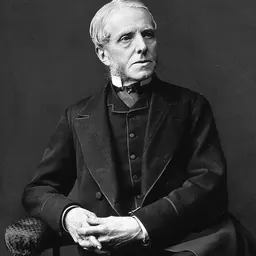


Frequently asked questions
Who was Vladimir Grabar?
Russian legal scholar (1865-1956)
When was Vladimir Grabar born?
Vladimir Grabar was born on 10 January 1865 in Vienna.
When did Vladimir Grabar die?
Vladimir Grabar died on 26 November 1956 in Moscow.
What was Vladimir Grabar's occupation?
Vladimir Grabar was a legal scholar and jurist.
What nationality was Vladimir Grabar?
Vladimir Grabar was Austrian and Russian.
Sources & further reading
Cite this page
APA: Biography.guide. (2026). Vladimir Grabar. https://biography.guide/vladimir-grabar/
MLA: "Vladimir Grabar." Biography.guide, https://biography.guide/vladimir-grabar/.
Chicago: "Vladimir Grabar." Biography.guide. https://biography.guide/vladimir-grabar/.
Data last updated: 2026-09-22 · Spot an error? Report a correction.
Page generated 2026-09-27 05:21 UTC