
Yevgeny Tarle
Soviet historian and academician of the Russian Academy of Sciences
About Yevgeny Tarle
Lived 1875 – 1955 (aged 79). Yevgeny Tarle was a Russian historian, university teacher and academic.
Yevgeny Viktorovich Tarle (; – 6 January 1955) was a Soviet historian, Marxist scholar, and academician of the Russian Academy of Sciences, who studied and published on topics such as the Napoleonic invasion of Russia and the Crimean War. Much of his work dealt with themes of Marxist historiography, imperialism, and Russian nationalism. Tarle spent much of his professional life disagreeing with state authorities over his scholarship and was also a history reader of the Moscow State Institute of International Relations (Russia's diplomatic university).
Life Early life and education Yevgeny Tarle born Grigory Tarle in 1874 in Kiev , Russia (modern-day Ukraine) into a Jewish family. He changed his name as a young man, before converting to the Orthodox Church. His father, Viktor Grigorievich Tarle, belonged to the Merchantry Social Estate and ran a shop in Kiev. Viktor also translated books from Russian to German, including the works of Fyodor Dostoyevsky. Viktor and his wife Rozalia Arnoldovna Tarle had four children.
Early political activism As a student, Tarle joined Marxist clubs and took an active part in the social democratic movement, frequently visiting Kievan factory workers as a lecturer and agitator. On 1 May 1900, he was arrested during a secret meeting in the middle of Anatoly Lunacharsky's speech. Tarle was sent to Kherson under police supervision and was banned from teaching at imperial universities and gymnasiums. In August, he and his wife moved to Warsaw, where he published articles on history in various magazines. In 1901, he was allowed a two-day visit to St. Petersburg to defend his master's thesis on Thomas More. With the support of his colleagues, he was permitted to work as a privatdozent at the University of St. Petersburg in 1903, a position he held until 1917. To achieve his doctoral degree, he completed a two-volume dissertation about France. From 1913 to 1918, he served as a professor at the University of Tartu. During this time, he completed another work on the economic history of France, published in 1916.
Foreign travel From 1903 to 1914, Tarle travelled to France yearly. From 1918 on, he headed the Petrograd department of the Central Archives of RSFSR. He soon became a professor at Moscow University and moved to Moscow. In 1921, he became a corresponding member of the Russian Academy of Sciences, becoming a full member in 1927. He was also active in the Russian Association of Scientific Institutes for Research in the Social Sciences (RANION). From 1922 to 1924, he published an annual journal of general history along with Fyodor Uspensky.
During 1928–1931, Tarle was frequently criticized by his colleagues in articles published in Istorik-Marksist and in Borba Klassov. Between 1929 and 1931, a group of prominent historians were arrested by the State Political Directorate following the Academic Case (also known as The Case of Platonov). They were accused of hatching a plot to overthrow the Soviet government. On 8 August 1931, Tarle was exiled to Almaty where he spent the next four years. His wife, Olga Tarle (1874–1955), died just a month later and was buried near him; they had lived together for over 60 years. The couple had two adult children, both of which went on to work in mathematical economy.
Works History of Italy in the Middle Ages («История Италии в средние века») West and Russia («Запад и Россия»)
Napoleon's Invasion of Russia, 1812 (New York, Oxford University Press, 1942, 1971; originally published in Russian in 1938). Borodino Napoleon Talleyrand Gorod russkoi slavy. Sevastopol v 1854–1855 gg. (Moscow: Voennoe izdatelstvo Ministerstva oborony Soiuza SSR, 1954. Krymskaia voina, 2 vols. (Moscow and Leningrad, 1950). Nakhimov. Moscow, 1948.
Don’t just read it —
keep it.
Full-length biographies made to live with: read them, listen on the way to work, watch them tonight.
- E-book
- Audio
- Video
Instant download · yours to keep · every purchase keeps this site free
Important facts
People in Yevgeny Tarle's life
Named in this biography and alive at the same time
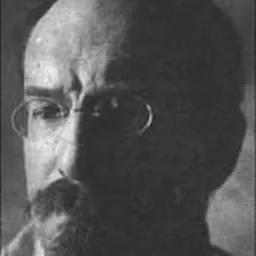
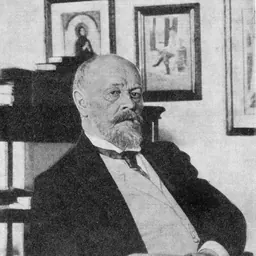

Related people
Same field, nearest in time

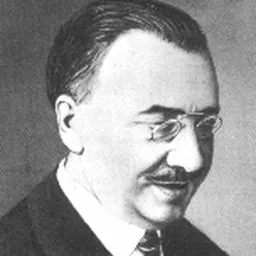
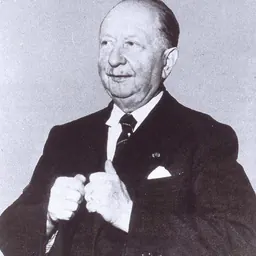
Contemporaries
People whose lives overlapped Yevgeny Tarle's


Frequently asked questions
Who was Yevgeny Tarle?
Soviet historian and academician of the Russian Academy of Sciences (1874-1955)
When was Yevgeny Tarle born?
Yevgeny Tarle was born on 27 October 1875 in Kyiv.
When did Yevgeny Tarle die?
Yevgeny Tarle died on 5 January 1955 in Moscow.
What was Yevgeny Tarle's occupation?
Yevgeny Tarle was a historian, university teacher and academic.
What nationality was Yevgeny Tarle?
Yevgeny Tarle was Russian.
Sources & further reading
Cite this page
APA: Biography.guide. (2026). Yevgeny Tarle. https://biography.guide/yevgeny-tarle/
MLA: "Yevgeny Tarle." Biography.guide, https://biography.guide/yevgeny-tarle/.
Chicago: "Yevgeny Tarle." Biography.guide. https://biography.guide/yevgeny-tarle/.
Data last updated: 2026-09-25 · Spot an error? Report a correction.
Page generated 2026-09-27 05:13 UTC