
About Manuel Gálvez
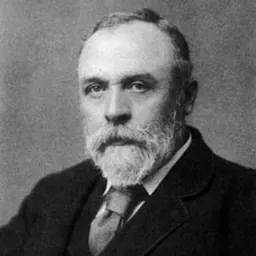
Lived 1882 – 1962 (aged 80). Manuel Gálvez was an Argentine historian, writer, poet and biographer.
Manuel Gálvez (18 July 1882 – 14 November 1962) was an Argentine novelist, poet, essayist, historian and biographer.
Early years Gálvez, a member of one of the leading patrician families of Entre Ríos Province, was educated by the Jesuits before attending the University of Buenos Aires, graduating in 1904 with a law degree. He was employed as a schools inspector from 1906 to 1931.
By widely reading the Hispanidad authors and examining their works for a specifically Argentine audience in his own writing Gálvez has been credited for ensuring the spread of the ideology amongst the country's nationalist intellectuals. He also emphasised the centrality of the Roman Catholic Church to Argentine identity.
Nationalism
Between 1906 and 1910 Gálvez became a regular visitor to Spain and these journeys helped to solidify his belief in Hispanidad, as expounded in his 1913 book El Solar de la Raza. and indeed claimed in his collection of essays El Diario de Gabriel Quiroga that he was the first genuine Argentine nationalist in history. The book extolled the virtues of the rural over the urban, rejecting the cosmopolitanism of Argentina's cities and claiming that the true spirit of the nation remained in the countryside away from internationalist influences.
He was the first of the nationalist writers to promote Juan Manuel de Rosas as an archetype of Argentine values,
Although seeking the development of a new and stronger national identity, Gálvez had initially stopped short of supporting any major changes to the country's political system. However, in 1925 Gálvez adopted Italian fascism as his preferred mode of government, arguing that it was the only way to prevent the weak government that he felt was aiding the growth of his declared enemies of communism, immigration and American imperialism.
He denied charges of anti-Semitism, claiming that he opposed Jewish immigration to Argentina simply because he was anti-immigration rather than anti-Jewish, although he regularly criticised perceived Jewish influence in Argentina and as late as 1962 his novel El Mal Metafisico was criticised for the highly stereotypical portrayal of Jewish characters. However, despite publicly endorsing versions of fascism he always stopped short of full fascism in his writing due to the innate conservatism of his traditionalism and his main political influences were fellow ultra-traditionalists Charles Maurras and Maurice Barrès.
Writing
Gálvez was a prolific writer whose works covered a number of styles and genres. As a novelist his works included La sombra del convento, El cántico espiritual, Miércoles Santo, La tragedia de un hombre fuerte, La noche toca a su fin y Cautiverio, La muerte en las calles (1949), Nacha Regules (1919) and Historia de arrabal (1923), the latter two works proving his most widely celebrated. He was a literary prize winner for both Los caminos de la muerte (1928) and El general Quiroga (1932). As an essayist, polemicist and critic he published El solar de la raza (1913), La vida múltiple (1916), Amigos y maestros de mi juventud (1944) and El novelista y las novelas (1959) as well as biographies of such historic figures as Domingo Faustino Sarmiento, Hipólito Yrigoyen and Gabriel García Moreno. He died in 1962 in Buenos Aires.
Works Narrative El diario de Gabriel Quiroga (1910) La maestra normal (1914) El mal metafísico (1916) La sombra del convento (1917) Nacha Regules (1919) Luna de miel y otras narraciones (1920) La tragedia de un hombre fuerte (1922) Historia de arrabal (1923) El cántico espiritual (1923) La pampa y su pasión (1927) Una mujer muy moderna (1927) Los caminos de la muerte (1928) Humaitá (1929) Jornadas de agonía (1929) Miércoles Santo (1930) El gaucho de los cerrillos (1931) El general Quiroga (1932) Cautiverio (1935) La noche toca a su fin (1935) Hombres en soledad (1938) La ciudad pintada de rojo (1948) La muerte en las calles (1949) Tiempo de odio y angustia (1951) Han tocado a degüello (1840–1842) (1951) Bajo la garra anglo-francesa (1953) Y así cayó Don Juan Manuel (1954) Las dos vidas del pobre Napoleón (1954) El uno y la multitud (1955) Tránsito Guzmán (1956) Poemas para la recién llegada (1957) Perdido en su noche (1958) Me mataron entre todos (1962) La locura de ser santo (1967), phostomous.
Autobiography Recuerdos de la vida literaria (1961)
Poetry El enigma interior, 1907. Sendero de humildad, 1909.
Essay El solar de la raza (1913) La inseguridad en la vida obrera (1913) La vida múltiple (1916) Amigos y maestros de mi juventud (1944) El novelista y las novelas (1959)
Biography Vida de Hipólito Yrigoyen (1939) Vida de Juan Manuel de Rosas (1940), historia novelada. Vida de Aparicio Saravia (1942) Vida de don Gabriel García Moreno (1942) Vida de Domingo Faustino Sarmiento (1945) Vida de Ceferino Namuncurá. El santito de la toldería (1947)
Drama El hombre de los ojos azules (1928) Calibán (1943).
Don’t just read it —
keep it.
Full-length biographies made to live with: read them, listen on the way to work, watch them tonight.
- E-book
- Audio
- Video
Instant download · yours to keep · every purchase keeps this site free
Important facts
People in Manuel Gálvez's life
Named in this biography and alive at the same time


Related people
Same field, nearest in time

Contemporaries
People whose lives overlapped Manuel Gálvez's



Frequently asked questions
Who was Manuel Gálvez?
Argentine historian (1882-1962)
When was Manuel Gálvez born?
Manuel Gálvez was born on 18 July 1882 in Paraná.
When did Manuel Gálvez die?
Manuel Gálvez died on 14 November 1962 in Buenos Aires.
What was Manuel Gálvez's occupation?
Manuel Gálvez was a historian, writer, poet and biographer.
What nationality was Manuel Gálvez?
Manuel Gálvez was Argentine.
Sources & further reading
Cite this page
APA: Biography.guide. (2026). Manuel Gálvez. https://biography.guide/manuel-galvez/
MLA: "Manuel Gálvez." Biography.guide, https://biography.guide/manuel-galvez/.
Chicago: "Manuel Gálvez." Biography.guide. https://biography.guide/manuel-galvez/.
Data last updated: 2026-09-22 · Spot an error? Report a correction.
Page generated 2026-09-27 05:17 UTC