
About Lou Lombardo
Lived 1932 – 2002 (aged 70). Lou Lombardo was an American film editor, film producer and film director.
Lou Lombardo (February 15, 1932 – May 8, 2002) was an American filmmaker whose editing of the 1969 film The Wild Bunch has been called "seminal". In all, Lombardo is credited on more than twenty-five feature films. Noted mainly for his work as a film and television editor, he also worked as a cameraman, director, and producer. In his obituary, Stephen Prince wrote, "Lou Lombardo's seminal contribution to the history of editing is his work on The Wild Bunch, directed by Sam Peckinpah. The complex montages of violence that Lombardo created for that film influenced generations of filmmakers and established the modern cinematic textbook for editing violent gun battles." It is a Western noted for its violence, which was unusual in its time, and for its innovative and effective storytelling, camerawork, and editing. The film has proven to be profoundly influential long after its 1969 release, and was an inductee of the 1999 National Film Registry list. In 1995 Peter Stack wrote, "It's astonishing how harrowing The Wild Bunch is, more than 25 years after it blasted its way onto the big screen to become maybe the best shoot-'em-up ever made, the one that turned meanness into a haunting pictorial poetry and summed up the corruption of guilt, old age and death in the American fantasy of the Old West." At that time, slow motion cameras were not commonly used for television work. Lombardo used the laborious trick of stretching time by repeating the individual frames of film two or three times, which required that there be a film splice at every frame. There are typically 24 frames of film exposed each second by standard motion picture cameras, so after tripling Lombardo had 72 frames per second. Intercutting involves the splicing of sections of film from different cameras, or from different "takes" of the same scene.
Montage in The Wild Bunch The Wild Bunch is bookended by two gun battles, one near the beginning of the film and one near its end. The gun battles are virtuosic demonstrations of the possibilities of film storytelling. Lombardo worked with Peckinpah both to design the camerawork for The Wild Bunch and to edit the film. As many as six cameras were filming simultaneously from different locations; the cameras were operating at various film rates from 24 to 120 frames per second. He and Peckinpah then edited the massive length of film footage for six months in Mexico, where the film had been shot. In his 2011 assessment, Daniel Eagan wrote, "The Wild Bunch had 3,642 edits, more than five times the Hollywood average for a feature. ... Montage this dense hadn't been attempted since Sergei Eisenstein back in the 1920s."
Many critics have noted the influence of the editing of the setpiece gunbattles in The Wild Bunch on later films. Paul Monaco has written, "Lombardo pushed the revolution in Hollywood editing further than anyone else, and The Wild Bunch was established at the end of the 1960s as the epitome for fast-paced editing in a narrative film." The editing of the film has apparently never been singled out for critical attention, with the exception of the innovative style of sound editing. In his textbook on film production, Bruce Mamer uses the film to exemplify the blending of dialogue from many speakers, "Robert Altman was famous for using this style of layered dialogue cutting. The frontier barroom scene that opens his McCabe & Mrs. Miller (Louis Lombardo, editor) has snippets of conversations underlying the foreground action." Stephen Prince chose a related theme in summarizing Lombardo's collaboration with Altman: "Though his work for Altman was less trendsetting than that for Peckinpah, the partnership with Altman lasted much longer, and Lombardo found the perfect visual rhythms for Altman's wandering and diffuse audio style." In 1977, Lombardo edited The Late Show, which was produced by Altman but directed by Robert Benton. The Late Show is a film noir detective story; Pauline Kael wrote at the time, "The Late Show never lets up; the editing is by Lou Lombardo (who has often worked with Robert Altman) and Peter Appleton, and I can't think of a thriller from the forties that is as tight as this, or has such sustained tension."
Lombardo's final project with Altman was the film O.C. and Stiggs, which was produced around 1984 and released in 1987. Lombardo left the film before post-production was completed; he is uncredited on the film. The film was released for home video in 1986, and has recently been reviewed more favorably.
Lombardo both produced and edited The Black Bird (1975), which was a humorous sequel to the film noir classic The Maltese Falcon; the film also starred George Segal, and was poorly reviewed upon its release.
Lombardo co-produced Cheech & Chong's first film, Up in Smoke (1978), which is now known as the "classic stoner comedy". The film enjoyed great box office success. Lombardo is also credited as the supervising editor on the film.
About 1981 Lombardo directed P. K. and the Kid, which starred a very young Molly Ringwald. The film was not released until early 1987, when Ringwald had become well-known; it nonetheless attracted little attention.
Return to editing and the Norman Jewison collaboration In 1986 Lombardo returned to editing with the fairly inconsequential Stewardess School. The film was produced by Phil Feldman, who had produced The Wild Bunch about 15 years earlier. Lombardo's next film was Moonstruck (1987), which was being directed and produced by Norman Jewison. Moonstruck was extremely successful at the box office, garnered three Academy Awards and three additional nominations, and has been well-regarded by many critics. Stephen Prince has written, "Another brilliant editor of late-sixties American cinema, Lou Lombardo (who edited The Wild Bunch (1969) to seminal effect) worked sporadically in the eighties and mainly on low-key films (Moonstruck, In Country (1989)) where his editing choices showed the intelligence and subtlety that rarely wins Oscars. The wonderful comic effectiveness and timing of Moonstruck, for example, depends as much on Lombardo's editing as on John Patrick Shanley's script or the performances by Cher, Nicolas Cage, and the rest of the cast." In addition to his son, Lombardo mentored Dennis M. Hill and Paul Rubell in the early stages of their careers. Lombardo was interviewed about his career by Vincent LoBrutto in 1991.
Filmography This filmography is based on the Internet Movie Database.
Don’t just read it —
keep it.
Full-length biographies made to live with: read them, listen on the way to work, watch them tonight.
- E-book
- Audio
- Video
Instant download · yours to keep · every purchase keeps this site free
Important facts
People in Lou Lombardo's life
Named in this biography and alive at the same time





Related people
Same field, nearest in time



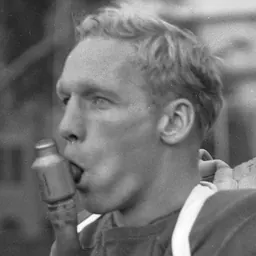
Contemporaries
People whose lives overlapped Lou Lombardo's
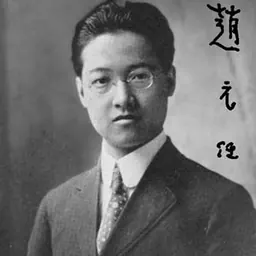


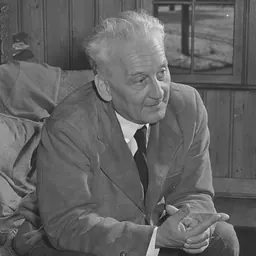
Frequently asked questions
Who was Lou Lombardo?
film editor and film director (1932-2002)
When was Lou Lombardo born?
Lou Lombardo was born on 15 February 1932 in Kansas City.
When did Lou Lombardo die?
Lou Lombardo died on 8 May 2002 in Woodland Hills.
What was Lou Lombardo's occupation?
Lou Lombardo was a film editor, film producer and film director.
What nationality was Lou Lombardo?
Lou Lombardo was American.
Sources & further reading
· DBpedia: Lou Lombardo (filmmaker)
Cite this page
APA: Biography.guide. (2026). Lou Lombardo. https://biography.guide/lou-lombardo/
MLA: "Lou Lombardo." Biography.guide, https://biography.guide/lou-lombardo/.
Chicago: "Lou Lombardo." Biography.guide. https://biography.guide/lou-lombardo/.
Data last updated: 2026-09-22 · Spot an error? Report a correction.
Page generated 2026-09-27 05:15 UTC