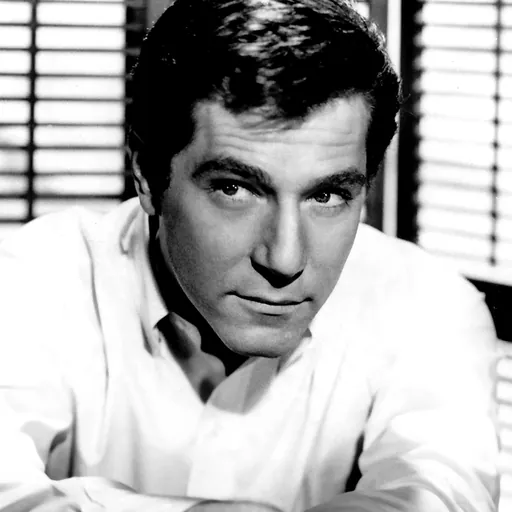
About George Segal
Lived 1934 – 2021 (aged 87). George Segal was an American banjoist, stage actor, television actor, film actor, voice actor and film producer.
George Segal Jr. (February 13, 1934 – March 23, 2021) was an American actor and musician. He became popular in the 1960s and 1970s for playing both dramatic and comedic roles. After first rising to prominence with roles in acclaimed films such as Ship of Fools and King Rat (1965), he co-starred in the drama Who's Afraid of Virginia Woolf? (1966).
Through the next decade and a half, Segal consistently starred in notable films across a variety of genres including The Quiller Memorandum (1966), The St. Valentine's Day Massacre (1967), No Way to Treat a Lady (1968), The Bridge at Remagen (1968), Where's Poppa? (1970), The Owl and the Pussycat (1970), Born to Win (1971), The Hot Rock (1972), Blume in Love (1973), A Touch of Class (1973), California Split (1974), The Terminal Man (1974), The Duchess and the Dirtwater Fox (1976), Fun with Dick and Jane (1977), Who Is Killing the Great Chefs of Europe? (1978), The Last Married Couple in America (1980), and Carbon Copy (1981). He was one of the first American film actors to rise to leading man status with an unchanged Jewish surname, helping pave the way for other major actors of his generation.
Later in his career, he appeared in supporting roles in films such as Stick (1985), Look Who's Talking (1989), For the Boys (1991), The Mirror Has Two Faces (1996), Flirting with Disaster (1996), The Cable Guy (1996), 2012 (2009), and Love & Other Drugs (2010).
He was nominated for the Academy Award for Best Supporting Actor for his performance in Who's Afraid of Virginia Woolf? and won two Golden Globe Awards, including the Golden Globe Award for Best Actor in a Motion Picture Musical or Comedy for his performance in A Touch of Class.
On television, he had regular roles in two popular sitcoms, playing Jack Gallo on Just Shoot Me! (1997–2003) and Albert "Pops" Solomon on The Goldbergs (2013–2021).
Segal also performed on the banjo, making music recordings and playing the instrument in some of his film and television appearances.
Early life George Segal Jr. was born on February 13, 1934, in New York City, the youngest of four children, to Fannie Blanche Segal (née Bodkin) and George Segal Sr., a malt and hop agent. He spent much of his childhood in Great Neck, New York. All four of Segal's grandparents were Russian-Jewish immigrants, and his maternal grandparents changed their surname from Slobodkin to Bodkin. His oldest brother, John, worked in the hops brokerage business and was an innovator in the cultivation of new hop varieties; he had a farm in Grandview, Washington where George often helped in the summers. The middle brother, Fred, was a screenwriter; He graduated from George School, a Quaker boarding school in Pennsylvania, in 1951 and attended Haverford College. He graduated from Columbia College of Columbia University in 1955 with a Bachelor of Arts in performing arts and drama.
Segal served in the United States Army during the Korean War. While there, he played in a band called Corporal Bruno's Sad Sack Six. and got a job as an understudy in the 1956 off-Broadway production of The Iceman Cometh starring Jason Robards. He appeared in Antony and Cleopatra for Joseph Papp and joined an improvisational group called The Premise, which performed at a Bleecker Street coffeehouse Segal continued to perform on Broadway with roles in Gideon (1961–62) by Paddy Chayefsky, which ran for 236 performances, as well as Rattle of a Simple Man (1963), an adaptation of a British hit, with Tammy Grimes and Edward Woodward.
He was signed to a Columbia Pictures contract in 1961, making his film debut in The Young Doctors. Segal made several television appearances in the early 1960s, including Alfred Hitchcock Presents, Armstrong Circle Theatre, and Naked City, He also had a small role in Act One (1963) and a more prominent part in the western Invitation to a Gunfighter (1964) alongside Yul Brynner. and the studio then put him under long-term contract. The role ultimately earned him the Golden Globe Award for New Star of the Year, alongside Harve Presnell and Chaim Topol.
Critical acclaim In 1965, Segal played an egocentric painter in an ensemble cast led by Vivien Leigh and Lee Marvin in Stanley Kramer's acclaimed drama Ship of Fools, which was nominated for the Academy Award for Best Picture. The same year, he also had the title role of a scheming POW in the well-regarded war drama King Rat (a role originally meant for Frank Sinatra) and received acclaim for both performances. In other notable film appearances, he played a secret service agent on assignment in Berlin in The Quiller Memorandum (1966) (a role originally meant for Charlton Heston ), an Algerian paratrooper who becomes a leader of the FLN in Lost Command (1966), and a Cagney-esque gangster in Roger Corman's The St. Valentine's Day Massacre (1967). with whom he worked again several times. and cast him again in Woolf after Robert Redford had turned down the role. In the four-person ensemble piece, Segal played the young faculty member, Nick, alongside Elizabeth Taylor, Richard Burton, and Sandy Dennis. The film received an Academy Award nomination for Best Picture and was later selected for the National Film Registry, and Segal was nominated for an Oscar and a Golden Globe.
Leading man For over ten years after his success with Woolf, Segal received many notable film roles, often working with major filmmakers and becoming a significant figure in the New Hollywood movement. He starred in Carl Reiner's celebrated dark comedy Where's Poppa? (1970), played the lead role in Sidney Lumet's Bye Bye Braverman (1968), starred with Robert Redford in Peter Yates's diamond heist comedy The Hot Rock (1972), starred in the title role of Paul Mazursky's acclaimed romantic comedy Blume in Love (1973), and starred alongside Elliott Gould as a gambling addict in Robert Altman's California Split (1974).
In one of his most successful roles, Segal played a philandering husband in Melvin Frank's continental romantic comedy A Touch of Class (1973) opposite Glenda Jackson. The film was nominated for the Academy Award for Best Picture, Jackson won an Oscar for her performance, and Segal won the Golden Globe Award for Best Actor – Motion Picture Musical or Comedy, which was the second Golden Globe of his career.
During this time, he had many other leading roles in various genres. He played a perplexed police detective in No Way to Treat a Lady (1968), a war-weary platoon commander in The Bridge at Remagen (1969), a man laying waste to his marriage in Loving (1970), and a hairdresser-turned-junkie in Born to Win (1971). The Owl and the Pussycat (1970), a romantic comedy starring Segal and Barbra Streisand and written by his former improv teammate Buck Henry, was particularly popular; and though Segal played against type as a dangerous computer scientist in The Terminal Man (1974), he used his popular appeal as a card shark in The Duchess and the Dirtwater Fox (1976), as a suburbanite-turned-bank robber in Fun with Dick and Jane (1977), as a heroic ride inspector in Rollercoaster (1977), and as a wealthy serial restaurant entrepreneur in Who Is Killing the Great Chefs of Europe? (1978). Other films starring Segal from this time include The Girl Who Couldn't Say No (1968), Russian Roulette (1975), and The Black Bird (1975).
During the 1970s and 1980s, Segal appeared as a frequent guest on The Tonight Show Starring Johnny Carson, and occasionally as a guest host. His appearances were marked by eccentric banter with Johnny Carson and were usually punctuated by bursts of banjo playing. The Cold Room (1984), and The Zany Adventures of Robin Hood (1984). He also starred in two short-lived television series, the semi-autobiographical sitcom Take Five (1987) and the crime drama Murphy's Law (1988–89). In 1985, he returned to Broadway in a short-lived production of Requiem for a Heavyweight by Rod Serling and in 1990 toured in a play called Double Act.
He later reflected on his career trajectory: In the first 10 years, I was playing all different kinds of things. I loved the variety, and never had the sense of being a leading man but a character actor. Then I got frozen into this "urban" character. About the time of "The Last Married Couple in America" (1980) I remember Natalie (Wood) saying to me ... "It's one typed role after another, and pretty soon you forget everything. You forget why you're here, why you're doing it." Then my marriage started to fall apart ... I was disenchanted, I was turning in on myself, I was doing a lot of self-destructive things ... there were drugs ... I'm also sure I was guilty of spoiled behavior. I think it's impossible when that star rush comes not to get a little full of yourself, which is what I was.
Later career
Nevertheless, after this relatively dry period, Segal re-established himself as a successful character actor in the 1990s. Though he appeared in some less-acclaimed films, he also worked with directors such as Mark Rydell, Gus Van Sant, Barbra Streisand, David O. Russell, Randal Kleiser, and Ben Stiller, respectively, in well-received films such as For the Boys (1991), To Die For (1995), The Mirror Has Two Faces (1996), Flirting with Disaster (1996), It's My Party (1996), and The Cable Guy (1996). Additionally, he had guest appearances on various shows such as Murder She Wrote and The Larry Sanders Show and continued to appear in television films such as Seasons of the Heart (1994), Houdini (1998), and The Linda McCartney Story (2000). In 1999, he briefly performed in Yasmina Reza's Art on Broadway, and in 2001 he reprised his performance in the West End.
From 1997 to 2003, Segal had his most prominent role in years when he starred in the NBC workplace sitcom Just Shoot Me! as Jack Gallo, the successful yet often oblivious owner and publisher of a New York City fashion magazine. For this role, he was nominated for the Golden Globe Award for Best Actor – Television Series Musical or Comedy in 1999 and 2000 as well as a Satellite Award in 2002. The show, which also starred David Spade and Laura San Giacomo, among others, and which once aired between iconic sitcoms Friends and Seinfeld, lasted for seven seasons and 148 episodes.
After finishing his run on Just Shoot Me, Segal appeared in supporting roles in films such as Heights (2005) and 2012 (2009). He and Jill Clayburgh cameoed as Jake Gyllenhaal's parents in Love & Other Drugs (2010), reuniting the co-stars 46 years after they first worked together in The Terminal Man. Additionally, Segal worked more frequently as a voice actor, including a role in the English-language version of Studio Ghibli's The Tale of the Princess Kaguya (2013) and a comedic reprisal of his Who's Afraid of Virginia Woolf? role in a 2018 episode of The Simpsons. His most recent film performance was alongside Christopher Plummer in Elsa & Fred (2014). In other roles, Segal played talent manager Murray Berenson in three episodes of the television series Entourage (2009), guest starred in shows such as Boston Legal, Private Practice, and Pushing Daisies, appeared in comedic short videos such as Chutzpuh, This Is, and starred in the TV Land sitcom Retired at 35 (2011–2012), alongside his Bye Bye Braverman co-star Jessica Walter.
Segal had another success when he starred in the ABC sitcom The Goldbergs (2013–2021), playing Albert "Pops" Solomon, the eccentric but lovable grandfather of a semi-autobiographical family based on that of series creator Adam F. Goldberg. The long-running series entered its eighth season in 2021, and Segal was part of the regular cast up until his death in March of that year. Throughout the show, Segal had appeared in most, though not all, episodes and, as in some of his earlier roles, he played the banjo several times on-screen.
In 2017, Segal received a star on the Hollywood Walk of Fame in the category of Television.
Music performances and recordings Segal was an accomplished banjo player. He released three albums and performed with the instrument in several of his acting roles and on late-night television. In addition to the banjo, he frequently played other small lute instruments such as the ukulele and dobro on TV and in his movies. Segal also sang, for example in Blume in Love.
In 1966, Segal released his debut LP, The Yama Yama Man. The title track is a ragtime version of the 1908 tune "The Yama Yama Man" with horns and banjos. Segal released the album at a time when he appeared regularly playing banjo on The Tonight Show Starring Johnny Carson. Segal also played banjo and sang with The Smothers Brothers when they performed Phil Ochs's "Draft Dodger Rag" on their CBS television show.
George Segal and the Imperial Jazzband released the album A Touch of Ragtime in 1974, with Segal on banjo. He made frequent television appearances with the "Beverly Hills Unlisted Jazz Band", whose members included actor Conrad Janis on trombone, and, in 1981, they performed live at Carnegie Hall.
Personal life and death Segal was married three times. He married film editor Marion Segal Freed in 1956, who would go on to work as an associate producer or editor on three of his films. They had two daughters and were together until their divorce in 1983. the Beverly Hills Unlisted Jazz Band.
Segal died of complications from bypass surgery in Santa Rosa, California, on March 23, 2021, at age 87.
Filmography
Film Year Title Role Director Notes 1961 The Young Doctors Dr. Howard Phil Karlson 1962 The Longest Day U.S. Army Ranger Ken Annakin, Andrew Marton, & Bernhard Wicki 1963 Act One Lester Sweyd Dore Schary 1964 Invitation to a Gunfighter Albagon Davis Doi Voice, direct-to-video 2007 Three Days to Vegas Purah Broadway 1963 Rattle of a Simple Man Serge West End 2007 Heroes Gustave Los Angeles 2007 Prophesy and Honor Colonel Sherman Moreland Honolulu 2008 Secret Order Saul Roth Los Angeles
Television Year Title Role Notes 1960 The Play of the Week (1) Don; (2) Innkeeper (1) Season 1 Episode 13: "The Closing Door"; (2) Season 2 Episode 13: "Emmanuel" 1960–1962 Armstrong Circle Theatre (1) First Lieutenant Paul Fallon (1) Season 10 Episode 8: "Ghost Bomber: The Lady Be Good" (1960) (aired February 3); (2) Season 10 Episode 24: "Ghost Bomber" (1960) (aired September 28); (3) Season 13 Episode 3: "The Friendly Thieves" (1962) (aired October 24) 1962 The United States Steel Hour Pete Season 10 Episode 2: "The Inner Panic" 1963 Channing Andre Season 1 Episode 8: "A Patron Saint for the Cargo Cult" Naked City Jerry Costell Season 4 Episode 20: "Man Without a Skin" The Alfred Hitchcock Hour Andrew 1980 My Friend Winnetou Gottlieb Miniseries 1982 The Deadly Game LP 1970 The Owl and the Pussycat LPDialogue excerpts from the film performed by Barbra Streisand and George Segal, accompanied by music by Blood, Sweat & Tears 1974 A Touch of Ragtime LPAs George Segal and the Imperial Jazzband 1987 Basin Street LPCanadian Brass with George Segal
Awards and nominations
1966 Academy Awards Best Supporting Actor Who's Afraid of Virginia Woolf?
1968 British Academy Film Awards Best Actor in a Supporting Role No Way to Treat a Lady
1983 CableAce Awards Best Actor in a Theatrical or Non-Musical Program The Deadly Game
1964
Most Promising Newcomer – Male The New Interns
1966 Best Supporting Actor – Motion Picture Who's Afraid of Virginia Woolf? 1973 Best Actor in a Motion Picture – Musical or Comedy A Touch of Class 1998
1999 1973 Kansas City Film Critics Circle Awards Best Actor A Touch of Class
1965
1967 Top Male Supporting Performance Who's Afraid of Virginia Woolf?
2001 Satellite Awards Best Actor in a Television Series – Musical or Comedy Just Shoot Me!
2017: Star on the Hollywood Walk of Fame
Notes and references
Don’t just read it —
keep it.
Full-length biographies made to live with: read them, listen on the way to work, watch them tonight.
- E-book
- Audio
- Video
Instant download · yours to keep · every purchase keeps this site free
Important facts
Family & relationships
People in George Segal's life
Named in this biography and alive at the same time





Related people
Same field, nearest in time



Contemporaries
People whose lives overlapped George Segal's




Frequently asked questions
Who was George Segal?
American actor (1934–2021)
When was George Segal born?
George Segal was born on 13 February 1934 in New York City.
When did George Segal die?
George Segal died on 23 March 2021 in Santa Rosa Memorial Hospital.
What was George Segal's occupation?
George Segal was a banjoist, stage actor, television actor, film actor, voice actor and film producer.
What nationality was George Segal?
George Segal was American.
Sources & further reading
Cite this page
APA: Biography.guide. (2026). George Segal. https://biography.guide/george-segal/
MLA: "George Segal." Biography.guide, https://biography.guide/george-segal/.
Chicago: "George Segal." Biography.guide. https://biography.guide/george-segal/.
Data last updated: 2026-09-20 · Spot an error? Report a correction.
Portrait: Wikimedia Commons · author & licence
Page generated 2026-09-27 04:58 UTC