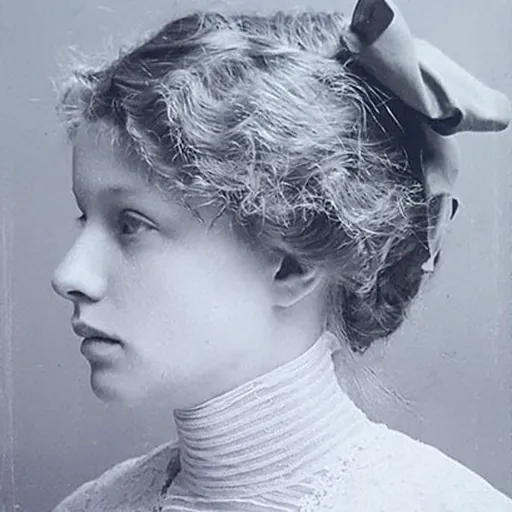
About Hertha Sponer
Lived 1895 – 1968 (aged 72). Hertha Sponer was a German physicist and chemist, known for Birge-Sponer method.
Hertha Dorthea Elisabeth Sponer (1 September 1895 – 27 February 1968) was a German physicist and chemist who contributed to modern quantum mechanics and molecular physics. She was the first woman on the physics faculty of Duke University and was one of only three women to earn both a PhD in Physics and Habilitation in Germany before the start of World War II, the others being Lise Meitner and Hedwig Kohn. Her younger sister was philologist and resistance fighter Margot Sponer.
Life and career
Early Life and Education Sponer was born in Neisse (Nysa), Prussian Silesia, in 1895 and was the eldest of children to Robert Franz Sponer, a stationary merchant, and Elizabeth Helene Ottilie Heerde. Her younger sister was Margot Sponer. She then enrolled at the University of Göttingen where she received her PhD in 1920 under the supervision of Peter Debye. Her dissertation was titled "Über ultrarote Absorption zweiatomiger Gase". In her last semester as a graduate student, she was appointed as an aide to mathematician David Hilbert to read and discuss theoretical physics papers with him. He then served as an examiner on her oral examination in March 1920.
Career After obtaining her doctorate, Sponer spent a year working at the Kaiser Wilhelm Institute for Physical Chemistry, where she first collaborated with James Franck. During her time at Berkeley, she collaborated with R. T. Birge, developing what is now called the Birge–Sponer method for determining dissociation energies.
By 1932, Sponer had published around 20 scientific papers in journals such as Nature and Physical Review, and had become an associate professor of physics. In 1933 James Franck resigned and left Göttingen and a year later she was dismissed from her position when Adolf Hitler came to power, due to the Nazis' stigma against women in academia. In 1934 Sponer moved to Oslo to teach at the University of Oslo as a visiting professor, and in 1936 she started her appointment at Duke University where she remained as a professor until 1966 when she became professor emeritus, a position she held until her death in 1968.
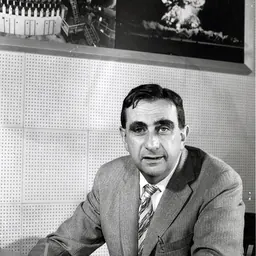
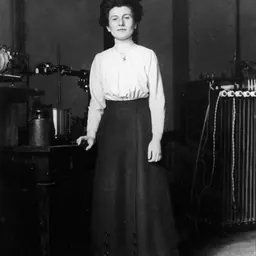
During her academic career, Sponer conducted research in quantum mechanics, physics, and chemistry. She authored and published numerous studies, many of which were in collaboration with famous physicists including Edward Teller and Gertrud Nordheim-Pöschl. She made many contributions to science including the application of quantum mechanics to molecular physics and work on the spectra of near ultra-violet absorption. She set up a spectroscopy lab in the physics department of Duke University, which was later moved to its own new building.
Sponer married James Franck in 1946. She died in Ilten, Lower Saxony.
Selected publications
Don’t just read it —
keep it.
Full-length biographies made to live with: read them, listen on the way to work, watch them tonight.
- E-book
- Audio
- Video
Instant download · yours to keep · every purchase keeps this site free
Important facts
People in Hertha Sponer's life
Named in this biography and alive at the same time






Related people
Same field, nearest in time

Contemporaries
People whose lives overlapped Hertha Sponer's

Frequently asked questions
Who was Hertha Sponer?
German physicist and chemist (1895–1968)
When was Hertha Sponer born?
Hertha Sponer was born on 1 September 1895 in Nysa.
When did Hertha Sponer die?
Hertha Sponer died on 27 February 1968 in Ilten.
What was Hertha Sponer's occupation?
Hertha Sponer was a physicist and chemist.
What was Hertha Sponer known for?
Hertha Sponer was known for Birge-Sponer method.
What nationality was Hertha Sponer?
Hertha Sponer was German.
Sources & further reading
Cite this page
APA: Biography.guide. (2026). Hertha Sponer. https://biography.guide/hertha-sponer/
MLA: "Hertha Sponer." Biography.guide, https://biography.guide/hertha-sponer/.
Chicago: "Hertha Sponer." Biography.guide. https://biography.guide/hertha-sponer/.
Data last updated: 2026-09-23 · Spot an error? Report a correction.
Portrait: Wikimedia Commons · author & licence
Page generated 2026-09-27 05:05 UTC