
Norman Jewison
Canadian film director, producer and actor
About Norman Jewison
Lived 1926 – 2024 (aged 97). Norman Jewison was a Canadian film director, film producer, actor, screenwriter, film actor and director.
Norman Frederick Jewison (July 21, 1926 – January 20, 2024) was a Canadian filmmaker. He is known for directing films which addressed topical social and political issues, often making controversial or complicated subjects accessible to mainstream audiences. Among numerous other accolades, he was nominated for the Academy Award for Best Director three times in three separate decades, for In the Heat of the Night, Fiddler on the Roof (1971) and Moonstruck (1987). He was nominated for an additional four Oscars, three Golden Globe Awards and a Primetime Emmy Award, and won a BAFTA Award. He received the Academy of Motion Pictures Arts and Sciences's Irving G. Thalberg Memorial Award in 1999.
Born and raised in Toronto, Jewison began his career at CBC Television in the 1950s, moving to the United States later in the decade to work at NBC. He made his feature film debut in 1962, with the comedy 40 Pounds of Trouble, and embarked on a motion picture directing career that spanned over 40 years. His notable films included The Cincinnati Kid (1965), The Russians Are Coming, the Russians Are Coming (1966), The Thomas Crown Affair (1968), Jesus Christ Superstar (1973), Rollerball (1975), F.I.S.T. (1978)...And Justice for All (1979), A Soldier's Story (1984), Agnes of God (1985) and The Hurricane (1999).
In 1988, Jewison founded the Canadian Film Centre. In 2003, he received the Governor General's Performing Arts Award for Lifetime Artistic Achievement for his multiple contributions to the film industry in Canada. He was Chancellor of Victoria University in the University of Toronto, his alma mater, from 2004 until 2010.
For four decades, he worked out of a fifth-floor office in his home at 18 Gloucester Street, a former furniture factory. In 2001, City of Toronto honored Jewison by naming Norman Jewison Park across the street in his honor. In 2023, the Hazelton Hotel named its screening room after him.
Early life and education Jewison was born in Toronto, Ontario, the son of Percy Joseph Jewison (1890–1974), who managed a convenience store and post office, and Dorothy Irene (née Weaver). He attended Kew Beach School and Malvern Collegiate Institute, and while growing up in the 1930s displayed an aptitude for performing and theatre. He was often mistaken for being Jewish due to his surname and direction of Fiddler on the Roof, but he and his family were in fact Methodists of English descent. He served in the Royal Canadian Navy (1944–1945) during World War II, and after being discharged travelled in the American South, where he encountered segregation, an experience that influenced his later work.
Jewison attended Victoria College in the University of Toronto, graduating with a B.A. in 1949. As a student, he was involved in writing, directing and acting in various theatrical productions, including the All-Varsity Revue in 1949. Following graduation, he moved to London England, where he worked sporadically as a script writer for a children's television program and bit part actor for the BBC, while supporting himself with odd jobs. Out of work in Britain in late 1951, he returned to Canada to become a production trainee at CBLT in Toronto, which was preparing for the launch of CBC Television.
Career 1952–1964: Early work
When CBC Television went on the air in the fall of 1952, Jewison was an assistant director. —who all pursued careers in the entertainment industry. In 1958 Jewison was recruited to work for NBC in New York, where his first assignment was Your Hit Parade, followed by The Andy Williams Show. The success of these shows led to directing specials featuring performers such as Harry Belafonte, Jackie Gleason and Danny Kaye. The television production that proved pivotal to Jewison's career was the Judy Garland "comeback" special that aired in 1961, which included Frank Sinatra and Dean Martin, and led to a weekly show that Jewison was later called in to direct. Visiting the studio during rehearsal for the special, actor Tony Curtis suggested to Jewison that he should direct a feature film. The film was financed and distributed by Universal-International Pictures and was the first motion picture ever filmed at Disneyland. Curtleigh Productions' contract with Jewison had a negotiable option for further films if the initial picture was successful. In early October 1962, Jewison formed his own independent film production company, Simkoe Productions, and signed a two-picture deal with Curtis' new film production company, Curtis Enterprises, as well as an additional two-picture deal with Universal-International Pictures. Although the two pictures for Curtis Enterprises were not made, both films for Universal-International Pictures were. He made two comedies starring Doris Day: The Thrill of It All, released in 1963 and co-starring James Garner, and Send Me No Flowers, released in 1964 and co-starring Rock Hudson. After another comedy, The Art of Love (1965), Jewison was determined to escape from the genre and tackle more demanding projects.
1965–1987: Breakthrough and acclaim
His breakthrough film proved to be The Cincinnati Kid (1965), a drama starring Steve McQueen, and Jewison considered it one of his personal favourites because it was his first challenging drama. This success was followed in 1966 by a satire on Cold War paranoia, The Russians Are Coming, the Russians Are Coming; it was the first film Jewison also produced, and it was nominated for four Academy Awards, including Best Picture. He felt that doing "a plea for coexistence, or the absurdity of international conflict was important right at that moment". While reaction to Russians was positive, Jewison was labelled as "a Canadian pinko" by right-wing commentators.
Continuing his string of successes was one of the films that has become closely identified with Jewison as its director, In the Heat of the Night (1967), a crime drama set in a racially divided Southern town and starring Sidney Poitier and Rod Steiger, which won five Academy Awards, including Best Picture, while Jewison was nominated for Best Director. While he was filming, Robert Kennedy told Jewison that this could be "a very important film. Timing is everything". Kennedy reminded Jewison of that prediction a year and a half later when he presented him with the Critics' Choice Movie Award for best drama.
At Pinewood Studios northwest of London, and on location in Yugoslavia, he worked on the musical Fiddler on the Roof (1971, re-issued 1979), which won three Oscars and was nominated for five others, including Best Picture and Director. During the filming of Fiddler, Jewison was also the subject of the 1971 National Film Board of Canada documentary, Norman Jewison, Filmmaker, directed by Douglas Jackson. Jewison's next project was the musical Jesus Christ Superstar (1973), based on the Broadway musical written by Andrew Lloyd Webber and Tim Rice. It was filmed in Israel, where Jewison also produced the western Billy Two Hats (1974), starring Gregory Peck. Superstar, controversial for its treatment of a religious subject, was followed by another movie that sparked critical debate, this time over violence. Rollerball (1975) is set in the near future when corporations rule the world and entertainment is centred around a deadly game. The next film he directed, the labour union drama F.I.S.T. (1978), loosely based on the life of Jimmy Hoffa, also provided some controversy, this time regarding the screenwriting credit. Screenwriter Joe Eszterhas was unhappy to share the screenwriting credit with the film's star Sylvester Stallone, as he felt that Stallone's input had been minor, while Stallone claimed to have basically rewritten the whole script.
In 1978 Jewison returned to Canada, settling in the Caledon area in Ontario and establishing a farm that produced prizewinning cattle, as well as maple syrup. Operating from a base in Toronto, as well as one maintained in California, he directed high-profile actors Al Pacino in ...And Justice for All (1979), and Burt Reynolds and Goldie Hawn in the romantic comedy Best Friends (1982), and he produced The Dogs of War (1981) and Iceman (1984). During this period Jewison also produced the 53rd Annual Academy Awards (1981), which was slated to air the day President Ronald Reagan was shot and had to be rescheduled. Revisiting the theme of racial tension that had characterised In the Heat of the Night, Jewison's A Soldier's Story (1984), based on a Pulitzer Prize winning play, was nominated for three Academy Awards, including Best Picture. His next film was also based on a successful play. Agnes of God (1985), set in a Quebec convent, starred Jane Fonda, Meg Tilly and Anne Bancroft; it received three Academy Award nominations. After the falling out with Columbia, his Yorktown Productions company was moved to Metro-Goldwyn-Mayer for a three-year agreement to direct, produce and develop pictures from the studio, and gave MGM the right of first refusal on films he wished to make. Jewison's next film proved to be one of the most popular romantic films ever made. Moonstruck (1987), starring Cher, was a box office hit that garnered three Academy Awards, including Best Actress for Cher. Jewison also received his third Best Director nomination.
The Hurricane (1999) was Jewison's third film to explore the effects of racism, telling the story of boxer Rubin "Hurricane" Carter, who had been falsely convicted for a triple murder in New Jersey during the mid-1960s. Denzel Washington won a Golden Globe and was nominated for an Oscar for his portrayal of Carter. In 1999, Jewison's work was recognised by The Academy of Motion Picture Arts and Sciences when he was given the Irving G. Thalberg Memorial Award for lifetime achievement. Jewison continued directing and producing up until his last film to be released, the 2003 thriller The Statement, based on a novel by Brian Moore starring Michael Caine. That same year his autobiography This Terrible Business Has Been Good to Me was published, expressing the enthusiasm, conviction and creative passion that sustained his career.
In 1999, he directed the HBO television movie Dinner with Friends starring Andie MacDowell, Greg Kinnear, Toni Collette and Dennis Quaid. The film was based on the play of the same name by Donald Margulies. Jewison was nominated for the Primetime Emmy Award for Outstanding Television Movie.
Canadian Film Centre
Jewison's commitment and contribution to film in Canada is evidenced by his creation of the Canadian Centre for Advanced Film Studies in 1986, which opened two years later as an advanced film school on Windfields Estate in Toronto, Ontario. This was subsequently renamed the Canadian Film Centre (CFC).
More than 1,700 alumni and 100 alumni companies have come out of CFC's programs to date, The centre has helped incubate and/or develop groundbreaking original content, including hit television series Orphan Black (from creators Graeme Manson and John Fawcett, CFC alumni), the award-winning first feature Closet Monster (from writer/director alumnus Stephen Dunn), and internationally award-winning documentary feature Stories We Tell (from director and CFC alumna Sarah Polley).
Additionally, feature films such as Rhymes for Young Ghouls (director Jeff Barnaby), Cube (director Vincenzo Natali) and Rude (director Clement Virgo) have been developed and produced through CFC Features.
Each year in Los Angeles, Jewison bestowed the CFC Award for Creative Excellence to CFC alumni in recognition of their outstanding work and contributions to the screen-based entertainment industry. Jewison presented the inaugural award to CFC alumna Semi Chellas (Mad Men) in 2014, to Graeme Manson and John Fawcett (Orphan Black) in 2015, and to Don McKellar (The Red Violin, Highway 61) in 2016.
Personal life alt=Norman Jewison and Margaret Ann Dixon married on July 11, 1953. She died on November 26, 2004, the day following her 74th birthday, in Orangeville, Ontario, from cancer. They had three children and five grandchildren. he held the position until October 2010.
In 2010, Blake Goldring donated million (equivalent to $ million in ) to Victoria University at the University of Toronto to establish a specialised first-year liberal arts program in Jewison's name. The program began in September 2011, welcoming fewer than 30 select students into Norman Jewison Stream for Imagination and the Arts. Goldring is a 1981 graduate of the school.
Also in 2010, Jewison married Lynne St. David, whom he had begun dating in 2008. However, Jewison reportedly carried on an affair with St. David while his first wife Dixie was still alive, and Dixie found out but did not have the strength to fight it.
Death Jewison died in his Malibu home on January 20, 2024, at age 97.
Jewison's $30 million estate was originally to be divided among his three children; however, two months before his death the will was changed to give the bulk of his fortune to his second wife St. David. As a result, Jewison's children sued St. David, arguing that Jewison lacked the mental capacity to make financial decisions after suffering strokes in 2010 and that St. David exerted undue influence for her own gain and alleging that she had progressively cut him off from friends and family starting in 2010. The legal disputes were settled through mediation.
Filmography Film Year Title Director Producer Writer 1962 40 Pounds of Trouble 1963 The Thrill of It All 1964 Send Me No Flowers 1965 The Art of Love The Cincinnati Kid 1966 The Russians Are Coming, the Russians Are Coming 1967 In the Heat of the Night 1968 The Thomas Crown Affair 1969 Gaily, Gaily 1971 Fiddler on the Roof 1973 Jesus Christ Superstar 1975 Rollerball 1978 F.I.S.T. 1979 ...And Justice for All 1982 Best Friends 1984 A Soldier's Story 1985 Agnes of God 1987 Moonstruck 1989 In Country 1991 Other People's Money 1994 Only You 1996 Bogus 1999 The Hurricane 2003 The Statement
Producer only The Landlord (1970) Billy Two Hats (1974) The Dogs of War (1980) Iceman (1984) The January Man (1989)
Executive producer Dance Me Outside (1994)
Acting roles YearTitleRoleNotes
Ref.:
Television
TV specials
TV movies
Ref.:
Achievements and honours
Jewison was nominated for the Academy Award for Best Director three times in three separate decades for In the Heat of the Night (1967), Fiddler on the Roof (1971) and Moonstruck (1987). He also won the prestigious Silver Bear for Best Director at the Berlin Film Festival and earned Lifetime Achievement Awards from the Directors Guilds of both Canada and America. He also won a BAFTA Award. In 1981, he received the Order of Canada.
Don’t just read it —
keep it.
Full-length biographies made to live with: read them, listen on the way to work, watch them tonight.
- E-book
- Audio
- Video
Instant download · yours to keep · every purchase keeps this site free
Important facts
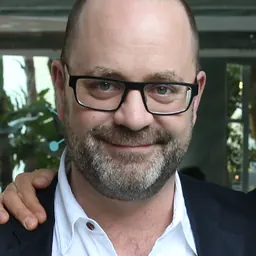
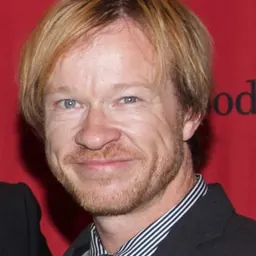
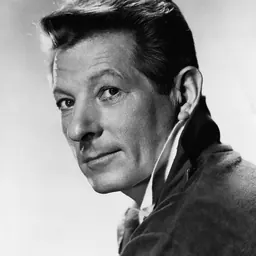
People in Norman Jewison's life
Named in this biography and alive at the same time





Related people
Same field, nearest in time
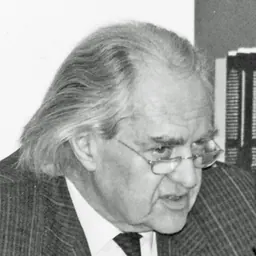



Contemporaries
People whose lives overlapped Norman Jewison's
Frequently asked questions
Who was Norman Jewison?
Canadian film director, producer and actor (1926–2024)
When was Norman Jewison born?
Norman Jewison was born on 21 July 1926 in Toronto.
When did Norman Jewison die?
Norman Jewison died on 20 January 2024 in Los Angeles.
What was Norman Jewison's occupation?
Norman Jewison was a film director, film producer, actor, screenwriter, film actor and director.
What nationality was Norman Jewison?
Norman Jewison was Canadian.
Sources & further reading
Cite this page
APA: Biography.guide. (2026). Norman Jewison. https://biography.guide/norman-jewison/
MLA: "Norman Jewison." Biography.guide, https://biography.guide/norman-jewison/.
Chicago: "Norman Jewison." Biography.guide. https://biography.guide/norman-jewison/.
Data last updated: 2026-09-20 · Spot an error? Report a correction.
Page generated 2026-09-27 05:31 UTC