
Verna Fields
American film editor and entertainment industry executive
About Verna Fields
Lived 1918 – 1982 (aged 64). Verna Fields was an American film editor, sound editor, audio technician and sound editor (filmmaking).
Verna Fields (née Hellman; March 21, 1918 – November 30, 1982) was an American film editor, film and television sound editor, educator, and entertainment industry executive. In the first phase of her career, from 1954 through to about 1970, Fields mostly worked on smaller projects that gained little recognition. She was the sound editor for several television shows in the 1950s. She worked on independent films including The Savage Eye, on government-supported documentaries of the 1960s, and on some minor studio films such as Peter Bogdanovich's first film, Targets (1968). For several years in the late 1960s, she was a film instructor at the University of Southern California. Her one major studio film, El Cid (1961), led to her only industry recognition in this phase of her career, which was the 1962 Golden Reel award for sound editing.
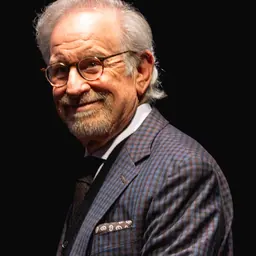
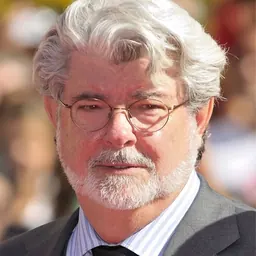
Fields came into prominence as a film editor and industry executive during the 'New Hollywood' era (1968–1982). She had established close ties with the directors Peter Bogdanovich, George Lucas, and Steven Spielberg early in their careers, and became known as their "mother cutter"; the term "cutter" is an informal variation of "film editor". The critical and commercial success of the films What's Up, Doc? (1972), American Graffiti (1973), and Jaws (1975) brought Fields a level of recognition that was unique among film editors at the time. Jaws in particular was enormously and unexpectedly profitable, and was part of the wave of films that ushered in the era of the "summer blockbuster". Fields' contributions to this success were widely acknowledged. She received an Academy Award and an American Cinema Editors Award for best editing for the film. Within a year of the film's release, she had been appointed as Vice-President for Feature Production at Universal Pictures. She was thus among the first women to enter upper-level management in the entertainment industry. Her career as an executive at Universal continued until her death in 1982 at age 64.
Early life, education, and training Verna Hellman was born in St. Louis, Missouri. She was the daughter of Selma (née Schwartz) and Samuel Hellman, who was then working as a journalist for the St. Louis Post-Dispatch and the Saturday Evening Post. Sam Hellman subsequently moved his family to Hollywood, where he became a prolific screenwriter.
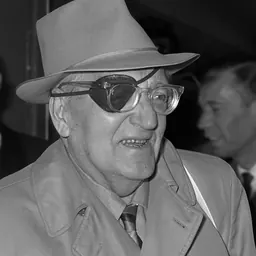
Verna Hellman graduated from the University of Southern California with a B.A. in journalism. She then held several positions at 20th Century Fox, including being the assistant sound editor on Fritz Lang's film The Woman in the Window (1944). In 1946, she married the film editor Sam Fields and stopped working. The Fieldses had two sons; one of them, Richard Fields, became a film editor. In 1954, Sam Fields died of a heart attack at the age of 38.
Career in sound editing After her husband died, Fields began a career as a television sound editor working on such shows as Death Valley Days and the children's programs Sky King and Fury. She installed a film editing lab in her home so that she could work at night while her children were young; she told them that she was the "Queen of Saturday morning". and represents her mature work. Bill Warren has described the scene in which the character Bobby starts sniping at freeway drivers from the top of a large oil storage tank: "The sound is mono, and brilliantly mixed – the entire sequence of Bobby shooting from the tanks was shot without sound. Verna Fields, then a sound editor, added all the sound effects. The result is seamlessly realistic, from the scrape of the guns on the metal of the tanks, to the crack of the rifles, to the little gasps Bobby makes just before firing."
Film editing and teaching Fields' career as a film editor commenced when the director Irving Lerner recruited her to be the editor of the film Studs Lonigan (1960); Fields and Lerner had both worked on The Savage Eye. In 1963, she edited An Affair of the Skin, which was directed by Ben Maddow (another Savage Eye contact). Over the next five years, Fields edited several other independent films, but her best known work was on the Disney film The Legend of the Boy and the Eagle (1967). She also made documentaries funded by the United States government through the Office of Economic Opportunity (OEO), the United States Information Agency (USIA), and the U.S. Department of Health, Education, and Welfare (HEW). Her greatest impact came when she began to teach film editing to a generation of students at the University of Southern California. She then operated on the fringes of the film business, for a time making documentaries for the Office of Economic Opportunity. The end of that Federal Agency pushed her back into mainstream Hollywood then being overrun by her former USC students.Fields' students had included Matthew Robbins, Willard Huyck, Gloria Katz, John Milius and George Lucas.
In 1971, Peter Bogdanovich, with whom Fields had worked on Targets, recruited her to edit What's Up, Doc? (1972); Bogdanovich had edited his previous films himself. The film was very successful, and is now considered as the second of Bogdanovich's 'golden period' that commenced with The Last Picture Show (1971). She had also hired Marcia Griffin for the job, and introduced Griffin and George Lucas; the couple subsequently married. In 1972, Lucas was directing American Graffiti. While Lucas had intended that his wife would edit the film, Universal asked him to add Verna Fields to the editing team. Over the first ten weeks of post-production, George and Marcia Lucas, along with Fields and Walter Murch (as sound editor), pieced together the original, 165-minute version of the film. Each of more than 40 scenes in the film had a continuously playing background song, with songs that had been popular around 1962, when the film's story was set. Michael Sragow has characterized the effect as "using rock 'n roll as a Greek chorus with a beat".
Fields then left American Graffiti. It took another six months of editing to create a shorter, 110-minute version of the film, but upon its release in 1973 American Graffiti was extremely successful both with critics and at the box office.
Verna Fields and Marcia Lucas were nominated for an Academy Award for Film Editing in 1974 for their work on American Graffiti; while the film won no Academy Awards, Marcia Lucas, Murch, and Fields all won Academy Awards for later work.
Steven Spielberg and Jaws Fields edited Steven Spielberg's first major film, The Sugarland Express (1974). She became widely celebrated for her work as the film editor on Spielberg's next film, Jaws (1975), for which she won both the Academy Award for Film Editing and the American Cinema Editors Eddie Award in 1976. Leonard Maltin has characterized her editing as "sensational". Gerald Peary, who interviewed Fields in 1980, wrote that, "Jaws scared the world, brought in a fortune for Universal, and made Verna Fields, who won an Academy Award, about as famous 'overnight' as an editor ever gets." In film editor Susan Korda's 2005 lecture, "We'll Fix It in the Edit!?", at the Berlinale Talent Campus, she broadly explained the contribution of editing to the film: "What is fascinating in Jaws is that the shark has a personality, the shark has an intelligence, indeed sometimes I think the shark has a sense of humor, morbid as it might be. And that was all achieved in the first two acts of the film before you see the shark. So the cutting was very essential for that."
Management for Universal Studios Shortly after the completion of Jaws in 1975, Fields was hired by Universal as an executive consultant. Some insight into Universal's reasons for hiring her can be gleaned from the fact that during the filming of Jaws, in addition to her editing, Fields had been "omnipresent...at Spielberg's beck and call by means of a walkie-talkie. Often she would shuttle back and forth on her bike between the producers in town and Spielberg at the dock for last-minute decisions". Fields had plainly earned the confidence of the producers and of the studio executives at Universal.
Throughout her career, Fields had worked independently, but in 1976, and following the unexpected success of Jaws, she accepted a position as the Feature-Production Vice-President with Universal. She was thus among the first women to hold high executive positions with the major studios. In a 1982 interview, Fields was quoted as saying, "I got a lot of credit for Jaws, rightly or wrongly."
Fields had come "up from the cutting room floor" and out of the customary, near-anonymity of film editors. Regarding this change in her career path, Fields told Peary in 1980 that "All these young filmmakers are possessive. They feel I belong to them, and they feel a certain resentment - that I went to the other side. In calmer moments, of course, they know it isn't true, that I can do more for them now."
Fields died of cancer in Los Angeles, California on November 30, 1982. She was 64 years old. The Motion Picture Sound Editors (MPSE) sponsor an annual Verna Fields Award for Student Sound Editing. The Women in Film Foundation, which honored Fields with its Crystal Award in 1981, presently administers the Verna Fields Memorial Fellowship for women film students at UCLA.
Selected filmography (editor)
Don’t just read it —
keep it.
Full-length biographies made to live with: read them, listen on the way to work, watch them tonight.
- E-book
- Audio
- Video
Instant download · yours to keep · every purchase keeps this site free
Important facts
People in Verna Fields's life
Named in this biography and alive at the same time





Related people
Same field, nearest in time



Contemporaries
People whose lives overlapped Verna Fields's

Frequently asked questions
Who was Verna Fields?
American film editor and entertainment industry executive (1918-1982)
When was Verna Fields born?
Verna Fields was born on 21 March 1918 in St. Louis.
When did Verna Fields die?
Verna Fields died on 30 November 1982 in Encino.
What was Verna Fields's occupation?
Verna Fields was a film editor, sound editor, audio technician and sound editor (filmmaking).
What nationality was Verna Fields?
Verna Fields was American.
Sources & further reading
Cite this page
APA: Biography.guide. (2026). Verna Fields. https://biography.guide/verna-fields/
MLA: "Verna Fields." Biography.guide, https://biography.guide/verna-fields/.
Chicago: "Verna Fields." Biography.guide. https://biography.guide/verna-fields/.
Data last updated: 2026-09-25 · Spot an error? Report a correction.
Page generated 2026-09-27 05:11 UTC