
Lewis Nicola
American military officer
About Lewis Nicola
Lived 1717 – 1807 (aged 89–90). Lewis Nicola was an American and British writer, military personnel, american Society for Promoting Useful Knowledge, merchant and society of the Cincinnati.
Lewis Nicola (1717 – August 9, 1807) was an Irish-born American military officer, merchant, and writer who held various military and civilian positions throughout his career. Nicola is most notable for authoring the Newburgh letter, which urged George Washington to assume a royal title. Born in Dublin, Ireland, Nicola had been an officer in the British Army, serving in Europe before immigrating to the Thirteen Colonies. Establishing a residence in Philadelphia with his family, Nicola opened a library in 1767 and was active in colonial philosophical organizations. As a result of his work to establish the American Philosophical Society, he was elected as one of its curators. When the American Revolution broke out, Nicola offered his services to the colonial government, which eventually appointed him to various positions with local forces.
In 1777, Nicola proposed that the Continental Congress establish the Invalid Corps. The Congress accepted his proposal and appointed him as its commander. The Corps was stationed at various Pennsylvania locations before moving to West Point, New York. In 1782, after the end of most hostilities but before the signing of the Treaty of Paris, Nicola wrote the Newburgh letter, which was received coldly by Washington. Returning to civilian life, Nicola nevertheless was still active in military affairs, and was recalled to service during the 1790s, despite his advanced age. During this period, he continued to research for the American Philosophical Society, writing an especially controversial document entitled The Divinity of Jesus Christ Considered, From Scripture Evidences, in which he claimed that the divinity of Jesus Christ is not supported by scripture. He died in 1807, in the possession of only $55.
Early life and entry into the British Army Very little is known of Nicola's early years. He was born in 1717 in Dublin, Ireland, to a British Army officer. His parents provided him with a strong educational background and bought him a commission in January 1740. During the 1740s, Nicola was stationed in various Irish cities: Galway, Derry, Cork, among others. Their family decided to move to Philadelphia, Pennsylvania, and they arrived August 1766. This did not work, and he eventually opened a library in September 1767. Throughout the next couple of years, Nicola moved the library to different spots before finally settling to Spruce Street and renaming it "General Circulating Library". At the start of the next year, Nicola decided to quit the dry good business for good and focus more on writing, stating "[Magazines were] the taste of the age, and found to possess many conveniences, such as gratifying the curiosity of the public, and serving as a repository for many small, though valuable pieces that would otherwise be lost to the world." He began editing his new periodical, the American Magazine, or General Repository, and the first issue was published in January 1769. This magazine, devoted to science, poetry, British and American news, folded in December after only nine issues. In July 1775, Nicola was hired by the Pennsylvania Council of Safety to inspect the local defenses in place along the banks of the Delaware River. Since this was the only military position offered to him, in January 1776 Nicola opened a beer-selling shop. This endeavor was short-lived, however, as the Pennsylvania Council of Safety gave him a second military position, this time as a barracks master. It was at this time that he wrote one of the earliest American drill manuals "A Treatise for Military Exercise Calculated of the use of the Americans" published in 1776.
Tenure with the Invalid Corps
Invalid Corps under Nicola in the early years
In March 1777, Nicola proposed to the Continental Congress the formation of an "Invalid Corps," a group of men unfit for combat but still able to perform other military duties.
On September 25, 1777, the Invalid Corps retreated to Fort Mifflin. Due to sickness, lack of clean water, and worries about British incursions, it was recommended to Nicola that he move the Corps to Trenton, New Jersey.
Following its brief stay in Trenton, the Invalid Corps moved to Allentown, Pennsylvania, as suggested by Richard Peters on September 29, 1777.
Service prior to 1782 The Invalid Corps continued its many moves, including one from Pennsylvania to Boston. However, for the next three years, the Corps remained either in Philadelphia or the future Massachusetts capital. During this three-year period, Nicola drew the "Plan of the English Lines near Philadelphia", which showed the locations of important fortifications from the Delaware River to Schuylkill River as well as other locations of British military facilities. Another reason hindering the move was pay; the Corps did not receive a payment for nearly ten months. Nicola sent letters about the situation to Washington, who wanted to have it settled as soon as the Corps arrived at West Point. Eventually, Nicola proposed to Washington that the Invalid Corps should move back to Philadelphia; however, for various reasons, Washington denied it.
During the Corps' tenure at West Point, Nicola faced many challenges. Firstly, his troops did not act the way he wanted. In October 1777, Nicola sent out an arrest warrant for Sergeant Major Jonathan Guy for giving uniforms of the Continental Army to the British. The third problem was the lack of enlisted men for the Corps. In a letter to the Pennsylvania Supreme Executive Council dated April 7, 1779, Nicola asked for a pay raise, saying he was unable to purchase food or even clothes. On February 5, 1782, the Pennsylvania Supreme Executive Council fired Nicola from the position of Town Major; their reasoning was that no such duty was needed at the time. During that same month and struggling for money, Nicola asked the Continental superintendent of finance Robert Morris for the money that the Congress did not pay the Corps. Even that, however, failed to give the Invalid Corps its money.
The Newburgh letter
On May 22, 1782, Nicola wrote the Newburgh letter to George Washington, from his army quarters in Newburgh, New York. Nicola used the first part of the letter to describe a financial hardship that both he and many of the men under his command were facing: their lack of pay. Most of the Army had been waiting for months—some even for years—for their pay from Congress. The justification for this was found in the Articles of Confederation, which allowed the Continental Congress to set up an army in time of war, but was not obligated to levy taxes. The right to collect taxes was reserved for the respective states, most of which were unable to afford the maintenance of an army. Nicola believed that this condition was the manifested weakness of a republic, writing, "When the benefits of a mixed government are pointed out and duly considered, will be examined readily adopted [...]".
After concluding his criticism of the republican form of government, Nicola suggested that Washington take the title of king. Recognizing that the terms "tyranny" and "monarchy" had too many negative connotations at the time, Nicola advised using an alternative title in the near future, "[...] But if all other things were once adjusted I believe strong argument might be produced for admitting the title of king, Which I conceive would be attended with some material advantages. Washington mentioned that he knew not what part of his conduct could have given rise to such a petition, which he thought a "calamity" facing the United States. Washington's answer to this and two other letters of apology written by Nicola on May 24 and 28 are not known. However, the relationship between Nicola and Washington soon returned to its prior normalcy.
Dissolution of the Invalid Corps and promotion In November 1782, Nicola complained to Washington about the fact that secretary at war General Benjamin Lincoln wanted the Invalid Corps dissolved, saying its costliness affected the military more than its benefits. Between June and August, Nicola was back on the road to Philadelphia. Failing to secure the route, he planned to temporarily operate a guest house. During the Whiskey Rebellion of 1794, he briefly returned to his former position as barrack master and commander of the city of Philadelphia. In 1798, he moved to Alexandria, Virginia to be closer to his daughter. He died on August 8, 1807. At the time of his death, Nicola possessed only $55.
Publications
Don’t just read it —
keep it.
Full-length biographies made to live with: read them, listen on the way to work, watch them tonight.
- E-book
- Audio
- Video
Instant download · yours to keep · every purchase keeps this site free
Important facts
People in Lewis Nicola's life
Named in this biography and alive at the same time
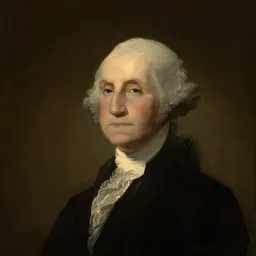
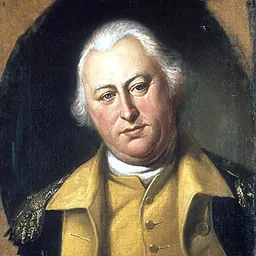
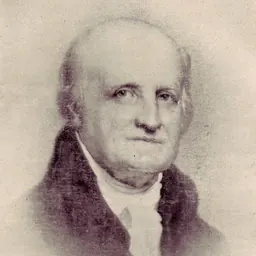
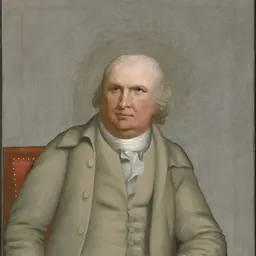
Related people
Same field, nearest in time




Contemporaries
People whose lives overlapped Lewis Nicola's




Frequently asked questions
Who was Lewis Nicola?
American military officer
When was Lewis Nicola born?
Lewis Nicola was born in 1717 in Dublin.
When did Lewis Nicola die?
Lewis Nicola died on 9 August 1807 in Alexandria.
What was Lewis Nicola's occupation?
Lewis Nicola was a writer, military personnel, american Society for Promoting Useful Knowledge, merchant and society of the Cincinnati.
What nationality was Lewis Nicola?
Lewis Nicola was American and British.
Sources & further reading
Cite this page
APA: Biography.guide. (2026). Lewis Nicola. https://biography.guide/lewis-nicola/
MLA: "Lewis Nicola." Biography.guide, https://biography.guide/lewis-nicola/.
Chicago: "Lewis Nicola." Biography.guide. https://biography.guide/lewis-nicola/.
Data last updated: 2026-09-20 · Spot an error? Report a correction.
Page generated 2026-09-27 05:16 UTC