
About Kawanabe Kyōsai
Lived 1831 – 1889 (aged 57). Kawanabe Kyōsai was a Japanese painter, graphic artist, ukiyo-e artist and artist.
was a Japanese painter and caricaturist. In the words of art historian Timothy Clark, "an individualist and an independent, perhaps the last virtuoso in traditional Japanese painting".
Biography Living through the Edo period to the Meiji period, Kyōsai witnessed Japan transform itself from a feudal country into a modern state. Born at Koga, he was the son of a samurai. His first shock was at the age of nine when he picked up a human head separated from a corpse in the Kanda river. After working for a short time as a boy with ukiyo-e artist Utagawa Kuniyoshi, he received his formal artistic training in the Kanō school under Maemura Tōwa (前村洞和? – 1841), who gave him the nickname "The Painting Demon", but Kyōsai soon abandoned the formal traditions for the greater freedom of the popular school. During the political foment which produced and followed the revolution of 1867, Kyōsai attained a reputation as a caricaturist. His very long painting on makimono (a horizontal type of Japanese handscroll/scroll) "The battle of the farts" may be seen as a caricature of this foment. He was arrested three times and imprisoned by the authorities of the shogunate. Soon after the assumption of effective power by Emperor Meiji, a great congress of painters and men of letters was held at which Kyōsai was present. He again expressed his opinion of the new movement in a caricature, which had a great popular success, but also brought him into the hands of the police, this time of the opposite party.
Kyōsai's collaboration with the writer Kanagaki Robun is said to have begun when Robun met the painter while writing an account of the 1855 Edo earthquake, the day after it struck; a sketch of a catfish by Kyōsai that accompanied Robun's text became Kyōsai's first single-sheet ukiyo-e woodblock print. Its commercial success led Robun to go on to produce a sequence of similar catfish images, known as namazu-e. Kyōsai's daughter, Kawanabe Gyōsui, went on to become a significant eccentric artist in the second half of the 19th century, teaching nihonga at Joshibi University and producing prints based on Edo-era paintings, triptychs paying homage to the style of Toyohara Chikanobu, and, in the 1930s, several kachō-ga (bird-and-flower paintings). The magazine was heavily influenced by Japan Punch, founded in 1862 by Charles Wirgman, a British cartoonist. Eshinbun Nipponchi had a very simple style of drawings and did not become popular with many people, and ended after just three issues.
In addition to his caricatures, Kyōsai painted a large number of pictures and sketches, often choosing subjects from Japanese folklore, Noh plays, nature, and religion, for example The Temptation of Shaka Niorai or The Goddess Kwannon on a dragon (on kakejiku frame). A fine collection of these works is preserved in the British Museum; and there are also good examples in the National Art Library at South Kensington and the Guimet Museum at Paris. was established in 1977, located at Warabi, Saitama Prefecture, Japan.
Erwin Bälz wrote in his diary that Kyosai died because of gastric cancer.
A crater on Mercury has been named in his honor.
Biographies The most important work about Kyōsai's art and life was written by himself: , half autobiography and half painting manual. An important contemporary work concerning the artist is , by . The work was finished in 1899, but published only in 1984.
Many westerners came to visit Kyōsai and wrote substantial memoirs about the artist. Two of the most important, both rare, are: Émile Étienne Guimet, Promenades japonaises, Paris, 1880 Josiah Conder, Paintings and Studies by Kawanabe Kyōsai, Tokyo, 1911. Conder was a serious student of Japanese art; after some initial rejections, he was accepted as Kyōsai's pupil, and accompanied him for ten years until the master's death.
The most updated, and easily available, reference to Kyōsai's life and works in English is: Timothy Clark, Demon of Painting: the Art of Kawanabe Kyōsai, London: Published for the Trustees of the British Museum by the British Museum Press, 1993
Gallery
Don’t just read it —
keep it.
Full-length biographies made to live with: read them, listen on the way to work, watch them tonight.
- E-book
- Audio
- Video
Instant download · yours to keep · every purchase keeps this site free
Important facts
more
Dōiku Kawanabe, Shōjō Kyōsai, Kyōsai Kawanabe, Suiraibō, Shūzaburō Kawanabe, Shūma, Kawanabe Gyōsai, Zekū Nyūdō, Gyōsai Kawanabe, Tōiku Noriyuki, Tōiku Noriyuki Kawanabe, Kawanabe Kiosa, Kawanabe Kyosai, Kawanabe Kyousai, Kyôsai Kawanabe, (Nyokū) Gyōsai, Shōjō/ ShōjōanPeople in Kawanabe Kyōsai's life
Named in this biography and alive at the same time


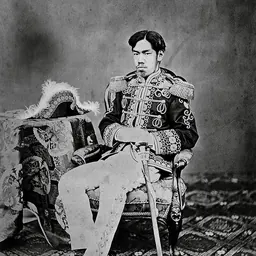
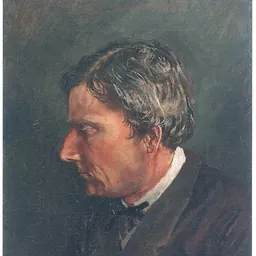
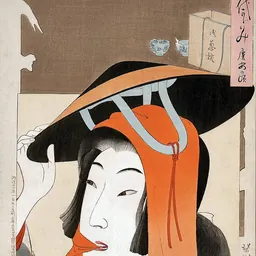
Related people
Same field, nearest in time
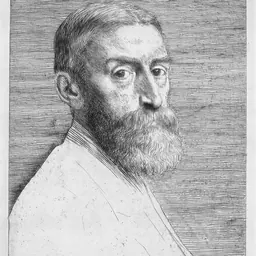

Contemporaries
People whose lives overlapped Kawanabe Kyōsai's


Frequently asked questions
Who was Kawanabe Kyōsai?
Japanese artist (1831–1889)
When was Kawanabe Kyōsai born?
Kawanabe Kyōsai was born on 18 May 1831 in Koga.
When did Kawanabe Kyōsai die?
Kawanabe Kyōsai died on 26 April 1889 in Tokyo Prefecture.
What was Kawanabe Kyōsai's occupation?
Kawanabe Kyōsai was a painter, graphic artist, ukiyo-e artist and artist.
What nationality was Kawanabe Kyōsai?
Kawanabe Kyōsai was Japanese.
Sources & further reading
Cite this page
APA: Biography.guide. (2026). Kawanabe Kyōsai. https://biography.guide/kawanabe-kyosai/
MLA: "Kawanabe Kyōsai." Biography.guide, https://biography.guide/kawanabe-kyosai/.
Chicago: "Kawanabe Kyōsai." Biography.guide. https://biography.guide/kawanabe-kyosai/.
Data last updated: 2026-09-20 · Spot an error? Report a correction.
Page generated 2026-09-27 05:21 UTC