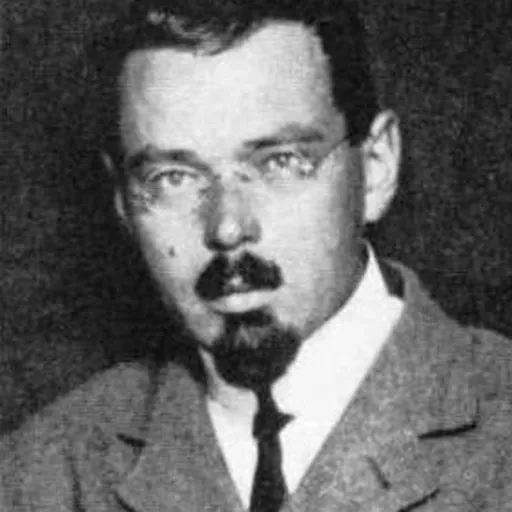
About Karl Schmidt-Rottluff
Lived 1884 – 1976 (aged 91). Karl Schmidt-Rottluff was a German sculptor, painter, university teacher, graphic artist, illustrator and lithographer.
Karl Schmidt-Rottluff (; Karl Schmidt until 1905; 1 December 1884 – 10 August 1976) was a German expressionist painter and printmaker; he was one of the four founders of the artist group Die Brücke.
Life and work Schmidt-Rottluff was born in Rottluff, nowadays a district of Chemnitz, on 1 December 1884. He attended the humanistische gymnasium (classics-oriented secondary school) in Chemnitz, where he befriended Erich Heckel. He enrolled in architecture at the Sächsische Technische Hochschule in Dresden in 1905, following in Heckel's footsteps, but gave up after one term. Whilst he was there, however, Erich Heckel introduced him to Ernst Ludwig Kirchner and Fritz Bleyl. They all passionately shared similar artistic interests and used architecture as a front to study art. They founded Die Brücke in Dresden on 7 June 1905, with the aim of creating a style that was uncompromising and which renounced all traditions. Its first exhibition opened in Leipzig in November of the same year.
In 1906, Schmidt added his native town of Rottluff to his surname. He spent the summer of that year on the island of Alsen with Emil Nolde, where he convinced him to join Die Brücke. Being known as a loner of the group, Schmidt-Rottluff spent the summers on the coast at Dangast, near Bremen from 1907 to 1912.
From 1905 to 1911, during the group's Dresden stay, Schmidt-Rottluff and his fellow group members followed a similar path of development, and were heavily influenced by the styles of Art Nouveau and Neo-impressionism. Schmidt-Rottluff’s works stood out from his peers because of their balance of composition and simple form, which together served to exaggerate their flatness. He spent 1910 painting some of his most infamous landscape works that received recognition and fame. In December 1911, he and the other members of Die Brücke moved from Dresden to Berlin. In 1937, 608 of Schmidt-Rottluff's paintings were seized from museums by the Nazis and several of them shown in exhibitions of "degenerate art". By 1941, he had been expelled from the painters guild and banned from painting. Much of his work was lost in the destruction of his Berlin studio in World War II, where he briefly returned to Rottluff afterwards to recover. the Neue Galerie, the Los Angeles County Museum of Art, the High Museum of Art, the British Museum, the North Carolina Museum of Art, the Portland Art Museum, the Smart Museum of Art, the University of Michigan Museum of Art, the Cooper Hewitt, the Clark Art Institute, the McNay Art Museum, the Indianapolis Museum of Art, the Thyssen-Bornemisza National Museum, the Stadel Museum, the Brooklyn Museum, the Hammer Museum, the Detroit Institute of Arts, the Fine Arts Museums of San Francisco, the Saint Louis Art Museum, the Centre Pompidou, and the Muscarelle Museum of Art. The Museum am Theaterplatz in Chemnitz (Gunzenhauser Museum) has a large collection of work from Schmidt-Rottluff.
In 2011, the Neue Nationalgalerie returned two paintings by Schmidt-Rottluff, a 1920 self-portrait and a 1910 landscape titled Farm in Dangast, to the heirs of Robert Graetz, a Berlin businessman who was deported by the Nazis to Poland in 1942. A German government panel, led by former constitutional judge Jutta Limbach, had previously ruled that the loss was almost certainly a result of Nazi persecution and the paintings should be returned. Schmidt Rottluff's esteemed Self Portrait with Monocle is now in the Staatliche Museum.
Art market In 1997, £925,500 was paid for Schmidt-Rottluff's Dangaster Park (1910) at Sotheby's in London. At a 2001 Phillips de Pury auction, British art dealer James Roundell bought Schmidt-Rottluff's The Reader (1911) for $3.9 million. The top price ever paid at auction for a work by Schmidt-Rottluff was almost $6 million for Akte im Freien – Drei badende Frauen (Outdoor Nudes – Three Bathing Women) (1913) at Christie’s in London in 2008.
Don’t just read it —
keep it.
Full-length biographies made to live with: read them, listen on the way to work, watch them tonight.
- E-book
- Audio
- Video
Instant download · yours to keep · every purchase keeps this site free
Important facts
more
K. Schmidt-RottluffPeople in Karl Schmidt-Rottluff's life
Named in this biography and alive at the same time


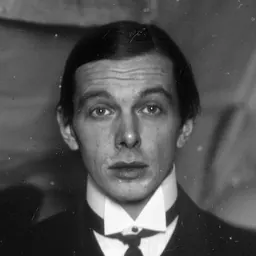




Related people
Same field, nearest in time



Contemporaries
People whose lives overlapped Karl Schmidt-Rottluff's

Frequently asked questions
Who was Karl Schmidt-Rottluff?
German artist (1884–1976)
When was Karl Schmidt-Rottluff born?
Karl Schmidt-Rottluff was born on 1 December 1884 in Rottluff.
When did Karl Schmidt-Rottluff die?
Karl Schmidt-Rottluff died on 10 August 1976 in West Berlin.
What was Karl Schmidt-Rottluff's occupation?
Karl Schmidt-Rottluff was a sculptor, painter, university teacher, graphic artist, illustrator and lithographer.
What nationality was Karl Schmidt-Rottluff?
Karl Schmidt-Rottluff was German.
Sources & further reading
· Wikipedia: Karl Schmidt-Rottluff
· DBpedia: Karl Schmidt-Rottluff
Cite this page
APA: Biography.guide. (2026). Karl Schmidt-Rottluff. https://biography.guide/karl-schmidt-rottluff/
MLA: "Karl Schmidt-Rottluff." Biography.guide, https://biography.guide/karl-schmidt-rottluff/.
Chicago: "Karl Schmidt-Rottluff." Biography.guide. https://biography.guide/karl-schmidt-rottluff/.
Data last updated: 2026-09-24 · Spot an error? Report a correction.
Portrait: Wikimedia Commons · author & licence
Page generated 2026-09-27 05:08 UTC