
About Erich Heckel
Lived 1883 – 1970 (aged 86). Erich Heckel was a German painter, university teacher, printmaker, illustrator, photographer and graphic artist.
Weisses Haus in Dangast, oil painting by Erich Heckel, 1908. Erich Heckel (31 July 1883 – 27 January 1970) was a German painter and printmaker, and a founding member of the group Die Brücke ("The Bridge") which existed 1905–1913. His work was part of the art competitions at the 1928 Summer Olympics and the 1932 Summer Olympics.
Biography Heckel was born in Döbeln, Saxony, the son of a railway engineer. Between 1897 and 1904 he attended the Realgymnasium in Chemnitz, before studying architecture in Dresden. He left after three terms, shortly after the foundation of Die Brücke, an artists' group of which he was secretary and treasurer. He worked in the office of the architect Wilhelm Kreis until July 1907, when he resigned to become a full-time artist.
Career Heckel met the other founding members of Die Brücke, Ernst Ludwig Kirchner, Karl Schmidt-Rottluff, and Fritz Bleyl, while studying architecture in Dresden. The foursome equally regarded pursuing a degree in architecture as a compromise with their respectable middle-class parents who would have never supported them, had they wanted to study art. Heckel attended the Dresden Polytechnic Institute for only eighteen months, after which time he accepted a job as a draughtsman at Wilhem Kreis's architectural studio. He was able to use the position for the benefit of the Brücke. When the firm was asked to design an exhibition room for the lamp manufacturer Max Seifert, Heckel was able to persuade the industrialist that it was worthwhile giving wall space and displays to Die Brücke for an exhibition.
Art As a member of Die Brücke, Heckel often filled the role of business manager, which allowed the collective to network with other upcoming artists at the time, such as the Munich-based Franz Marc. This subsequently led to greater publicity for the collective, such as their mention in the almanac of Franz Marc's own artistic coalition, the Blaue Reiter. In 1906 and 1907 the Die Brücke had another exhibition in Löbtau, devoted exclusively to graphics and including a group of woodcuts by Wassily Kandinsky. Unfortunately, the group once again failed to strike a chord with the public. From May 1915 until the end of the war in November 1918, Heckel served in the Ostend emergency hospital. Housed in the railway station, it was home to a true artists’ colony. The orderlies painted, made woodcuts and read and discussed literature and poetry. They adorned the building with murals and window decorations and produced special works at Christmas. Heckel befriended James Ensor who invited him into his house and his studio. He also continued his artistic activities in Germany. On the home front, he established contacts with collectors and prepared for exhibitions. As a draughtsman, he made numerous sketches of the places he visited and the people he observed. But as a painter, the Flemish landscape and North Sea created the deepest impression, especially the sunlight penetrating the unusual cloud formations.
Between 1922 and 1924 Heckel painted one small, arched room at the invitation of the Angermuseum on the ground floor of the museum. It is now called the Heckelraum. The mural paintings, which were subsequently given the title Lebensstufen (in English: Stages in Life), are considered to be the most important surviving wall paintings of German Expressionism.
In 1937 the Nazi Party declared his work "degenerate"; it forbade him to show his work in public, and more than 700 items of his art were confiscated from German museums. By 1944 all of his woodcut blocks and print plates had been destroyed.
After World War II Heckel lived at Gaienhofen near Lake Constance, teaching at the Karlsruhe Academy until 1955. He continued painting until his death in Radolfzell in 1970.
Legacy Like most members of Die Brücke, he was a prolific printmaker: Dube's catalogues raisonné describe with 465 woodcuts, 375 etchings, and 400 lithographs. More than 200 of them, mostly etchings, are from the last seven years of his life.
A major retrospective exhibition, Erich Heckel – His Work in the 1920s, was held October 2004 – February 2005 at the Brücke Museum in Berlin.
In 2000, Heckel's Dangaster Dorflandschaft (Dangast village landscape) (1909) was sold for £1.21 million at Sotheby's in London.
David Bowie based the cover of his 1977 album "Heroes" on Heckel's painting Roquairol. The same painting also provided the basis for the cover of Iggy Pop's 1977 album The Idiot.
From 9 October 2025 to 12 January 2026, the Neue Galerie exhibited Erich Heckel, a monographic exhibit of works created between 1905 and 1920.
Critical reception The critic James Auer has said that Heckel's Franzi Standing in many ways encapsulates the principal virtues of the entire Expressionist movement. At once frank and respectful, daring and compassionate, it depicts a girl-woman on the cusp of adolescence, innocent and free yet, at the same time, curious and knowing.
Gallery of work
Don’t just read it —
keep it.
Full-length biographies made to live with: read them, listen on the way to work, watch them tonight.
- E-book
- Audio
- Video
Instant download · yours to keep · every purchase keeps this site free
Important facts
People in Erich Heckel's life
Named in this biography and alive at the same time
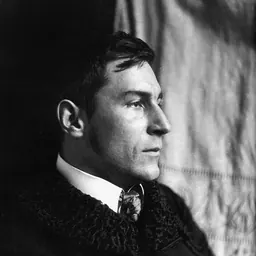
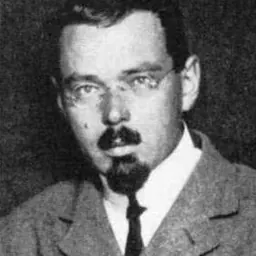
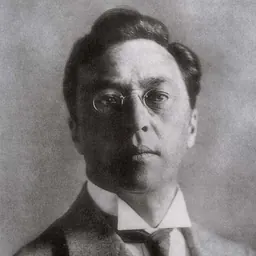



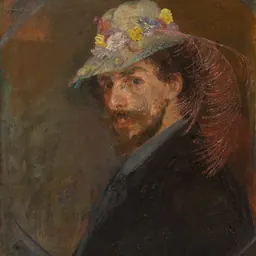
Related people
Same field, nearest in time

Contemporaries
People whose lives overlapped Erich Heckel's


Frequently asked questions
Who was Erich Heckel?
German artist (1883–1970)
When was Erich Heckel born?
Erich Heckel was born on 31 July 1883 in Döbeln.
When did Erich Heckel die?
Erich Heckel died on 27 January 1970 in Radolfzell am Bodensee.
What was Erich Heckel's occupation?
Erich Heckel was a painter, university teacher, printmaker, illustrator, photographer and graphic artist.
What nationality was Erich Heckel?
Erich Heckel was German.
Sources & further reading
Cite this page
APA: Biography.guide. (2026). Erich Heckel. https://biography.guide/erich-heckel/
MLA: "Erich Heckel." Biography.guide, https://biography.guide/erich-heckel/.
Chicago: "Erich Heckel." Biography.guide. https://biography.guide/erich-heckel/.
Data last updated: 2026-09-20 · Spot an error? Report a correction.
Page generated 2026-09-27 05:27 UTC