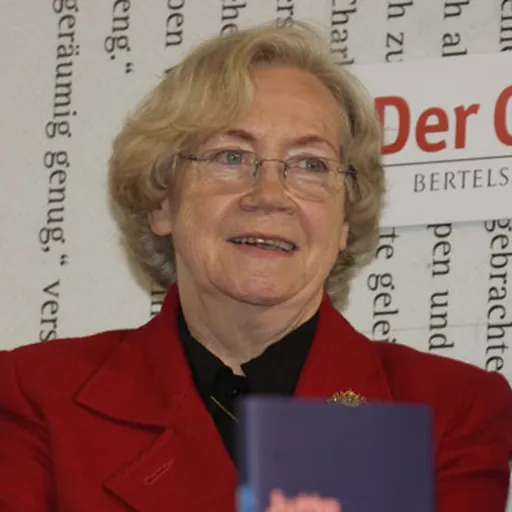
Jutta Limbach
German judge and politician (SPD),President of the Federal Constitutional Court
About Jutta Limbach
Lived 1934 – 2016 (aged 82). Jutta Limbach was a German judge, politician, university teacher, jurist and member of the Constitutional Court of Austria.
Jutta Limbach (27 March 1934 – 10 September 2016) was a German jurist and politician. She was a member of the Social Democratic Party of Germany (SPD) and served as President of the Federal Constitutional Court of Germany from 1994 to 2002, the first woman in this office.
Early life and education Born as Jutta Ryneck, Limbach grew up in Berlin. Her grandmother Elfriede Ryneck was a member of the Weimar National Assembly and the Reichstag, and her father Ernst Ryneck served as mayor of Pankow after 1945.
Limbach studied law in Berlin and Freiburg. She passed the first and the second state law examination in 1958 and 1962. From 1963 to 1966 she worked as a research assistant at the law school of the Free University of Berlin and received her doctorate in law in 1966, with a thesis in legal sociology.
Career Limbach fulfilled the requirements to be appointed professor by the German educational system in 1971. In 1972, she was appointed professor for civil law, commercial law and legal sociology at the Free University.
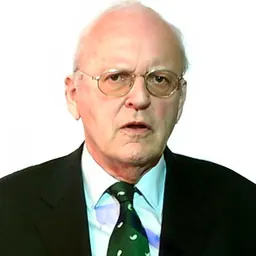
Judge at the Federal Constitutional Court of Germany In 1994, Limbach was appointed to the position of vice-president of the Federal Constitutional Court of Germany, the same year she became president, succeeding Roman Herzog. She was the first female president of the court and served in this role until she reached the age limit of 68 in 2002. During her leadership, the 2nd Senate of the Court issued numerous important rulings, including decisions on the criminal prosecution of former Stasi spies (BVerfGE 92, 277), on Germany's accession to the Economic and Monetary Union of the European Union (BVerfGE 97, 350) and on the German system of equalization payments (BVerfGE 101, 158).
Later role Limbach then became president of the German non-profit organization Goethe-Institut. In 2004, she was repeatedly named as a possible candidate to succeed Johannes Rau as President of Germany in that year's election. Limbach was a member of the committee of the Peace Prize of the German Book Trade.
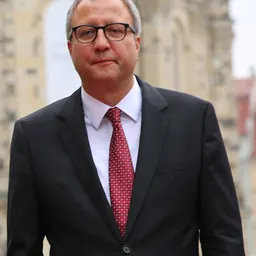
In 2005 and 2006 Limbach was a member of the Group of Wise Persons who was tasked by the Council of Europe to develop strategies how to manage the workload of the European Court of Human Rights. In 2007, she was a member of the Group of Intellectuals for Intercultural Dialogue set up at the initiative of the European Commission. instead, Andreas Voßkuhle was nominated by the SPD.
In 2013 Limbach was awarded the Mercator Visiting Professorship for Political Management at the University of Duisburg-Essen's NRW School of Governance. During the winter semester of 2014 she gave both lectures and seminars at the university.
Limbach Commission on Nazi art From 2003, Limbach headed the so-called Limbach Commission (Advisory Commission on the return of cultural property seized as a result of Nazi persecution, especially Jewish property), The eight members of the commission are charged by Germany's federal, state and local governments with helping to return art looted by the Nazis to its rightful owners gathered for the first time. By 2014, the Limbach Commission had been called upon to advise on about a dozen restitution cases.
Awards and recognitions Limbach held honorary degrees from the Masaryk University (1997), University of Basel (1999), Erasmus University Rotterdam (2002), University College London (2002), York University (2003) and University of Bremen (2008). In 1999, she was named Honorary Bencher of the Gray's Inn.
Don’t just read it —
keep it.
Full-length biographies made to live with: read them, listen on the way to work, watch them tonight.
- E-book
- Audio
- Video
Instant download · yours to keep · every purchase keeps this site free
Important facts
People in Jutta Limbach's life
Named in this biography and alive at the same time


Related people
Same field, nearest in time





Contemporaries
People whose lives overlapped Jutta Limbach's




Frequently asked questions
Who was Jutta Limbach?
German judge and politician (SPD),President of the Federal Constitutional Court
When was Jutta Limbach born?
Jutta Limbach was born on 27 March 1934 in Berlin.
When did Jutta Limbach die?
Jutta Limbach died on 10 September 2016 in Berlin.
What was Jutta Limbach's occupation?
Jutta Limbach was a judge, politician, university teacher, jurist and member of the Constitutional Court of Austria.
What nationality was Jutta Limbach?
Jutta Limbach was German.
Sources & further reading
Cite this page
APA: Biography.guide. (2026). Jutta Limbach. https://biography.guide/jutta-limbach/
MLA: "Jutta Limbach." Biography.guide, https://biography.guide/jutta-limbach/.
Chicago: "Jutta Limbach." Biography.guide. https://biography.guide/jutta-limbach/.
Data last updated: 2026-09-22 · Spot an error? Report a correction.
Portrait: Wikimedia Commons · author & licence
Page generated 2026-09-27 05:04 UTC