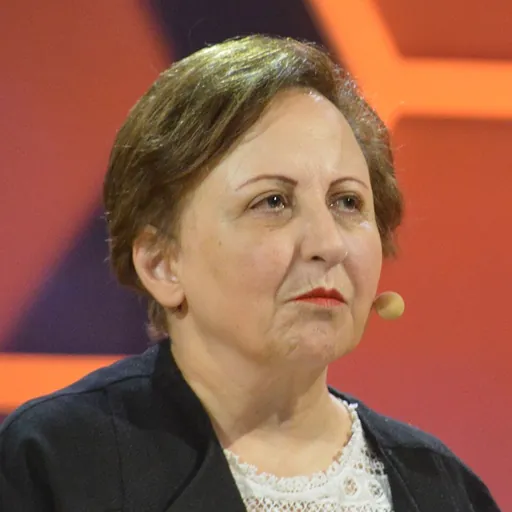
Shirin Ebadi
Iranian lawyer, human rights activist, and Nobel Peace Prize recipient
About Shirin Ebadi
Born 1947. Shirin Ebadi is an Iranian judge, writer, human rights defender, peace activist, lawyer and women's rights activist, known for Defenders of Human Rights Center.
Nobel Peace Prize On 10 October 2003, Ebadi was awarded the Nobel Peace Prize for her efforts for democracy and human rights, especially for the rights of women and children. The selection committee praised her as a "courageous person" who "has never heeded the threat to her own safety". In her acceptance speech, Ebadi stated that she is against a policy of forced regime change.
Ebadi presented a book entitled Democracy, human rights, and Islam in modern Iran: Psychological, social and cultural perspectives to the Nobel Committee. The volume documents the historical and cultural basis of democracy and human rights from Cyrus and Darius, 2,500 years ago to Mohammad Mossadeq, the prime minister of modern Iran who nationalized the oil industry. In her acceptance speech, Ebadi criticized repression in Iran and insisted that Islam was compatible with democracy, human rights and freedom of opinion. In the same speech she also criticized US foreign policy, particularly the War on terrorism.
IRNA reported the Nobel committee's decision in a few lines that the evening newspapers and the Iranian state media waited hours to report, and as the last item on the radio news update. Reformist officials were said to have "generally welcomed the award", but "[came] under attack for doing so." Reformist president Mohammad Khatami did not officially congratulate Ebadi and stated that although the scientific Nobels are important, the Peace Prize is "not very important" and was awarded to Ebadi on the basis of "totally political criteria". Iran denied the charges.
Post-Nobel prize
Since receiving the Nobel Prize, Ebadi has lectured, taught and received awards in different countries, issued statements and defended people accused of political crimes in Iran. She has traveled to and spoken to audiences in India, the United States, and other countries; released her autobiography in an English translation. With five other Nobel laureates, she created the Nobel Women's Initiative to promote peace, justice, and equality for women. In 2019, Ebadi called for a treaty to end violence against women, in support of Every Woman Coalition.
Threats In April 2008, she told Reuters news agency that Iran's human rights record had regressed in the past two years and agreed to defend Baháʼís arrested in Iran in May 2008.
In April 2008, Ebadi released a statement saying: "Threats against my life and security and those of my family, which began some time ago, have intensified," and that the threats warned her against making speeches abroad and to stop defending Iran's persecuted Baháʼí community. In August 2008, the IRNA news agency published an article attacking Ebadi's links to the Baháʼí Faith and accused her of seeking support from the West. It also criticized Ebadi for defending homosexuals, appearing without the Islamic headscarf abroad, questioning Islamic punishments, and "defending CIA agents". It accused her daughter, Nargess Tavassolian, of conversion to the Baháʼí faith, a capital offense in the Islamic Republic. However Shirin Ebadi has denied it, saying, "I am proud to say that my family and I are Shiites." Her daughter believes "the government wanted to scare my mother with this scenario." Ebadi believes the attacks are in retaliation for her agreeing to defend the families of the seven Baháʼís arrested in May.
In December 2008, Iranian police shut down the office of a human rights group led by her. Another human rights group, Human Rights Watch, has said it was "extremely worried" about Ebadi's safety, Among many other complaints, the group accused the IRI of detaining "Ebadi's husband and sister for questioning and threatened them with losing their jobs and eventual arrest if Ebadi continues her human rights advocacy." Ebadi also said her bank account was frozen by authorities. Norwegian Minister of Foreign Affairs Jonas Gahr Støre expressed his "shock and disbelief" at the incident.
Post-Nobel Prize timeline
2003 (November) – She declared that she would provide legal representation for the family of the murdered Canadian freelance photographer Zahra Kazemi. The trial was halted in July 2004, prompting Ebadi and her team to leave the court in protest that their witnesses had not been heard. 2004 (January) – During the World Social Forum in Bombay Ebadi, speaking at a small girls' school run by the NGO "Sahyog", proposed that 30 January (the day Mahatma Gandhi was assassinated) be observed as International Day of Non-Violence. This proposal was brought to her by school children in Paris by their Indian teacher Akshay Bakaya. Three years later, Sonia Gandhi and Archbishop Desmond Tutu relayed the idea at the Delhi Satyagraha Convention in January 2007, preferring however to propose Gandhi's birthday on 2 October. The UN General Assembly on 15 June 2007 adopted 2 October as the International Day of Non-Violence. 2004 – Ebadi was listed by Forbes magazine as one of the "100 most powerful women in the world". She is also included in a published list of the "100 most influential women of all time". 2005 Spring – Ebadi taught a course on "Islam and Human Rights" at the University of Arizona's James E. Rogers College of Law in Tucson, Arizona. 2005 (12 May) – Ebadi delivered an address on Senior Class Day at Vanderbilt University, Nashville, Tennessee. Vanderbilt Chancellor Gordon Gee presented Ebadi with the Chancellor's Medal for her human rights work. 2005 – Ebadi was voted the world's 12th leading public intellectual in The 2005 Global Intellectuals Poll by Prospect (UK). 2006 – Random House released her first book for a Western audience, Iran Awakening: A Memoir of Revolution and Hope, with Azadeh Moaveni. A reading of the book was serialized as BBC Radio 4's Book of the Week in September 2006. American novelist David Ebershoff was the book's editor. 2006 – Ebadi was one of the founders of The Nobel Women's Initiative along with sister Nobel Peace laureates Betty Williams, Mairead Corrigan Maguire, Wangari Maathai, Jody Williams and Rigoberta Menchú Tum. Six women representing North America and South America, Europe, the Middle East and Africa decided to bring together their experiences in a united effort for peace with justice and equality. The Nobel Women's Initiative aims to help strengthen work being done in support of women's rights worldwide. 2007 (17 May) – Ebadi announced that she would defend the Iranian American scholar Haleh Esfandiari, who is jailed in Tehran. 2008 (March) – Ebadi tells Reuters news agency that Iran's human rights record had regressed in the past two years. 2008 (7 August) – Ebadi announced via the Muslim Network for Baháʼí Rights that she would defend in court the seven Baháʼí leaders arrested in the spring. 2008 (1 September) – Ebadi published her book Refugee Rights in Iran exposing the lack of rights given to Afghan refugees living in Iran. 2008 (21 December) – Ebadi's office of the Center for the Defense of Human Rights was raided and closed. 2008 (29 December) – Islamic authorities close Ebadi's Center for Defenders of Human Rights, raiding her private office, seizing her computers and files. Worldwide condemnation of raid. 2009 (16 June) – In the midst of nationwide protests against the very surprising and highly suspect election results giving incumbent President Mahmoud Ahmadinejad a landslide victory, Ebadi calls for new elections in an interview with Radio Free Europe. 2009 (24 September) – Touring abroad to lobby international leaders and highlight the Islamic regime's human rights abuses since June, Ebadi criticizes the British government for putting talks on the Islamic regime's nuclear program ahead of protesting its brutal suppression of opposition. Noting the British Ambassador attended President Ahmadinejad's inauguration, she said, "`That's when I felt that human rights were being neglected. ... Undemocratic countries are more dangerous than a nuclear bomb. It's undemocratic countries that jeopardize international peace.`" She calls for "the downgrading of Western embassies, the withdrawal of ambassadors and the freezing of the assets of Iran's leaders." 2009 (29 December) – Ebadi's sister Noushin Ebadi was detained apparently to silence Ebadi who is abroad. "She was neither politically active nor had a role in any rally. It's necessary to point out that in the past two months she had been summoned several times to the Intelligence Ministry, who told her to persuade me to give up my human rights activities. I have been arrested solely because of my activities in human rights," Ebadi said. 2010 (June) – Ebadi's husband denounced her on state television. According to Ebadi this was a coerced confession after his arrest and torture. 2012 (26 January) — in a statement released by the International Campaign for Human Rights in Iran, Ebadi called on "all freedom-loving people across the globe" to work for the release of three opposition leaders — Zahra Rahnavard, Mir Hossein Mousavi, and Mehdi Karroubi — who have been confined to house arrest for nearly a year.
Lawsuits Lawsuit against the United States In 2004, Ebadi filed a lawsuit against the U.S. Department of Treasury because of restrictions she faced over publishing her memoir in the United States. American trade laws prohibit writers from embargoed countries. The law also banned American literary agent Wendy Strothman from working with Ebadi. Azar Nafisi wrote a letter in support of Ebadi. Nafisi said that the law infringes on the First Amendment. After a lengthy legal battle, Ebadi won and was able to publish her memoir in the United States.
Other activities Apne Aap Women Worldwide, Co-Chair of the International Advisory Board Aurora Prize, Member of the Selection Committee (since 2015) Business for Peace Award Committee, Member (2009) Reporters Without Borders (RWB), Member of the Emeritus Board Scholars at Risk (SAR), Member of the Ambassadors Council Nuremberg International Human Rights Award, Member of the Jury (2004–2020)
Recognition Awards Awarded plate by Human Rights Watch, 1996 Official spectator of Human Rights Watch, 1996 Awarded Rafto Prize, Human Rights Prize in Norway, 2001 Nobel Peace Prize in October 2003 Women's eNews 21 Leaders for the 21st Century Award, 2004 International Democracy Award, 2004 James Parks Morton Interfaith Award from the Interfaith Center of New York, 2004 ‘Lawyer of the Year’ award, 2004 UCI Citizen Peacebuilding Award, 2005 The Golden Plate Award by the American Academy of Achievement, 2005 Legion of Honor award, 2006 Toleranzpreis der Evangelischen Akademie Tutzing, 2008 Award for the Global Defence of Human Rights, International Service Human Rights Award, 2009 Wolfgang Friedmann Memorial Award, Columbia Journal of Transnational Law, 2013 Time 100, Time magazine, 2026
Honorary degrees Doctor of Laws, Williams College, 2004 Doctor of Laws, Brown University, 2004 Doctor of Laws, University of British Columbia, 2004 Honorary doctorate, University of Maryland, College Park, 2004 Honorary doctorate, University of Toronto, 2004 Honorary doctorate, Simon Fraser University, 2004 Honorary doctorate, University of Akureyri, 2004 Honorary doctorate, Australian Catholic University, 2005 Honorary doctorate, University of San Francisco, 2005 Honorary doctorate, Concordia University, 2005 Honorary doctorate, The University of York, The University of Canada, 2005 Honorary doctorate, Université Jean Moulin in Lyon, 2005 Honorary doctorate, Loyola University Chicago, 2007 Honorary Doctorate The New School University, 2007 Honorary Doctor of Laws, Marquette University, 2009 Honorary Doctor of Law, University of Cambridge, 2011 Honorary Doctorate, School of Oriental and African Studies (SOAS) University of London, 2012 Honorary Doctor of Laws, Law Society of Upper Canada, 2012
Books published Iran Awakening: One Woman's Journey to Reclaim Her Life and Country (2007) Refugee Rights in Iran (2008) The Golden Cage: Three brothers, Three choices, One destiny (2011) Until We Are Free (2016)
Don’t just read it —
keep it.
Full-length biographies made to live with: read them, listen on the way to work, watch them tonight.
- E-book
- Audio
- Video
Instant download · yours to keep · every purchase keeps this site free
Important facts
People in Shirin Ebadi's life
Named in this biography and alive at the same time

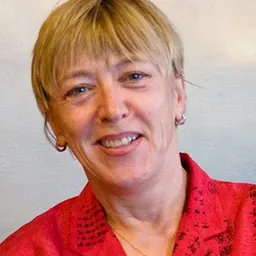
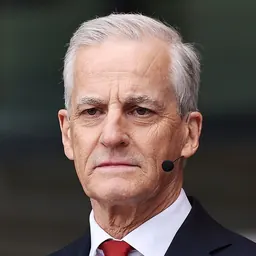

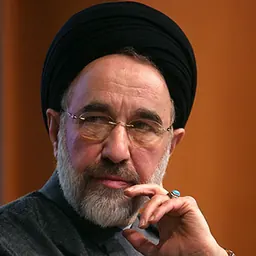



Related people
Same field, nearest in time


Contemporaries
People whose lives overlapped Shirin Ebadi's





Frequently asked questions
Who is Shirin Ebadi?
Iranian lawyer, human rights activist, and Nobel Peace Prize recipient
When was Shirin Ebadi born?
Shirin Ebadi was born on 21 June 1947 in Hamadan.
What is Shirin Ebadi's occupation?
Shirin Ebadi is a judge, writer, human rights defender, peace activist, lawyer and women's rights activist.
What is Shirin Ebadi known for?
Shirin Ebadi is known for Defenders of Human Rights Center.
What nationality is Shirin Ebadi?
Shirin Ebadi is Iranian.
Sources & further reading
Cite this page
APA: Biography.guide. (2026). Shirin Ebadi. https://biography.guide/shirin-ebadi/
MLA: "Shirin Ebadi." Biography.guide, https://biography.guide/shirin-ebadi/.
Chicago: "Shirin Ebadi." Biography.guide. https://biography.guide/shirin-ebadi/.
Data last updated: 2026-09-20 · Spot an error? Report a correction.
Page generated 2026-09-27 05:09 UTC