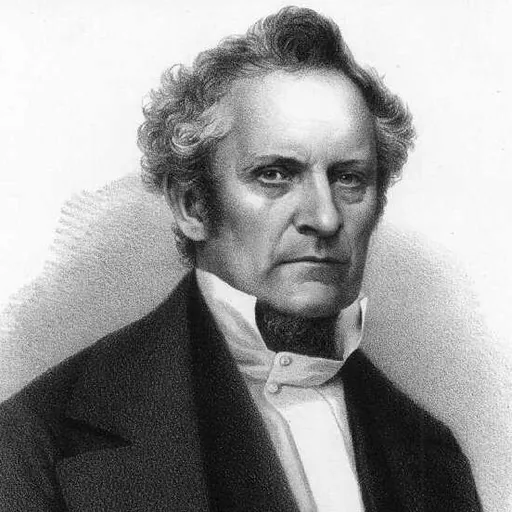
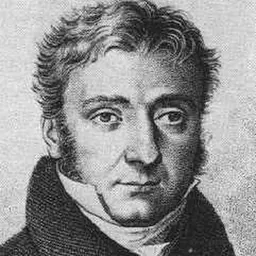
Julius Plücker
German mathematician and physicist
About Julius Plücker
Lived 1801 – 1868 (aged 66). Julius Plücker was a German physicist, mathematician and university teacher, known for Homogeneous coordinates, Plücker coordinates and Plücker embedding.
Julius Plücker (16 July 1801 – 22 May 1868) was a German mathematician and physicist. He made fundamental contributions to the field of analytical geometry and was a pioneer in the investigations of cathode rays that led eventually to the discovery of the electron. He also vastly extended the study of Lamé curves.
Biography
Early years Plücker was born at Elberfeld (now part of Wuppertal) on July 16th, 1801. After being educated at Düsseldorf and at the universities of Bonn, Heidelberg and Berlin he went to Paris in 1823, where he came under the influence of the great school of French geometers, whose founder, Gaspard Monge, had only recently died.
In 1825 he returned to Bonn, and in 1828 was made professor of mathematics.
In the same year he published the first volume of his Analytisch-geometrische Entwicklungen, which introduced the method of "abridged notation".
In 1831 he published the second volume, in which he clearly established on a firm and independent basis projective duality.
Career In 1836, Plücker was made professor of physics at University of Bonn. In 1858, after a year of working with vacuum tubes of his Bonn colleague Heinrich Geißler, he published his first classical researches on the action of the magnet on the electric discharge in rarefied gases. He found that the discharge caused a fluorescent glow to form on the glass walls of the vacuum tube, and that the glow could be made to shift by applying an electromagnet to the tube, thus creating a magnetic field. It was later shown that the glow was produced by cathode rays.
Plücker, first by himself and afterwards in conjunction with Johann Hittorf, made many important discoveries in the spectroscopy of gases. He was the first to use the vacuum tube with the capillary part now called a Geissler tube, by means of which the luminous intensity of feeble electric discharges was raised sufficiently to allow of spectroscopic investigation. He anticipated Robert Wilhelm Bunsen and Gustav Kirchhoff in announcing that the lines of the spectrum were characteristic of the chemical substance which emitted them, and in indicating the value of this discovery in chemical analysis. According to Hittorf, he was the first who saw the three lines of the hydrogen spectrum, which a few months after his death, were recognized in the spectrum of the solar protuberances.
In 1865, Plücker returned to the field of geometry and invented what was known as line geometry in the nineteenth century. In projective geometry, Plücker coordinates refer to a set of homogeneous co-ordinates introduced initially to embed the space of lines in projective space as the Klein quadric in . The construction uses 2×2 minor determinants, or equivalently the second exterior power of the underlying vector space of dimension 4. It is now part of the theory of Grassmannians ( -dimensional subspaces of an -dimensional vector space ), to which the generalization of these co-ordinates to minors of the matrix of homogeneous coordinates, also known as Plücker coordinates, apply. The embedding of the Grassmannian into the projectivization of the th exterior power of is known as the Plücker embedding.
Don’t just read it —
keep it.
Full-length biographies made to live with: read them, listen on the way to work, watch them tonight.
- E-book
- Audio
- Video
Instant download · yours to keep · every purchase keeps this site free
Important facts
more
Plücker surface, Plücker's conoidPeople in Julius Plücker's life
Named in this biography and alive at the same time
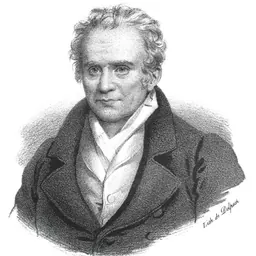
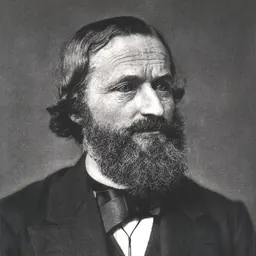
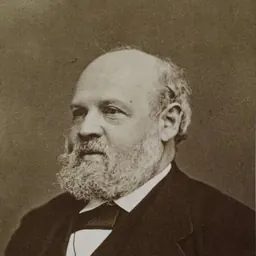
Related people
Same field, nearest in time



Contemporaries
People whose lives overlapped Julius Plücker's





Frequently asked questions
Who was Julius Plücker?
German mathematician and physicist (1801-1868)
When was Julius Plücker born?
Julius Plücker was born on 16 July 1801 in Elberfeld.
When did Julius Plücker die?
Julius Plücker died on 22 May 1868 in Bonn.
What was Julius Plücker's occupation?
Julius Plücker was a physicist, mathematician and university teacher.
What was Julius Plücker known for?
Julius Plücker was known for Homogeneous coordinates, Plücker coordinates, Plücker embedding, Plücker formula, Plücker matrix and Plücker relations.
What nationality was Julius Plücker?
Julius Plücker was German.
Sources & further reading
Cite this page
APA: Biography.guide. (2026). Julius Plücker. https://biography.guide/julius-plucker/
MLA: "Julius Plücker." Biography.guide, https://biography.guide/julius-plucker/.
Chicago: "Julius Plücker." Biography.guide. https://biography.guide/julius-plucker/.
Data last updated: 2026-09-21 · Spot an error? Report a correction.
Portrait: Wikimedia Commons · author & licence
Page generated 2026-09-27 04:59 UTC