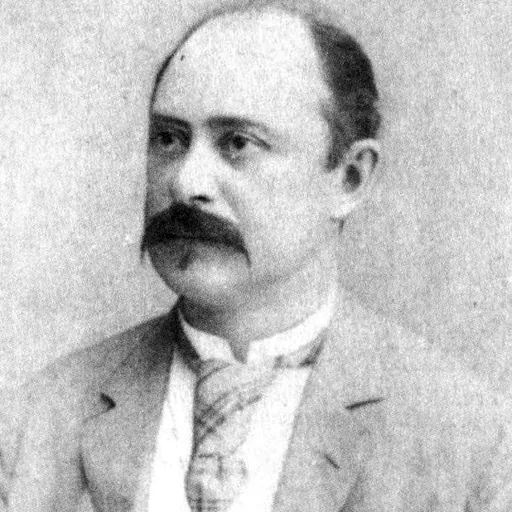
About Josip Frank
Lived 1844 – 1911 (aged 67). Josip Frank was an Austrian lawyer, politician and jurist.
Josip Frank (; 16 April 1844 – 17 December 1911) was a Croatian lawyer and politician, a noted representative of the Party of Rights and the Pure Party of Rights in the Croatian Parliament, and a vocal advocate of Croatian national independence in Austria-Hungary.
Early life
Frank was born into a Croatian-Jewish family, but converted to Catholicism at the age of 18 and attended the gymnasium in Osijek. He studied at the Vienna University, graduating in 1868, and moved Zagreb in 1872 to work as an attorney at law.
Political career
Frank's initial political involvement included a critique of the People's Party (of Josip Juraj Strossmayer), joining the opinion of ban Levin Rauch. When Ivan Mažuranić became Croatian ban in 1873, Frank criticized him because of his relations with the Magyars and the Serbs.
In 1877, he founded the newspapers Agramer Presse and Kroatische Post. They were both banned by Austro-Hungarian authorities.
In 1880, Frank was elected to the Zagreb city council, and published a brochure titled Die Quote Kroatiens, arguing that Croatia's finances had been disproportionately affected by the 1868 Nagodba (Compromise).
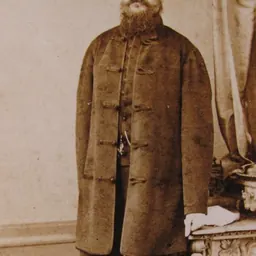
In 1880, Croatian poet August Šenoa described Frank as:
In 1884, Frank was elected as an independent delegate to the Croatian Sabor, representing the Kotar of Popovača. In 1887, he was elected to represent the Kotar of Vojni Križ.
In 1890, supported by Fran Folnegović, he joined Ante Starčević's Party of Rights, soon advancing to the highest ranks of the party. Frank became instrumental in the writing of the political program of the Party of Rights, published on June 6, 1894. In 1895, after an incident in which students from Zagreb publicly burned the Hungarian flag in front of Emperor Franz Joseph, a rift formed in the party as Folnegović and others condemned that act. Frank convinced Starčević to split off the faction, becoming the Pure Party of Rights. After Starčević 's, Frank became the party's president. Frank's Party of Rights was opposed to the Party of Rights led by Frano Supilo and other advocates of the policy of a "New Course", of alignment towards Serbs.
Frank maintained an interest in financial matters, which earned him a regular place in the Croatian Parliament's finance committee, and later in the budget committee. He was a member of the board of financial matters of the Kingdom of Croatia between 1898 and 1906. In 1898, he published a treatise called Nuncij where he harshly accused Hungary for a perceived injustice in the financial terms of the settlement between Croatia and Hungary. In 1904 Frank reiterated his demands for a financial independence of Croatia, and in part due to his efforts, in 1906 a new financial agreement between Croatia and Hungary was formed which was considered the most beneficial to the Croatian side.
One of the most important characteristics of the Frank's followers was their anti-Serb position. After Peter I Karađorđević came to power in Serbia in 1903, Frank's attention increasingly turned to opposing any rapprochement with the Serbs, unlike the majority opinion represented by the Croato-Serbian Coalition. In the 1906 election the Party of Rights became the main opposition to the Coalition, and quite a staunch one at that, collaborating with ban Pavao Rauch (1908-1910), who represented the interests of Austria and Hungary, to depose the Coalition because of its "Yugoslav" programme. During the Bosnian annexation crisis in 1908, he was the initiator of a persecution of Serbs accused for high treason. Frank also played a role in the infamous Friedjung trial of 1909 where it would be proved that the Austrian historian Heinrich Friedjung reproduced libellous claims of treason against the leaders of the Croato-Serbian Coalition. Josip Frank carried on Starčević's ideology, and defined Croat identity 'strictly in terms of Serbophobia'. He opposed any cooperation between Croats and Serbs, and the historian Aleksa Djilas described him as "a leading anti-Serbian demagogue and the instigator of the persecution of Serbs in Croatia". His followers, called Frankovci, were the most ardent Ustashe members.
Unlike Ante Starčević, that was anticlerical, Frank considered to be useful collaboration with Catholic church in Croatia.
During the annexation crisis when Austria-Hungary annexed Bosnia and Herzegovina, Frank prepared the formation of the paramilitary unit Croatian National Legion.
Josip Frank's support for the Austrian court in his fight against the pro-Yugoslav and pro-Serbian forces did not go unopposed within his own party, as in 1908 Mile Starčević led a faction (called the ) to form a splinter Starčević Party of Rights. In 1909 Frank fell terminally ill, and could no longer take active part in politics. After that, the party attracted a prominent group of Catholic intellectuals to join them in 1910 and changed their name to Christian-Social Party of Rights. In 1911, they reconciled with the Starčević Party of Rights, and merged back into a single Party of Rights. Frank lived to witness this, but died shortly thereafter. Frank was buried at the Mirogoj Cemetery.
Legacy
The supporters of Frank's ideas in Croatian politics became known as the Frankists.
His daughter Olga was Slavko Kvaternik's wife.
Don’t just read it —
keep it.
Full-length biographies made to live with: read them, listen on the way to work, watch them tonight.
- E-book
- Audio
- Video
Instant download · yours to keep · every purchase keeps this site free
Important facts
People in Josip Frank's life
Named in this biography and alive at the same time



Related people
Same field, nearest in time

Contemporaries
People whose lives overlapped Josip Frank's

Frequently asked questions
Who was Josip Frank?
Croatian politician (1844–1911)
When was Josip Frank born?
Josip Frank was born on 16 April 1844 in Osijek.
When did Josip Frank die?
Josip Frank died on 17 December 1911 in Zagreb.
What was Josip Frank's occupation?
Josip Frank was a lawyer, politician and jurist.
What nationality was Josip Frank?
Josip Frank was Austrian.
Sources & further reading
Cite this page
APA: Biography.guide. (2026). Josip Frank. https://biography.guide/josip-frank/
MLA: "Josip Frank." Biography.guide, https://biography.guide/josip-frank/.
Chicago: "Josip Frank." Biography.guide. https://biography.guide/josip-frank/.
Data last updated: 2026-09-23 · Spot an error? Report a correction.
Portrait: Wikimedia Commons · author & licence
Page generated 2026-09-27 05:07 UTC