
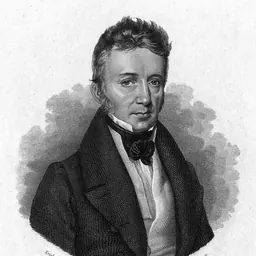
Josip Juraj Strossmayer
Croatian Roman Catholic bishop, benefactor and politician
About Josip Juraj Strossmayer
Lived 1815 – 1905 (aged 90). Josip Juraj Strossmayer was an Austrian and Hungarian diplomat, politician, writer, catholic priest, catholic bishop and theologian, known for Yugoslav Academy of Sciences and Arts.
Josip Juraj Strossmayer, also Štrosmajer (; ; 4 February 1815 – 8 April 1905) was a Croatian prelate of the Catholic Church, politician and benefactor. Between 1849 and his death, he served as the Bishop of Bosnia (Đakovo) and Syrmia. He was one of the key founders of the Yugoslav Academy of Sciences and Arts (today named Croatian Academy of Sciences and Arts) and the Gallery of Old Masters in Zagreb.
Early life and Church career
Strossmayer was born in Osijek in the Kingdom of Slavonia, then part of the Austrian Empire, to a Croatian family. His great-grandfather was an ethnic German immigrant from Styria who had married a Croatian woman. Strossmayer finished school at a Jesuit Humanitas schola gymnasium in Osijek, and then graduated theology at the Catholic seminary in Đakovo. He earned a PhD in philosophy at a high seminary in Budapest, at the age of 20. he worked as a vicar in Petrovaradin, before moving to Vienna in 1840 to the Augustineum and the University of Vienna, where he received another doctorate in philosophy and Canon law in 1842. In 1847, he was made the Habsburg palace chaplain (a position he would hold until 1859), and named one of the rectors of the Augustineum. Pope Pius IX praised Strossmayer's "remarkably good Latin." A speech in which Strossmayer defended Protestantism made a great sensation. but was actually forged by a former Augustinian, a Mexican named José Agustín de Escudero. It was full of heresies, and denied not only papal infallibility, but also papal primacy.
Political work In politics, Strossmayer was an active supporter of the People's Party, he advocated for Pan-Slavism He started his political career in 1860, when he became member of the Imperial Council. There, he spoke against centralism and absolutism, but also opposed Hungarian demands for greater independence. He supported federalization of the Austrian Empire. After Strossmayer's criticism, Imperial government made concessions regarding the official use of the Croatian language in Croatia and Slavonia.
In 1861, Strossmayer became member of the Croatian Sabor (diet). There, he advocated union between Croatians and Hungarians within federalized Hungary. Strossmayer published a denial and called this a lie. He initiated the building of the Academy Palace (completed in 1880) and set up The Strossmayer Gallery of Old Masters (1884) in Zagreb.
Strossmayer aided the creation of the printing house in Cetinje, helped found the Matica slovenska and actively supported Matica srpska, the national culture societies of the Slovenes and the Serbs, respectively.
Personal life
Since the early days of his episcopate, he was a close friend of Franjo Rački, the most renowned Croatian historian of his time. When the Academy was founded in 1867, Strossmayer was named chief sponsor, and Rački its President. In 1894, when Rački died, Strossmayer wrote: "I lost my dearest friend... I lost a part of myself... the good half of everything I have created was his thought, his credit and his glory". Their friendship was well documented in a series of four books containing their letters, compiled by historian Ferdo Šišić.
Legacy Bishop Nikolaj Velimirović dedicated a booklet entitled Religion and Nationality in Serbia to Strossmayer: "to the memory of the great Croatian patriot Bishop Strossmayer on the centenary of his birth (1815–1915)".
In 1881, Schulzer (a Hungarian-Croatian army officer and mycologist) published a genus of fungi in the family Helotiaceae as Strossmayeria which was named in Strossmayer's honour.
Prague's Strossmayerovo náměstí, a public square on the north bank of the Vltava river, was re-named after him in the 1960s. A prominent street in central Sarajevo bears Strossmayer's name.
Gallery
Don’t just read it —
keep it.
Full-length biographies made to live with: read them, listen on the way to work, watch them tonight.
- E-book
- Audio
- Video
Instant download · yours to keep · every purchase keeps this site free
Important facts
People in Josip Juraj Strossmayer's life
Named in this biography and alive at the same time

Related people
Same field, nearest in time




Contemporaries
People whose lives overlapped Josip Juraj Strossmayer's


Frequently asked questions
Who was Josip Juraj Strossmayer?
Croatian Roman Catholic bishop, benefactor and politician (1815–1905)
When was Josip Juraj Strossmayer born?
Josip Juraj Strossmayer was born on 4 February 1815 in Osijek.
When did Josip Juraj Strossmayer die?
Josip Juraj Strossmayer died on 8 April 1905 in Đakovo.
What was Josip Juraj Strossmayer's occupation?
Josip Juraj Strossmayer was a diplomat, politician, writer, catholic priest, catholic bishop and theologian.
What was Josip Juraj Strossmayer known for?
Josip Juraj Strossmayer was known for Yugoslav Academy of Sciences and Arts.
What nationality was Josip Juraj Strossmayer?
Josip Juraj Strossmayer was Austrian and Hungarian.
Sources & further reading
· Wikipedia: Josip Juraj Strossmayer
· DBpedia: Josip Juraj Strossmayer
Cite this page
APA: Biography.guide. (2026). Josip Juraj Strossmayer. https://biography.guide/josip-juraj-strossmayer/
MLA: "Josip Juraj Strossmayer." Biography.guide, https://biography.guide/josip-juraj-strossmayer/.
Chicago: "Josip Juraj Strossmayer." Biography.guide. https://biography.guide/josip-juraj-strossmayer/.
Data last updated: 2026-09-26 · Spot an error? Report a correction.
Page generated 2026-09-27 05:15 UTC