
About August Šenoa
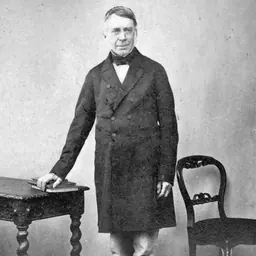
Lived 1838 – 1881 (aged 43). August Šenoa was an Austrian and Hungarian writer, poet, journalist, playwright and literary critic.
August Ivan Nepomuk Eduard Šenoa (; originally Schönoa; 14 November 1838 – 13 December 1881) was a Croatian novelist, playwright, poet, and editor. Born to an ethnic German and Slovak family, Šenoa became a key figure in the development of an independent literary tradition in Croatian and shaping the emergence of the urban Croatian identity of Zagreb and its surroundings at a time when Austrian control was weaning. He was a literary transitional figure, who helped bring Croatian literature from Romanticism to Realism and introduced the historical novel to Croatia. He wrote more than ten novels, among which the most notable are: ('The Goldsmith's Treasure'; 1871), ('Pirates of Senj', ; 1876), ('The Peasant Revolt'; 1877), and Diogenes.
Šenoa was one of the most popular Croatian novelists in his day, and the author of the popular patriotic song "Živila Hrvatska".
Biography
Šenoa was born in Zagreb on 14 November 1838 to Alois Schönoa, an ethnic German from what is now the Czech Republic who worked as a confectioner and pastry chef for Bishop , who brought him to Zagreb in 1829, Slovak either from Tyrnau His mother died giving birth to Aurel in 1847; August was eight years old. When German was reinstated as the scholastic language under the so-called "Absolutism of Bach", August returned home at his father's behest to finish his gymnastic education in Gornji grad. In 1855, he published his first work, Tears . The following year, he graduated gymnasium and traveled with a friend through Slovenia and Italy, which inspired him to write A Carnation on the Grave of a Poet , one of his earliest Pan-Slavist works.
In 1865, Šenoa graduated from the Law Faculty of Prague, but, due to a preoccupation with writing and a loss of interest in the legal profession, failed to pass his qualifying exam. As a result, both Strossmayer, who had promised him a professorship at the University of Zagreb, His funeral was attended by thousands and included Croatia's most notable figures of the era, including Ivan Mažuranić, Nikola Krestić, and Ivan Kukuljević Sakcinski. His novels and plays have been framed as embodying the Volksgeist of the era and leaving behind the traditional view of Croatia's precarious position at the center of the crossroads of Europe, flanked by the Orthodox East and Ottoman Turks to the south, leaving Croatia to "[pin] all her hopes upon the House of Habsburg".
In his novels, he fused national romanticism characterized by buoyant and inventive language with realistic depictions of the growth of the petite bourgeois class.
His work is known for Cecildemillean scenes and poetic description of oppressed Croatian peasantry and nobility struggling against foreign rule (Venetians, Austrians/Germans and Hungarians) and romanticized period from the 15th to the 18th century. Šenoa is often credited with "creating the Croatian reading public".
Legacy In 2008, a total of 182 streets in Croatia were named after August Šenoa, making him the person with the seventh most streets in the country named after him.
Šenoa's birth house is located at 27 Ivo Mallin House. It is open to visitors. The house suffered damage in the 2020 Zagreb earthquake, but was later reopened.
Selected works Srebrn novac Konstancija III (1879)
Don’t just read it —
keep it.
Full-length biographies made to live with: read them, listen on the way to work, watch them tonight.
- E-book
- Audio
- Video
Instant download · yours to keep · every purchase keeps this site free
Important facts
People in August Šenoa's life
Named in this biography and alive at the same time

Related people
Same field, nearest in time

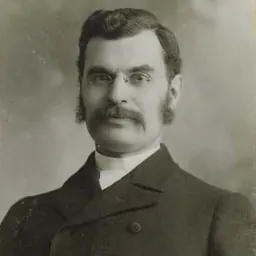
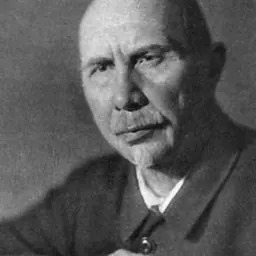
Contemporaries
People whose lives overlapped August Šenoa's

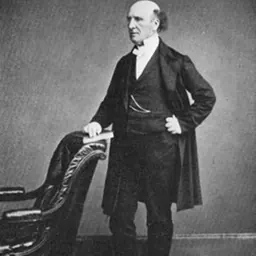
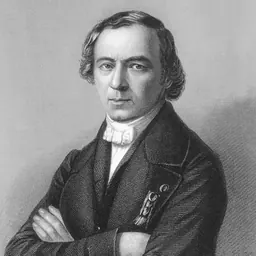

Frequently asked questions
Who was August Šenoa?
Croatian novelist (1838-1881)
When was August Šenoa born?
August Šenoa was born on 14 November 1838 in Zagreb.
When did August Šenoa die?
August Šenoa died on 13 December 1881 in Zagreb.
What was August Šenoa's occupation?
August Šenoa was a writer, poet, journalist, playwright and literary critic.
What nationality was August Šenoa?
August Šenoa was Austrian and Hungarian.
Sources & further reading
Cite this page
APA: Biography.guide. (2026). August Šenoa. https://biography.guide/august-senoa/
MLA: "August Šenoa." Biography.guide, https://biography.guide/august-senoa/.
Chicago: "August Šenoa." Biography.guide. https://biography.guide/august-senoa/.
Data last updated: 2026-09-22 · Spot an error? Report a correction.
Page generated 2026-09-27 05:30 UTC