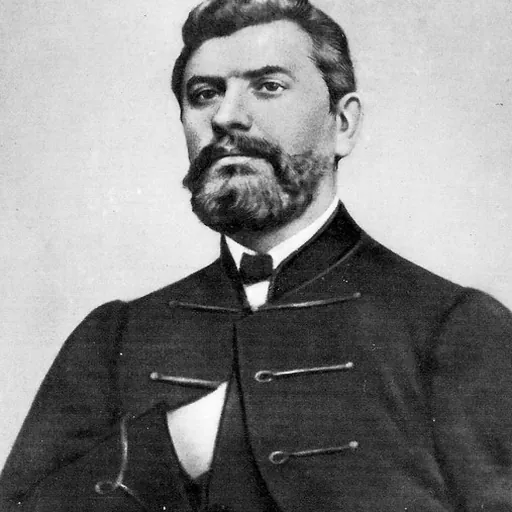
Ante Starčević
Croatian politician, writer and "Father of Croatian homeland"
About Ante Starčević
Lived 1823 – 1896 (aged 72). Ante Starčević was an Austrian writer, politician, opinion journalist, literary critic, magazine editor and notary.
Ante Starčević ( ; 23 May 1823 – 28 February 1896) was a Croatian politician and writer. His policies centered around Croatian state law, the integrity of Croatian lands, and the right of his people to self-determination. As an important member of the Croatian parliament and the founder of the Party of Rights he has laid the foundations for Croatian nationalism. He has been referred to as Father of the Nation due to his campaign for the rights of Croats within Austria-Hungary and his propagation of a Croatian state in a time when many politicians sought unification with other South Slavs.
Biography Life Starčević was born in the village of Veliki Žitnik near Gospić, a small town in the Military Frontier within the Austrian Empire, to a Croat Catholic father Jakov and Serb Orthodox mother Milica . Starčević's formative years were influenced by his uncle Šime Starčević, a Catholic priest with strong Illyrian sympathies who supported the brief Napoleonic occupation of Dalmatia and compiled an Illyrian-French dictionary. From the age of thirteen to sixteen, his educational foundation was formed by Šime's teachings, including Latin and the Shtokavian Croatian dialect.
In 1845, he graduated from Classical Gymnasium in Zagreb. He then briefly continued his studies at the seminary in Senj, but soon moved to Pest in 1845 to attend a Roman Catholic theological seminary, graduating in 1846. He then tried to get an academic post with the University of Zagreb but was unsuccessful, so he remained in Šram's office until 1861 when he was appointed chief notary of Fiume County.
In his old age, he moved to Starčević House , built for him by the Croatian people in 1895. He died in his house less than a year later, aged 73. According to his wish, he was buried in the Church of St Mirko in the Zagreb suburb of Šestine. His bust was made by Ivan Rendić. On his deathbed, he requested that no monuments be raised to his honor, but his statue was put up in front of Starčević House in 1998.
Political activity
By the 1850s Croatian ideologies of national identity were split between Yugoslavism, which grew upon the Illyrian movement and advocated for unity between South Slavs as a way to sustain the Croatian nation, and exclusive Croatian nationalism. Starčević and Kvaternik rejected the Yugoslav framework and deemed that a revolution like the French Revolution was necessary to liberate Croatia from Austrian control.
As the chief notary in Fiume in 1861, Starčević wrote "the four petitions of the Rijeka county". Along with Kvaternik, he viewed Austria as the "sworn historic enemy" of the Croats, and did not accept Hungary's governing authority over Croatia. In achieving political goals, the party rejected any cooperation with Vienna or Budapest, or Serbs. and claimed that "Bosnian Muslims are a part of the Croatian people and of the purest Croatian blood".
With the speech he held in the Parliament on 26 June 1861, Starčević initiated the campaign aimed at rehabilitation of Petar Zrinski and Fran Krsto Frankopan, executed in 1671 by Leopold I for the Magnate conspiracy.
From his first writings of 1861, until his last speech, Starčević tried to prove that the main and lasting thing was to get rid of Austrian intimidation and that for the Croatian people there was no life or happier future "until it's no longer under Austria-Hungary." He took up the hostile stance towards the "mindset called Austria, in which governments and rulers (...) conspired against the peoples."
Starčević saw the main Croatian enemy in the Habsburg monarchy. He believed in the ability of the Croatian people to govern themselves and that sovereignty grew from the nation, the people, and not from the ruler that governed "by the Grace of God". "God and Croats" was the essence of Starčević's political ideas. Under the influence of the ideas of the French Revolution, he fought against feudalism and advocated for the democratization of political life. In politics, he relied on townsmen, wealthier peasantry, and intellectuals.
Ideology Starčević was at first a proponent of the Illyrian movement, later he adopted ideological views from the French period such as nationalism and liberalism. He developed his personal, as well as party ties around Croatian nationalism, liberalism in regards to freedom and liberties of peoples and nations, religious pluralism and parliamentary monarchism. He espoused the idea of a Greater Croatia that would spawn modern-day Croatia, Bosnia and Herzegovina, and Slovenia and viewed all South Slavs who inhabited the regions as Croats, regardless of their religion. For Starčević, Croatia included all the territory from the Alps in the north to Macedonia and the Bulgarian border to the south. The Bulgarians and Croats were the only South Slavic nations.
Literary and linguistic work
In addition to his political activities, Starčević was a theologian, philosopher and writer. He wrote literary criticisms, short stories, newspaper articles, political satire, philosophical essays and poems. His translation of Anacreon from Ancient Greek was published in Danica ilirska in 1853. He provided critical reviews of Ignjat Đurđević's various poems.
Starčević stated his opposition to the Vienna Language Agreement of 1850 in which Serb and Croat linguists agreed on a foundation of a Serbo-Croatian language based on the Shtokavian dialect. He also opposed the linguistic concepts of Vuk Stefanović Karadžić and published articles attacking his proposals. Starčević denied the existence of a Serb identity and therefore advocated for a Croatian language. His position mirrored Karadžić's from the opposite end, as Karadžić viewed all Shtokavian speakers as Serbs while Starčević viewed them all as Croats. Krleža used to compare Starčević's struggles to those of Don Quixote's. Krleža, however, did not pay much attention to political aspects of his works.
In 1869, he published an affirmative article on the Ottoman Empire and Islam.
Assessment Starčević promoted the "principle of nationality", according to which every nation must have a state. Starčević advocated Croatia's independence from the Austrian Empire and viewed Austria as a "sworn historical enemy", but did not support the use of force. For him, there was only one Croatian state right, which belonged to the Croatian people. This became the central constituent of his ideology. He saw the foundations of the new state in the ideas of the French Revolution, and supported universal suffrage.
Starčević fiercely condemned all those who thought differently from him. He coined the term "Slavoserb", derived from the Latin words "" and "", for those who function as servants to foreign powers and against their own people. He applied that term to people such as Ljudevit Gaj, Bishop of Bosnia or Đakovo and Syrmia Josip Juraj Strossmayer, and Ban of Croatia Ivan Mažuranić. It was applied to persons who were both Croats and Serbs. He also pointed out Nikola IV Zrinski and Josip Jelačić as servants to foreigners, and named the participants of the Magnate conspiracy as their opposite. He wrote positively about the Serbian Nemanjić dynasty.
He and the Bishop of Bosnia or Đakovo and Syrmia, Josip Juraj Strossmayer, disagreed about Croatian politics. Strossmayer was sympathetic towards panslavic unity of South Slavs (future Yugoslavia). Starčević, on the other hand, demanded an independent Croatian state and opposed any solution that would include Croats within some other multi-ethnic country.
Legacy Croatian writer Antun Gustav Matoš wrote a tractate about him. In it, he proclaims Starčević as the greatest Croat and the greatest patriot in the 19th century. He also describes Starčević as the greatest Croatian thinker. For his political and literary work, Starčević is commonly called Father of the Nation among Croats, a name first used by Eugen Kvaternik while Starčević was still alive. His portrait was depicted on the obverse of the Croatian 1000 kuna banknote, issued in 1993.
Many streets and squares are named after Starčević; in 2008, a total of 203 streets in Croatia were named after him, making him the sixth most common person eponym of streets in the country. There are also schools named after him. Most right-wing parties in Croatia claim his politics as their legacy.
Don’t just read it —
keep it.
Full-length biographies made to live with: read them, listen on the way to work, watch them tonight.
- E-book
- Audio
- Video
Instant download · yours to keep · every purchase keeps this site free
Important facts
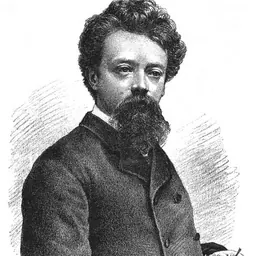
People in Ante Starčević's life
Named in this biography and alive at the same time



Related people
Same field, nearest in time

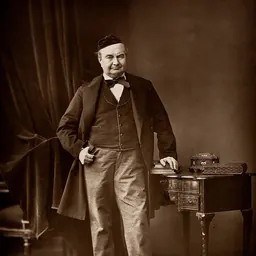
Contemporaries
People whose lives overlapped Ante Starčević's

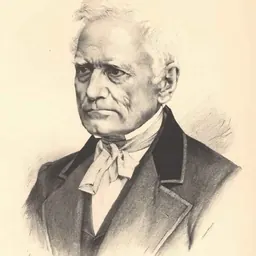
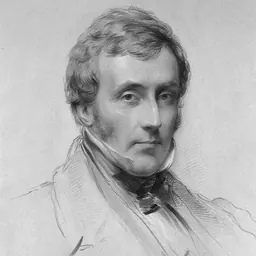
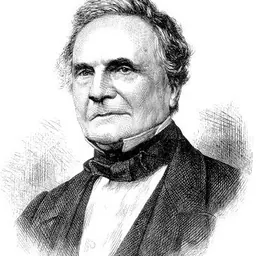
Frequently asked questions
Who was Ante Starčević?
Croatian politician, writer and "Father of Croatian homeland" (1823-1896)
When was Ante Starčević born?
Ante Starčević was born on 23 May 1823 in Veliki Žitnik.
When did Ante Starčević die?
Ante Starčević died on 28 February 1896 in Zagreb.
What was Ante Starčević's occupation?
Ante Starčević was a writer, politician, opinion journalist, literary critic, magazine editor and notary.
What nationality was Ante Starčević?
Ante Starčević was Austrian.
Sources & further reading
Cite this page
APA: Biography.guide. (2026). Ante Starčević. https://biography.guide/ante-starcevic/
MLA: "Ante Starčević." Biography.guide, https://biography.guide/ante-starcevic/.
Chicago: "Ante Starčević." Biography.guide. https://biography.guide/ante-starcevic/.
Data last updated: 2026-09-23 · Spot an error? Report a correction.
Portrait: Wikimedia Commons · author & licence
Page generated 2026-09-27 05:06 UTC