
About Joseph Wright
Lived 1756 – 1793 (aged 37). Joseph Wright was an American painter and sculptor.
Joseph Wright (July 16, 1756 – September 13, 1793) was an American painter and sculptor. He painted life portraits of George Washington and Benjamin Franklin, and was a designer of early U.S. coinage. Wright had been Washington's original choice for Chief Engraver of the United States Mint, but died he at age 37 before being confirmed to that position by the United States Congress. Wright is often confused with his contemporary, the English painter Joseph Wright of Derby.
Early years Wright was born in Bordentown, New Jersey, the son of Philadelphia barrelmaker Joseph Wright and sculptor Patience Lovell Wright. His parents were Quakers of English descent, and he attended the Academy and College of Philadelphia. Wright was the first American-born student to matriculate from the Royal Academy of Arts.
Portrait painter Benjamin Franklin
Paitence Wright was a supporter of the American Revolution, and wartime tensions in London led to her move her portrait studio/wax museum to Paris in 1780. Her friend Benjamin Franklin came to Paris in 1782, as chief of the American delegation to negotiate a treaty to end the Revolutionary War. The chief of the British delegation, Richard Oswald, commissioned 26-year-old Joseph Wright to paint a portrait of Franklin. Rather than posing for many tedious hours, Franklin urged Wright to base his portrait on a small 1778 pastel portrait by French artist Joseph-Siffred Duplessis owned by Franklin. The pose was the same, but Wright's portrait was life-size, and he changed the clothing and background. Wright's correspondence confirms that Franklin indeed did sit for him. Franklin was pleased with the portrait, and commissioned Wright to paint a copy as a gift for a friend. Wright painted seven known versions of the portrait. The life portrait is in the Yale University Art Gallery, the "Franklin" replica is in the National Gallery of Art, Wright was granted a single sitting, and painted a 1/2-length study—oil on mahogany panel, 14 1/8 x 12 in. -- now in the collection of the Philadelphia History Museum. He based five known portraits on this life study, but there is no documentation that Washington granted additional sittings. The July 1783 letter took months to arrive, and was conveyed through the Saxon minister in London, who enclosed his own letter offering to pay for the portrait, and through Robert Morris. Washington spent two weeks in Philadelphia as Morris's houseguest in December 1783, during which he may have selected Wright to paint the portrait. He was soon to depart for Paris, to represent the United States in treaty negotiations between France and Great Britain. Wright was only able to finish the head and to sketch out the body before the portrait sailed with Jefferson. American painter John Trumbull was in Paris in 1786, and Jefferson hired him to complete the portrait. The Wright/Trumbull version later hung at Monticello, and is now at the Massachusetts Historical Society. A seated portrait of Washington by Wright is at the Connecticut State Library and Supreme Court Building, in Hartford. A head-and-bust portrait, missing the background battlefield scene of the 3/4-length versions, is at Mount Vernon. The Count de Solms acknowledged receipt of the original portrait in a 1785 letter, but its current whereabouts are unknown. The committee's recommendation specified: "The general to be represented in a Roman dress, holding a truncheon in his right hand, and his head encircled with a laurel-wreath."
Wright's clay bust may have been nearing completion in late 1783, when Patience Wright, then back in London, wrote to Washington in December: "My Friends Write to me from America that Joseph Wright (my Son) has painted a Likeness and also moddel'd (sic) a Clay Busto of General Washington which will be a very great honor to My Famaly (sic)." In April 1784, the Congressional committee paid Wright $233.33 for the clay bust. But it provided no funding for the bust to be transported to France for the U.S. Minister to the Court of Versailles, Benjamin Franklin, to select a sculptor. He created a half-size plaster version of this for Martha Washington, that remains at Mount Vernon. He modeled at least two profile relief heads in wax, that are now at Mount Vernon and the Winterthur Museum in Delaware. Wright painted a 1790 profile bust of Washington in uniform, which he engraved and published as a print. Thomas Jefferson judged Wright's engraving very highly: "I have no hesitation in pronouncing Wright's drawing to be a better likeness of the General than [Charles Willson] Peale's."
Other portraits Wright moved his portrait studio to New York City in 1786. It is also the only known image of the interior of Federal Hall, where both houses of Congress met, 1788–1790. and an 1881 copy by Samuel Bell Waugh is in the U.S. House of Representatives art collection.
Wright painted pendant portraits of Charles Thomson, secretary of the Continental Congress, 1774–1789, and his second wife, Hannah Harrison.
U.S. coinage
Early in his presidency, Washington and Secretary of State Thomas Jefferson diligently sought expert European engravers to design the first United States coins. These attempts were unsuccessful, and Wright was working as the unofficial engraver at the U.S. Mint by late 1792. He was designated as the Mint's "First Draughtsman & Diesinker" in August 1793, but Wright died the following month.
Wright designed the Liberty Cap Half-Cent and the Liberty Cap Large Cent. There is debate about whether Wright or Henry Voigt engraved the dies for these coins, although most historians and numismatists today credit the 1793 dies to Wright. Wright also designed the 1792 Quarter dollar and engraved the dies for it, but that coin was never issued. Wright caught yellow fever and died on September 13; his wife died days later. Although orphaned, all three children survived.
Don’t just read it —
keep it.
Full-length biographies made to live with: read them, listen on the way to work, watch them tonight.
- E-book
- Audio
- Video
Instant download · yours to keep · every purchase keeps this site free
Important facts
People in Joseph Wright's life
Named in this biography and alive at the same time
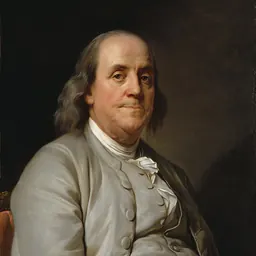
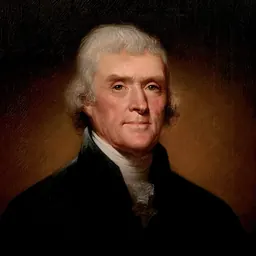
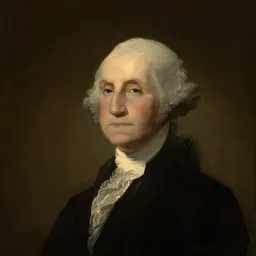
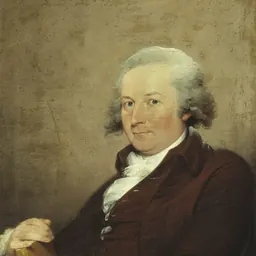


Related people
Same field, nearest in time




Contemporaries
People whose lives overlapped Joseph Wright's




Frequently asked questions
Who was Joseph Wright?
American portrait painter (1756-1793)
When was Joseph Wright born?
Joseph Wright was born on 16 July 1756 in Bordentown City.
When did Joseph Wright die?
Joseph Wright died on 13 September 1793 in Philadelphia.
What was Joseph Wright's occupation?
Joseph Wright was a painter and sculptor.
What nationality was Joseph Wright?
Joseph Wright was American.
Sources & further reading
· DBpedia: Joseph Wright (American painter)
Cite this page
APA: Biography.guide. (2026). Joseph Wright. https://biography.guide/joseph-wright-painter/
MLA: "Joseph Wright." Biography.guide, https://biography.guide/joseph-wright-painter/.
Chicago: "Joseph Wright." Biography.guide. https://biography.guide/joseph-wright-painter/.
Data last updated: 2026-09-20 · Spot an error? Report a correction.
Page generated 2026-09-27 05:30 UTC