
About Joseph Renville
Lived 1779 – 1846 (aged 66–67). Joseph Renville was an American composer, translator, hymnwriter, explorer and fur trader.
Joseph Renville (1779–1846) was an interpreter, translator, expedition guide, Canadian officer in the War of 1812, founder of the Columbia Fur Company, and an important figure in dealings between settlers of European ancestry and Dakota (Sioux) Natives in Minnesota. He contributed to the translation of Christian religious texts into the Dakota language. The hymnal Dakota dowanpi kin, was "composed by J. Renville and sons, and the missionaries of the A.B.C.F.M." and was published in Boston in 1842. Its successor, Dakota Odowan, first published with music in 1879, has been reprinted many times and is in use today.
Joseph Renville's father, Joseph Rainville (also known as De Rainville) (1753–1806), was a French Canadian canoeman and fur trader, and his mother, Miniyuhe (Miniyuhewiŋ), was a kinswoman of the Mdewakanton Dakota chief Little Crow family. Renville's bicultural formative years probably included instruction by a Roman Catholic priest in Eastern Canada. and Renville County, North Dakota. A street in Detroit, Michigan is also named after him.
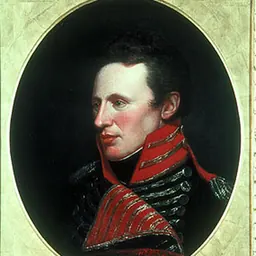
Expeditions and War of 1812 In 1805, Renville was appointed by the U.S. as an interpreter on the recommendation of officer Zebulon Pike during his expedition to explore the upper northern reaches of the Louisiana Purchase.
In 1827, American Fur Company bought out the Columbia Fur Company, but retained the "coureurs des bois."
In the early years, Renville "allowed the missionaries to use the tepee headquarters of the soldiers' lodge as a church." Joseph and Mary Renville, who had been married in the Dakota tradition in 1806 and in the Catholic Church in 1829, were converted to Protestantism along with several children in 1836. Several of their female Dakota relatives joined a year later.
Although the mission was less successful in converting Dakota men (because the missionaries required them to reject polygamy), there were a handful of men who attended church and school at Lac qui Parle Mission regularly over the years, including Taoyatetuda, Mary Renville's kinsman, who would later return to Kaposia to take over as Chief Little Crow. in the nineteenth century.
Joseph and Mary Renville of Lac qui Parle encouraged their eight children to read and write in both Dakota and English. Many of them went on to forge further ties in fur trading society, in Sioux kinship networks such as "Wićaŋḣpi Hiŋḣpaya; or, The Fallen Star," which was published in Stephen R. Riggs's work Dakota Grammar, Texts and Ethnology (1893).
Their youngest daughter, Marguerite Renville, taught most of the classes at the mission school in Kaposia when the American Board missionaries were invited to settle there in 1846 by Taoyateduta, Chief Little Crow.
Joseph Renville helped to look after his nephew, Gabriel Renville, after his brother Victor (Ohiya) Renville was killed in 1832. Gabriel Renville was a driving force within the Dakota Peace Party during the Dakota War of 1862, and served as the leader of the Dakota scouts for three years. He went on to become Chief of the Sisseton Wahpeton Oyate Sioux Tribe, overseeing the creation and settlement of the Lake Traverse Reservatio n.
Clarification There has been considerable confusion among historians and genealogists about Joseph Renville's family history. Joseph Renville of Lac qui Parle had a father, son and grandson who were also named Joseph; some historical accounts designate Joseph of Lac qui Parle himself as "Jr." whereas others have attached the "Jr." to his son (1809–1856).
Perhaps the greatest source of confusion is that Akipa, a full-blood Dakota of the Wahpeton band (with no direct relation to the French Canadian Renville/Rainville family or the Mdewakanton), As a result, some researchers have incorrectly assumed that they were the same person.
Joseph Renville of Lac qui Parle and Akipa were, however, related indirectly through Akipa's marriage in about 1835 or 1836 to Winona Crawford, the widow of Joseph's brother Victor Renville, which made Joseph Akipa Renville the stepfather of Joseph Renville's nephew Gabriel.
Long after the death of Joseph Renville of Lac qui Parle in 1846, Joseph Akipa Renville (c. 1810–1891), son of Buffalo Man, was part of the Sisseton-Wahpeton delegation to Washington, DC in 1858,
Don’t just read it —
keep it.
Full-length biographies made to live with: read them, listen on the way to work, watch them tonight.
- E-book
- Audio
- Video
Instant download · yours to keep · every purchase keeps this site free
Important facts
People in Joseph Renville's life
Named in this biography and alive at the same time
Related people
Same field, nearest in time




Contemporaries
People whose lives overlapped Joseph Renville's



Frequently asked questions
Who was Joseph Renville?
Dakota translator and fur trader (1779–1846)
When was Joseph Renville born?
Joseph Renville was born in 1779 in Ramsey County.
When did Joseph Renville die?
Joseph Renville died on 18 March 1846 in Minnesota.
What was Joseph Renville's occupation?
Joseph Renville was a composer, translator, hymnwriter, explorer and fur trader.
What nationality was Joseph Renville?
Joseph Renville was American.
Sources & further reading
Cite this page
APA: Biography.guide. (2026). Joseph Renville. https://biography.guide/joseph-renville/
MLA: "Joseph Renville." Biography.guide, https://biography.guide/joseph-renville/.
Chicago: "Joseph Renville." Biography.guide. https://biography.guide/joseph-renville/.
Data last updated: 2026-09-25 · Spot an error? Report a correction.
Page generated 2026-09-27 05:13 UTC