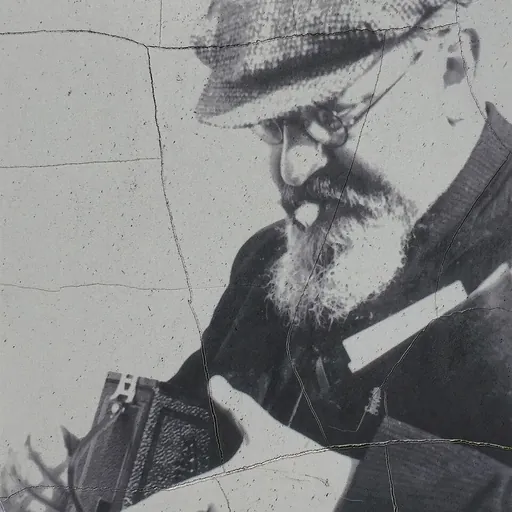
About Joseph Carlebach
Lived 1883 – 1942 (aged 59). Joseph Carlebach was a rabbi.
Joseph Hirsch (Tzvi) Carlebach (January 30, 1883, Lübeck, German Empire – March 26, 1942, Biķerniecki forest, near Riga, Latvia) was a German Orthodox rabbi, natural scientist, and scholar of the history of the Jews in Germany.
Early life and family Joseph Carlebach was born in Lübeck on 30 January 1883, the eighth of the twelve children of Rabbi Salomon Carlebach (1845–1919), chief rabbi of Lübeck, and Esther Carlebach née Adler (1853–1920), a writer and poet. Esther was a daughter of Rabbi Alexander Sussmann Adler (1816–1869), Salomon's predecessor as rabbi of Lübeck. Joseph thus belonged to the wider intermarried Yoel–Adler–Carlebach rabbinical dynasty, descended on his father's side from his grandfather, Hirsch Joseph Carlebach. Several of Joseph's brothers also became rabbis, among them Emanuel Carlebach (in Memel and Cologne), Ephraim Carlebach (in Leipzig) and Hartwig Naftali Carlebach, the father of the "singing rabbi" Shlomo Carlebach; his nephew Azriel Carlebach became founding editor of the Israeli newspapers Maariv and Yedioth Ahronoth.
In 1919 Carlebach married his former pupil Charlotte ("Lotte") Preuss (1900–1942), a daughter of the physician Julius Preuss (1861–1913). After a period teaching in Jerusalem from 1905 to 1907, he worked as a secondary-school teacher in Berlin while preparing his doctorate. Alongside his university studies he attended the Orthodox Rabbinical Seminary in Berlin as a guest student,
Between 1905 and 1907 Carlebach lived in Jerusalem and taught at the Lämel School, years that coincided with the beginning of the Second Aliyah.
His background and manner opened to him the homes of leaders of both the Old Yishuv and the New Yishuv. He met the aged Rabbi Shmuel Salant (1816–1909), the young Rabbi Abraham Isaac Kook (1865–1935), who had reached the country about a year earlier, and knew Eliezer Ben-Yehuda (1858–1922), David Yellin (1864–1941), with whom he kept up an extensive correspondence after returning to Germany, and Yehiel Michel Pines (1843–1913).
Leiman likewise records that Carlebach was befriended by the chief rabbi Shmuel Salant, who "left an indelible impression" on him.
He recorded his impressions of the country in lectures and in the German and English Jewish press.
He served in the imperial German Army and, kept away from front-line fighting, was assigned to educational work. The school was modelled on the Torah im Derech Eretz outlook of Samson Raphael Hirsch, seeking to combine Torah study with modern science and a contemporary general education. In contrast, the writer Sammy Gronemann, who was in Kovno in the military administration in the same years, described Carlebach as "a brilliant schoolmaster" who treated his pupils not as a stern instructor but as an older friend and colleague.
The German military government was hostile to Zionism and to expressions of Jewish nationalism, the Hebrew language included, and it monitored Carlebach's activities. He repeatedly worked around its restrictions, and on one occasion the authorities suspended him from his post for a time.
In 1921 Carlebach was appointed head (Rektor) of the Talmud Tora school in Hamburg, which he led until 1926. In a reform-minded spirit he introduced independent study and experimentation, project work, and the use of art and movement in the classroom, aiming at a synthesis of Jewish and general education.
Carlebach combined an openness to the surrounding culture, unusual for an Orthodox rabbi, with strict observance of Jewish law. The Israeli jurist Haim Cohn, one of his pupils, recalled an episode that brought the two together: He spent a full day with the boys in the Cologne Cathedral, expertly explaining every detail of the statues, the glass windows, the ornaments, and the intricacies of the Catholic faith and ritual; but I was not allowed to participate, being a Cohen who may not be under the same roof with a corpse or with tombs, lest he become impure; and although, according to the letter of the Law, it is only the Jewish dead the contact with whom renders impure, and not the non-Jewish dead, still Carlebach held that the least possibility that among the dead buried in the cathedral may have been a person of Jewish origin (even though ultimately converted to Christianity), sufficed to make the place taboo to me.
In 1925 he was elected chief rabbi (Oberrabbiner) of the Hochdeutsche Israeliten-Gemeinde (High German Israelite Community) in Altona, then still an independent Prussian city, in succession to Meir Lerner. In 1935 Carlebach sailed to Haifa in Mandatory Palestine aboard the ship Tel Aviv on its maiden voyage. It was his second visit, nearly thirty years after the formative period he had spent teaching in Jerusalem, and though it came as the position of Germany's Jews was worsening, he chose to return to his Hamburg congregation rather than emigrate.
In April 1936 the Deutsch-Israelitische Gemeinde (German-Israelite Community) of Hamburg appointed Carlebach chief rabbi at the Bornplatz Synagogue, in succession to Samuel Spitzer. It was to be his last pulpit. His former pupil Baruch Zvi Ophir later described him as the central spiritual authority of Hamburg-Altona Jewry, revered across all currents of the community.
In 1936 the Hamburg authorities ordered the community's Grindel Jewish Cemetery, which had repeatedly been the target of antisemitic desecration in 1931 and 1932, to be given up to make way for new housing. Carlebach ruled that the exhumation and reburial of the dead, though normally forbidden under Jewish law, were permissible in the circumstances, regarding reinterment in a Jewish cemetery as a lesser evil than leaving the graves to be trampled over once the cemetery was cleared. The remains of thousands of people, by some estimates between 6,500 and 8,000, were reinterred in a common grave at the Ohlsdorf Jewish Cemetery by a deadline of 31 May 1937, and several hundred of the gravestones were re-erected at a replacement burial ground laid out in 1937–38 and designed by the Jewish architect Fritz Block.
Deportation and murder
On 6 December 1941, the Carlebach family was deported from Hamburg to the Jungfernhof concentration camp near Riga, as part of a transport of 753 Hamburg Jews and the fourth and last deportation from the city that year. By then almost sixty, Carlebach fell seriously ill in the camp. According to his daughter Miriam Gillis-Carlebach, the Gestapo had offered Carlebach the chance to remain behind, but he chose to go with the transport rather than abandon those travelling with him. By her account, in the camp he secretly organised lessons, arranged a Hanukkah celebration and several bar mitzvah ceremonies, and is said to have ruled that a fellow prisoner should eat non-kosher sausage, persuading her that the duty to preserve life and health took precedence.
On 26 March 1942 Carlebach, his wife Charlotte (née Preuss) and their three youngest daughters, Ruth, Noemi and Sara, were shot in the Biķernieki forest near Riga, in the mass killing of roughly 1,600 to 1,800 people, mostly the elderly and children, known as the Dünamünde Action. In the Altona district the Carlebachstraße is named after him, and Sol LeWitt's sculpture Black Form – Dedicated to the Missing Jews stands outside the Altona town hall. Stolpersteine were laid for Carlebach and his three murdered daughters.
Works Lewi ben Gerson als Mathematiker: ein Beitrag zur Geschichte der Mathematik bei den Juden. Berlin: L. Lamm, 1910. (His Heidelberg doctoral dissertation, on Levi ben Gershon.) Moderne pädagogische Bestrebungen und ihre Beziehungen zum Judentum. Berlin: Hebräischer Verlag "Menorah", 1925. Die drei grossen Propheten Jesajas, Jirmija und Jecheskel: eine Studie. Frankfurt am Main: Hermon-Verlag, 1932. French translation: Les trois grands prophètes, Isaïe, Jérémie, Ézéchiel, trans. Henri Schilli. Paris: Éditions Albin Michel, 1959. Hebrew translation: Sheloshet ha-neviʼim ha-gedolim: Yeshayahu, Yirmeyahu, Yeḥezkel, ed. Miriam Gillis-Carlebach. Alon Shvut: Tevunot–Herzog College; Ramat Gan: Joseph Carlebach Institute, Bar-Ilan University, 2012. Das gesetzestreue Judentum. Berlin: Schocken Verlag, 1936.
Posthumous editions and translations: Ausgewählte Schriften, ed. Miriam Gillis-Carlebach, with a foreword by Haim H. Cohn. 2 vols. Hildesheim and New York: G. Olms Verlag, 1982. Jüdischer Alltag als humaner Widerstand: Dokumente des Hamburger Oberrabbiners Dr. Joseph Carlebach aus den Jahren 1939–1942, ed. Miriam Gillis-Carlebach. Hamburg: Verein für Hamburgische Geschichte, 1990. Mikhtavim mi-Yerushalayim (1905–1906) [Letters from Jerusalem], ed. and trans. Miriam Gillis-Carlebach. Ramat Gan: Joseph Carlebach Institute; Jerusalem: Ariel, c. 1996. Sefer ha-sfarim [The Book of Books], Hebrew translation by Michal Barkan of his English original (1927). Ramat Gan: Joseph Carlebach Institute, Bar-Ilan University, 1999. Ha-masa shel Keren ha-Torah el atarei ha-tarbut ha-Yehudit ba-mizrach [The Keren HaTorah journey to the sites of Jewish culture in the East], his account of his 1936 tour of Eastern European yeshivas. Ramat Gan: Joseph Carlebach Institute, Bar-Ilan University, 2015.
Don’t just read it —
keep it.
Full-length biographies made to live with: read them, listen on the way to work, watch them tonight.
- E-book
- Audio
- Video
Instant download · yours to keep · every purchase keeps this site free
Important facts
People in Joseph Carlebach's life
Named in this biography and alive at the same time
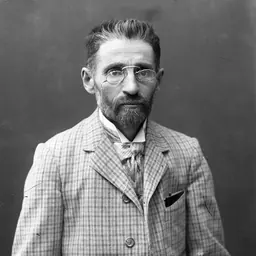

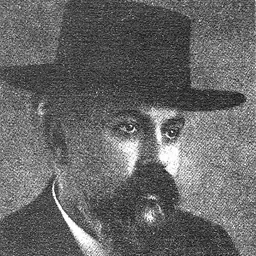
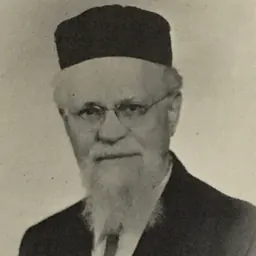
Related people
Same field, nearest in time

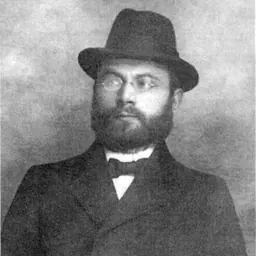


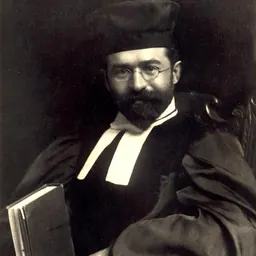
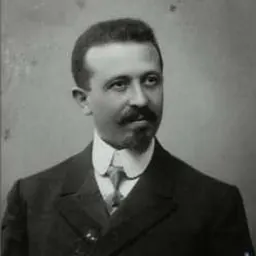
Contemporaries
People whose lives overlapped Joseph Carlebach's


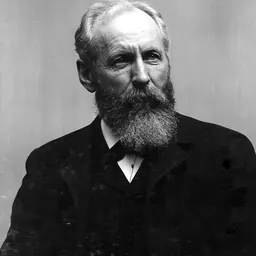


Frequently asked questions
Who was Joseph Carlebach?
natural scientist, Orthodox rabbi (1883–1942)
When was Joseph Carlebach born?
Joseph Carlebach was born on 30 January 1883 in Lübeck.
When did Joseph Carlebach die?
Joseph Carlebach died on 26 March 1942 in Biķernieki Forest, Jungfernhof concentration camp.
What was Joseph Carlebach's occupation?
Joseph Carlebach was a rabbi.
What nationality was Joseph Carlebach?
Joseph Carlebach's recorded nationality: German Reich.
Sources & further reading
Cite this page
APA: Biography.guide. (2026). Joseph Carlebach. https://biography.guide/joseph-carlebach/
MLA: "Joseph Carlebach." Biography.guide, https://biography.guide/joseph-carlebach/.
Chicago: "Joseph Carlebach." Biography.guide. https://biography.guide/joseph-carlebach/.
Data last updated: 2026-09-23 · Spot an error? Report a correction.
Portrait: Wikimedia Commons · author & licence
Page generated 2026-09-27 05:06 UTC