
About Isaac HaLevy Herzog
Lived 1888 – 1959 (aged 70). Isaac HaLevy Herzog was a Russian rabbi.
Yitzhak HaLevi Herzog (; 3 December 1888 – 25 July 1959), also known as Isaac Herzog or Hertzog, was the first Chief Rabbi of Ireland, his term lasting from 1921 to 1936. From 1936 until his death in 1959, he was Ashkenazi Chief Rabbi of the British Mandate of Palestine and of Israel after its creation in 1948. He was the father of Chaim Herzog and grandfather of Isaac Herzog, both presidents of Israel.
Early life Yitzhak Halevi Herzog was born at Łomża in Russian Poland, the son of Liba Miriam (Cyrowicz) and Joel Leib Herzog. In 1898 he moved with his family to the United Kingdom, where they settled in Leeds. His initial schooling was largely at the instruction of his father who was a rabbi in Leeds and then later for the Polish Jewish community in Paris.
Herzog later moved to Ireland and became a fluent Irish speaker. He was known as "the Sinn Féin Rabbi" for his support of the First Dáil and the Irish republican cause during the Irish War of Independence. Herzog was involved with the Federation of Zionist Youth and Habonim Dror, the Zionist Labour movement, during his teenage years.
Rabbinic career Herzog was ordained as a rabbi in 1910 by the Rabbi of Safad. or 1925 In 1936, he immigrated to Palestine; he was elected to succeed rabbi Abraham Isaac Kook as Ashkenazi Chief Rabbi of British Mandate of Palestine upon Kook's death. He settled in Jerusalem. He was a supporter of both the Irish Republican Army (IRA) and the Irgun. Sign commemorating rabbi Herzog, in the Artists' quarter of Safed, near Beit Castel gallery.
In 1936, he testified in front of the Peel Commission in London and participated in 1939 in the London Conference of 1939 between Jews and Arabs from Mandatory Palestine, convened by the British government. In May 1939, shortly before the Second World War, the British put out the White Paper of 1939 restricting Jewish immigration to Palestine. After leading a procession through the streets of Jerusalem, on the steps of the Hurva Synagogue Herzog turned and said: "We cannot agree to the White Paper. Just as the prophets did before me, I hereby rip it in two." Some 40 years later, on 10 November 1975 Chaim Herzog repeated his father's gesture with the UN resolution that Zionism is equal to racism.
During the Arab Revolt, he called, together with other rabbis, for adherence to the Havlagah policy of the Haganah and for avoidance of acts of revenge. He became Chief Rabbi of Israel on the formation of the State of Israel in 1948.
Death and legacy Herzog died on 25 July 1959. His funeral was attended by thousands, including all members of the Israeli cabinet except the Prime Minister, who sent a personal message to Herzog's widow, along with representatives of the labour movement and the professions, members of the Supreme Court and the diplomatic corps. Chaim Herzog spoke the kaddish; Yaakov Herzog was unable to be present due to the Sabbath but sat shivah in Washington D.C. At least four rabbis, including both the Ashkenazi and Sephardi Chief Rabbis, delivered eulogies. A week of national mourning followed. He also previously served as a member of the Knesset, Israel's parliament, and head of the opposition. He previously served as housing and tourism minister and minister of welfare and later was chairman of the Jewish Agency.
Scholarship After mastering Talmudic studies at a young age, Herzog pursued wide-ranging academic interests. In 1897, he studied oriental languages at the Sorbonne in Paris, followed by work at Leeds in England. He matriculated at the University of London in 1905, and graduated with a Bachelor of Arts in classical and modern languages and mathematics in 1909. He secured a Masters of Arts in Semitics from the University of London in 1911, and a doctorate in literature from the same university in 1914. His doctoral thesis, which made him famous in the Jewish world, concerned his claim of re-discovering tekhelet, the type of blue dye once used for the making of tzitzit.
Published works Herzog was recognised as a great rabbinical authority, and he wrote many books and articles dealing with halachic problems surrounding the Torah and the State of Israel. Indeed, his writings helped shape the attitude of the Religious Zionist Movement toward the State of Israel. Herzog authored: Main Institutions of Jewish Law Heichal Yitzchak Techukah leYisrael al pi haTorah Pesachim uKetavim The Royal Purple and the Biblical Blue
Awards and recognition In 1958, Herzog was awarded the Israel Prize, in rabbinical literature.
Don’t just read it —
keep it.
Full-length biographies made to live with: read them, listen on the way to work, watch them tonight.
- E-book
- Audio
- Video
Instant download · yours to keep · every purchase keeps this site free
Important facts
People in Isaac HaLevy Herzog's life
Named in this biography and alive at the same time


Related people
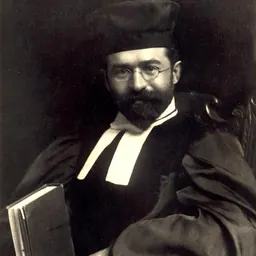
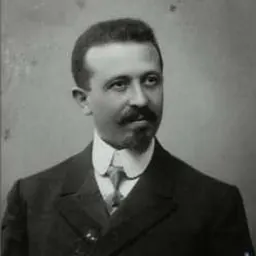
Same field, nearest in time


Contemporaries
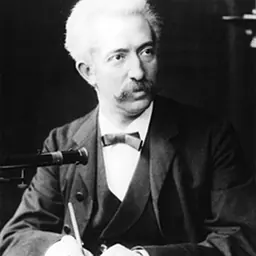
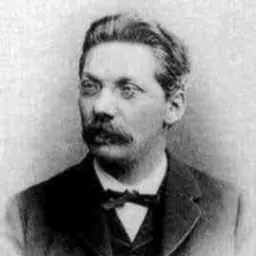
People whose lives overlapped Isaac HaLevy Herzog's




Frequently asked questions
Who was Isaac HaLevy Herzog?
1st Chief Rabbi of Ireland and Israel (1888–1959)
When was Isaac HaLevy Herzog born?
Isaac HaLevy Herzog was born on 3 December 1888 in Łomża.
When did Isaac HaLevy Herzog die?
Isaac HaLevy Herzog died on 25 July 1959 in Jerusalem.
What was Isaac HaLevy Herzog's occupation?
Isaac HaLevy Herzog was a rabbi.
What nationality was Isaac HaLevy Herzog?
Isaac HaLevy Herzog was Russian.
Sources & further reading
· Wikipedia: Isaac HaLevy Herzog
· DBpedia: Yitzhak HaLevi Herzog
Cite this page
APA: Biography.guide. (2026). Isaac HaLevy Herzog. https://biography.guide/isaac-halevy-herzog/
MLA: "Isaac HaLevy Herzog." Biography.guide, https://biography.guide/isaac-halevy-herzog/.
Chicago: "Isaac HaLevy Herzog." Biography.guide. https://biography.guide/isaac-halevy-herzog/.
Data last updated: 2026-09-20 · Spot an error? Report a correction.
Page generated 2026-09-27 05:25 UTC