
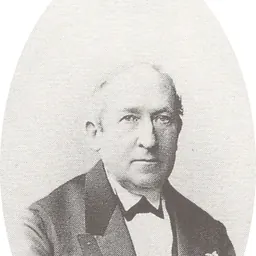
Eliezer Ben-Yehuda
Russian hebrew linguist, grammarian, journalist, lexicographer, newspaper editor and Zionist activist
About Eliezer Ben-Yehuda
Lived 1858 – 1922 (aged 64). Eliezer Ben-Yehuda was a Russian and Turkish lexicographer, linguist, journalist, grammarian and newspaper editor, known for Revival of the Hebrew language.
Eliezer Ben‑Yehuda (born Eliezer Yitzhak Perlman; 7 January 1858 – 16 December 1922) was a Jewish linguist, lexicographer, and journalist who immigrated to Jerusalem in 1881, when the Ottoman Empire ruled it. He is renowned as the lexicographer of the first Hebrew dictionary and also as the editor of Jerusalem-based HaZvi, one of the first Hebrew newspapers published in Mandatory Palestine. Ben-Yehuda was the primary driving force behind the revival of the Hebrew language.
Early life and education
Eliezer Yitzhak Perlman (later Eliezer Ben-Yehuda) was born in Luzhki in the Vilna Governorate of the Russian Empire (now Vitebsk Oblast, Belarus) to Yehuda Leib and Tzipora Perlman, who were Chabad hasidim. He was one of five siblings. He attended a Jewish elementary school (a cheder) where he studied Hebrew and the Hebrew Bible from the age of three, as was customary among the Jews of Eastern Europe. His father died during his childhood and his mother, lacking the financial means to support five children, sent him to live with his uncle David Wolfson, who was more financially secure. By the age of twelve, he had read large portions of the Torah, Mishna, and Talmud. His mother and uncle hoped he would become a rabbi, and after his bar mitzvah he was sent to a yeshiva. There he was exposed to the Hebrew of the Jewish Enlightenment, which included some secular writings. The first secular Hebrew book he read was a translation of Robinson Crusoe. Later, he learned French, German, and Russian, and was sent to Dünaburg for further education. Reading the Hebrew-language newspaper HaShahar, he became acquainted with the early movement of Zionism.
Upon graduation in 1877, Ben-Yehuda went to Paris for four years. While there, he studied various subjects at the Sorbonne University—including the history and politics of the Middle East. It was in Paris that he met a Jew from Jerusalem, who spoke Hebrew with him. It was this conversation that convinced him that the revival of Hebrew as the language of a nation was feasible.
Immigration to Ottoman Palestine In 1881 Ben-Yehuda joined the First Aliyah and immigrated to the Mutasarrifate of Jerusalem, then ruled by the Ottoman Empire, and settled in Jerusalem. He found a job teaching at the school of the Alliance Israélite Universelle. Motivated by the surrounding ideals of renovation and rejection of the diaspora lifestyle, Ben-Yehuda set out to develop a new language that could replace Yiddish and other regional dialects as a means of everyday communication between Jews who moved to Ottoman Palestine from various regions of the world. Ben-Yehuda regarded Hebrew and Zionism as symbiotic, writing, "the Hebrew language can live only if we revive the nation and return it to the fatherland." and Jewish travellers and merchants also used it in receipts, loan documents, and communication with far-away communities. although in 1903 he, along with many members of the Second Aliyah, supported Theodor Herzl's Uganda Scheme proposal as a temporary refuge.
Ben‑Yehuda raised his son, Ben-Zion (meaning "son of Zion"), entirely in Hebrew. He did not allow his son to be exposed to other languages during childhood, and even berated his wife for singing a Russian lullaby. His son thus became the first native speaker of Hebrew in modern times. Ben‑Yehuda later raised his daughter, Dola, entirely in Hebrew as well.
Lexicography Ben-Yehuda was a major figure in the establishment of the Committee of the Hebrew Language (Va'ad HaLashon), later the Academy of the Hebrew Language, an organization that still exists today. He was the initiator of the first modern Hebrew dictionary known as the Ben-Yehuda Dictionary and he became known as the "reviver" (המחיה) of the Hebrew language, despite opposition to some of the words he coined.
In December 1893, Ben-Yehuda and his father-in-law were imprisoned by the Ottoman authorities in Jerusalem following accusations by members of the Jewish community that they were inciting rebellion against the government.
Personal life
Ben-Yehuda was married twice, to two sisters. His first wife, Devora (née Jonas), died in 1891 of tuberculosis, leaving him with five small children.
Her final wish was that Eliezer marry her younger sister, Paula Beila. Soon after his wife Devora's death, three of his children died of diphtheria within a period of 10 days. Six months later, he married Paula,
Ben-Yehuda's son, journalist Itamar Ben-Avi, is the father of radio station head , who is in turn the mother of Ben-Yehuda's great-grandson Gil Hovav, a TV presenter, culinary journalist, restaurant critic, and author.
Hemda Ben-Yehuda became an accomplished journalist and author in her own right, ensuring the completion of the Hebrew dictionary in the decades after Eliezer's death, as well as mobilising fundraising and coordinating committees of scholars in both Israel and abroad.
Death and legacy In December 1922, Ben-Yehuda, 64, died of tuberculosis, from which he suffered most of his life. He was buried on the Mount of Olives in Jerusalem. His funeral was attended by 30,000 people. His wife Hemda lived there for close to thirty years. Ten years after her death, her son Ehud transferred the title of the house to the Jerusalem municipality for the purpose of creating a museum and study center. Eventually it was leased to a church group from Germany who established a center there for young German volunteers. The house is now a conference center and guesthouse run by the German organization Action Reconciliation Service for Peace (ARSP), which organizes workshops, seminars and Hebrew language ulpan programs.
Cecil Roth was quoted by historian Jack Fellman as having summed up Ben-Yehuda's contribution to the Hebrew language: "Before Ben‑Yehuda, Jews could speak Hebrew; after him, they did." There are no other examples of a natural language without any native speakers subsequently acquiring several million native speakers, and no other examples of a sacred language becoming a national language with millions of "first language" speakers.
Don’t just read it —
keep it.
Full-length biographies made to live with: read them, listen on the way to work, watch them tonight.
- E-book
- Audio
- Video
Instant download · yours to keep · every purchase keeps this site free
Important facts
more
Eliezer Ben Yehuda, Eliezer Ben Jehuda, lezer olianovPeople in Eliezer Ben-Yehuda's life
Named in this biography and alive at the same time


Related people
Same field, nearest in time


Contemporaries
People whose lives overlapped Eliezer Ben-Yehuda's



Frequently asked questions
Who was Eliezer Ben-Yehuda?
Russian hebrew linguist, grammarian, journalist, lexicographer, newspaper editor and Zionist activist
When was Eliezer Ben-Yehuda born?
Eliezer Ben-Yehuda was born on 7 January 1858 in Lužki.
When did Eliezer Ben-Yehuda die?
Eliezer Ben-Yehuda died on 16 December 1922 in Jerusalem.
What was Eliezer Ben-Yehuda's occupation?
Eliezer Ben-Yehuda was a lexicographer, linguist, journalist, grammarian and newspaper editor.
What was Eliezer Ben-Yehuda known for?
Eliezer Ben-Yehuda was known for Revival of the Hebrew language.
What nationality was Eliezer Ben-Yehuda?
Eliezer Ben-Yehuda was Russian and Turkish.
Sources & further reading
· Wikipedia: Eliezer Ben-Yehuda
Cite this page
APA: Biography.guide. (2026). Eliezer Ben-Yehuda. https://biography.guide/eliezer-ben-yehuda/
MLA: "Eliezer Ben-Yehuda." Biography.guide, https://biography.guide/eliezer-ben-yehuda/.
Chicago: "Eliezer Ben-Yehuda." Biography.guide. https://biography.guide/eliezer-ben-yehuda/.
Data last updated: 2026-09-25 · Spot an error? Report a correction.
Page generated 2026-09-27 05:10 UTC