
About Samson Raphael Hirsch
Lived 1808 – 1888 (aged 80). Samson Raphael Hirsch was a rabbi, translator, writer, theologian and politician.
Samson Raphael Hirsch (; 20 June 1808 – 31 December 1888) was a German Orthodox rabbi best known as the intellectual founder of the Torah im Derech Eretz school of contemporary Orthodox Judaism. Occasionally termed neo-Orthodoxy, his philosophy, together with that of Azriel Hildesheimer, has had a considerable influence on the development of Orthodox Judaism.
Hirsch was rabbi in Oldenburg, Emden, and was subsequently appointed chief rabbi of Moravia. From 1851 until his death, Hirsch led the secessionist Orthodox community in Frankfurt am Main. He wrote a number of influential books, and for a number of years published the monthly journal Jeschurun, in which he outlined his philosophy of Judaism. He was a vocal opponent of Reform Judaism, and similarly opposed early forms of Conservative Judaism.
Early years and education Hirsch was born in Hamburg, which was then a part of Napoleonic France. His father, Raphael Arye Hirsch, though a merchant, devoted much of his time to Torah studies; his grandfather, Mendel Frankfurter, was the founder of the Talmud Torah schools in Hamburg and unsalaried assistant rabbi of the neighboring congregation of Altona; and his granduncle, Yehudah Leib (Löb) Frankfurter Shapira (1743–1846), was the author of several Hebrew works, including the Torah commentary Harechasim le-Bik'ah (הרכסים לבקעה).
Hirsch was a student of Chacham Isaac Bernays, and the Biblical and Talmudical education which he received, combined with his teacher's influence, led him to determine not to become a merchant, as his parents had desired, but to choose the rabbinical vocation. In furtherance of this plan, he studied Talmud from 1828 to 1829 in Mannheim under Rabbi Jacob Ettlinger. He received semicha (ordination) from Rabbi Ettlinger Hirsch's major works are discussed in further detail below.
In 1838, Hirsch published, "as a necessary concomitant" of the Letters, his Horeb, oder Versuche über Jissroel's Pflichten in der Zerstreuung, as a text-book on Judaism for educated Jewish youth. He had written Horeb first, but his publishers doubted that a work defending traditional Judaism would find a market in those times with reform in vogue.
Nikolsburg In 1846, Hirsch was called to the rabbinate of Nikolsburg in Moravia, and in 1847, he became chief rabbi of Moravia and Austrian Silesia. In Austria, he spent five years in the re-organization of the Jewish congregations and the instruction of numerous disciples; he was also, in his official capacity as chief rabbi, a member of the Moravian Landtag, where he campaigned for more civil rights for Jews in Moravia.
Works The Nineteen Letters of Ben Uziel. Translated by Bernard Drachman, 1899. The Book of Psalms translated and elucidated by Rabbi Samson Raphael Hirsch. Frankfurt A.M. 1882.
Commentary on the Torah Hirsch's innovative and influential commentary on the Pentateuch
(Uebersetzung und Erklärung des Pentateuchs, "Translation and explanation of the Pentateuch"; 5 volumes published 1867–78), has been "hailed as a classic" since the publication of the first volume, Bereshit. According to Hirsch, the goal of the commentary was to expound the text by ascertaining the exact meaning of the words, their etymology, philology, and origin, and, this achieved, "to establish, on the basis of halakhic and aggadic interpretations, the Jewish Weltanschauung".
A feature of the commentary is its analysis of the meanings and symbols in the religious precepts (mitzvot); see further below. This analysis, too, builds on the discussion of the Hebrew, while at the same time, it draws on the treatment of each mitzvah in the Oral Torah, intentionally consistent with the final application in Halakha. The commentary gained worldwide popularity for its scope of insight and information offered to scholar and layman alike, and is still widely referenced. provides further context; and see also and .
Nineteen Letters Hirsch's Nineteen Letters on Judaism (Neunzehn Briefe über Judenthum), published in 1836 under the pseudonym "Ben Uziel", offered an intellectual presentation of Orthodox Judaism in classical German and a "fearless, uncompromising defense" of all its institutions and ordinances. (See under Oldenburg above.) It was written in the form of a fictional correspondence between a young rabbi/philosopher and a youthful intellectual. The first letter, the intellectual's, outlines the challenges that emancipation created for modern Jews, and questions the continued relevance of Judaism. The rabbi responds in the subsequent letters, discussing, in a structured sequence, God, man, and Jewish history; leading to a discussion of the mitzvot and their classification (as employed in Horeb). The work made a profound impression on German Jewish circles and has been republished and translated several times; it is still influential and often taught.
Horeb Horeb (subtitled Versuche über Jissroel's Pflichten in der Zerstreuung, "Essays on the Duties of the Jewish People in the Diaspora"), published 1838, is Rabbi Hirsch's presentation of Jewish law and observances, with particular emphasis on their underlying ideas, capturing the "unifying ideological threads"; these discussions are still regularly taught and referenced.
The title is a reference to the (Ten) Commandments; Mount Horeb, , is another name for Mount Sinai. Horeb is organized into six sections, according to Hirsch's classification of the commandments. As for the Letters, its historical background is the enlightenment, and particularly the beginnings of Reform Judaism, and it thus constituted an attempt "to lead the young generation of Jewry back to the Divine law." See also below. In it Hirsch shows that the Torah's mitzvot, are not mere "ceremonies", but "duties" of Israel. It was then, to some extent, "a necessary concomitant of the Letters". It was conceived, also, to deal with the practical observances of Judaism – providing summarised Halachot relevant to each sub-section.
Commentary on the Siddur and Psalms Rabbi Hirsch left in manuscript at the time of his death a translation and explanation of the prayer-book, which was subsequently published. His commentary on Pirkei Avot here, has been republished separately. His commentary on the book of Psalms (Uebersetzung und Erklärung der Psalmen, 1882) is still widely read; it underpins much of his siddur commentary.
Works of activism Works here (besides similar mentioned above) include: Pamphlet: Jüdische Anmerkungen zu den Bemerkungen eines Protestanten (anon.), Emden, 1841– response to a provocative and anti-Semitic pamphlet by an anonymous Protestant Pamphlet: Die Religion im Bunde mit dem Fortschritt (anon.), Frankfurt am Main, 1854 – response to provocations from the side of the Reform-dominated "Main Community" Pamphlets during the Secession Debate: Das Princip der Gewissensfreiheit (The principle of freedom of conscience), 1874 Der Austritt aus der Gemeinde (Leaving the community), 1876 Ueber die Beziehungen des Talmuds zum Judenthum (On the Talmud's Relationships with Judaism), 1884 – a defense of Talmudic literature against anti-Semitic slanders in Russia
Translations and collections Most of Hirsch's writings have been translated into English and Hebrew by his descendants, starting with "Horeb" in the 1950s (by Dayan Isidor Grunfeld of London) and his Torah commentary in the 1960s (by his grandson Isaac Levi, also of London). Horeb was translated into Hebrew already in 1892.
The publication, in several volumes, of his collected writings (Gesammelte Schriften or Nachalath Zwi) was begun in 1902. and 1960 by Jacob Breuer based on Drachman's translation. The latest translation to English was prepared by Karin Paritzky and revised by Joseph Elias (who states that they "benefited greatly from the two earlier editions"). Elias glosses Breuer's edition as "very readable" while panning it as an achievement reached "by the omission or simplification of a good many passages, so that the reader does not obtain the full meaning that the author intended."
Themes in his work Hirsch lived in the post-Napoleonic era, an epoch when Jews had been granted civil rights in a large number of European countries, leading to a call for reform. A large segment of his work focuses on the possibilities for Orthodox Judaism in such an era, when freedom of religion also meant the freedom to practice Torah precepts without persecution and ridicule.
The principle of "Austritt", an independent Orthodoxy, flows naturally from his view on the place of Judaism in his epoch: If Judaism is to gain from these civil liberties, it has to be able to develop independently — without having to lend implicit or explicit approval to efforts at reformation.
Although Hirsch does not mention his influences (apart from traditional Jewish sources), later authors have identified ideas from the Kuzari (Yehuda Halevi), Nahmanides, and the Maharal of Prague in his works. Nevertheless, most of his ideas are original.
While the Zionist movement was not founded during his lifetime, it is clear from his responses to Rabbi Zvi Hirsch Kalischer, and in several places in his commentary to the Bible and Siddur, that although he had a deep love for the Holy Land, he opposed a movement to wrest political independence for it before the Messianic Era.
Influence and controversy
There is considerable controversy over Hirsch's legacy; this is a matter of debate amongst three parties: Haredi (sometimes called Ultra-Orthodox), Modern Orthodox, and Hirsch's descendants. While it is undisputed that his Torah im Derech Eretz was his real innovation, the exact implementation has been greatly debated.
Those on Orthodoxy's right wing hold that Hirsch himself approved of secular studies as a "Horaas Sha'ah", or temporary dispensation, only to save Orthodox Jewry of the nineteenth century from the threat posed by assimilation. While a yeshiva student in Eastern Europe, Rabbi Shimon Schwab obtained the opinions of various Poskim (authorities in Jewish law) to this effect (see Selected Writings, "These and Those", where Schwab himself disagrees).
At the other end of the Orthodox continuum, some Modern Orthodox Jews understand Hirsch in the sense of Torah Umadda, meaning a synthesis of Torah knowledge and secular knowledge – each for its own sake (this view is propagated in several articles in Tradition: A Journal of Orthodox Thought, published by the Rabbinical Council of America). In this view, Hirsch thought that it was permissible, and even productive, for Jews to learn Gentile philosophy, music, art, literature, and ethics for their own sake.
In contrast, a third, middle opinion is proposed. It is held by Hirsch's son-in-law and successor Rabbi Solomon Breuer, his grandson Rabbi Joseph Breuer, the latter's successor Rabbi Shimon Schwab, his great-grandson Professor Mordechai Breuer (historian), Rabbi Yechiel Yaakov Weinberg, Rabbi Joseph Elias in his commentary to The Nineteen Letters, In response to the "Torah Umadda" theory: Hirschian philosophy demands the domination of Torah over secular knowledge, not a separate synthesis. On this basis, then, many adherents of Hirsch's philosophy have preferred the natural sciences over the humanities as a subject of secular study, seemingly because they are easier to judge through the prism of Torah thought than the more abstract humanities.
Don’t just read it —
keep it.
Full-length biographies made to live with: read them, listen on the way to work, watch them tonight.
- E-book
- Audio
- Video
Instant download · yours to keep · every purchase keeps this site free
Important facts
more
Usiel, Ben Usiel, Ben Uziel, Hirsch, Samson Raphael, Hirsh, Samson Raphael, Samson Raphaël, Ben Usie͏̈l, S.R., Šimšwn ben Rpaʾel, Hîrš, Šimšôn Refāʾēl, Rashar Hirsch, Šimšwn Rpaʾel, Šimšen Refael, Shimshon Refaʼel, Girsh, S. R., S. R, Samson R., Ben ʿWziyʾelPeople in Samson Raphael Hirsch's life
Named in this biography and alive at the same time
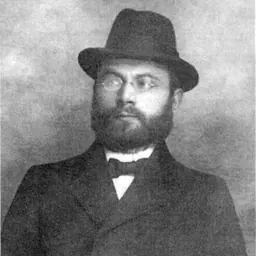

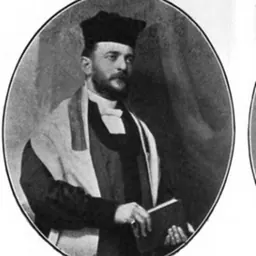

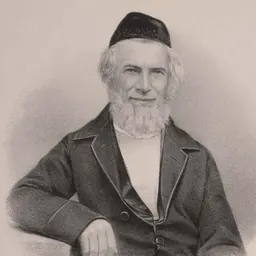



Related people
Same field, nearest in time


Contemporaries
People whose lives overlapped Samson Raphael Hirsch's





Frequently asked questions
Who was Samson Raphael Hirsch?
Jewish theologian, Germany 19th century (1808–1888)
When was Samson Raphael Hirsch born?
Samson Raphael Hirsch was born on 20 June 1808 in Hamburg.
When did Samson Raphael Hirsch die?
Samson Raphael Hirsch died on 31 December 1888 in Frankfurt.
What was Samson Raphael Hirsch's occupation?
Samson Raphael Hirsch was a rabbi, translator, writer, theologian and politician.
What nationality was Samson Raphael Hirsch?
Samson Raphael Hirsch's recorded nationality: Hamburg.
Sources & further reading
· Wikipedia: Samson Raphael Hirsch
· DBpedia: Samson Raphael Hirsch
Cite this page
APA: Biography.guide. (2026). Samson Raphael Hirsch. https://biography.guide/samson-raphael-hirsch/
MLA: "Samson Raphael Hirsch." Biography.guide, https://biography.guide/samson-raphael-hirsch/.
Chicago: "Samson Raphael Hirsch." Biography.guide. https://biography.guide/samson-raphael-hirsch/.
Data last updated: 2026-09-20 · Spot an error? Report a correction.
Page generated 2026-09-27 05:25 UTC