
About John Logan
Lived 1747 – 1807 (aged 59–60). John Logan was an American lawyer, politician and judge.
John Logan (1747July 1807) was a military officer, farmer and politician from Virginia who became a pioneer in and helped found the state of Kentucky. He served under his brother, Benjamin during Lord Dunmore's War in 1774, then both moved to what was then called Kentucky County, Virginia. Logan took part in several expeditions against the Shawnee, including some led by Daniel Boone, John Bowman, and George Rogers Clark. After Kentucky County was split into three counties, Logan and his brother at various times represented Lincoln in the Virginia House of Delegates, and John Logan also represented that county at the Virginia Ratification Convention in 1788.
When Kentucky became a state in 1792, Logan briefly served in the Kentucky Senate, before accepting appointment as the state's first treasurer, an office he held continuously until his death in 1807. After being becoming treasurer, he moved to Franklin County, where he became one of the first trustees of the city of Frankfort, which became the state capital. He also represented Franklin County at the 1799 state constitutional convention and later became the county's first circuit court judge.
Early life John Logan was born to David and Jane (McKinley) Logan in the spring of 1747 in then-vast Virginia County. He was baptized by Rev. John Craig in Augusta County on the 10th of May 1747. His parents had immigrated from Ireland by way of Pennsylvania, before settling in the Shenandoah Valley in the "Borden Track."
His father died in 1757, leaving no will, so by primogeniture his entire estate passed to his oldest son Benjamin when he came of age in 1764.
In 1776, Benjamin Logan made claims for himself and several members of his family, including John, in Kentucky County, Virginia along the Dix River, although the family did not immediately move there. The party engaged a small detachment of Shawnees with indecisive results before retreating; the Shawnee group may have been sent in advance of the larger war party that later laid siege to the Boonesborough settlement. In July, he led troops which safely conveyed gunpowder and ammunition from Boonesborough to the fort at St. Asaph's (near the present-day city of Stanford, Kentucky). In 1780, he was ordered to bring four-fifths of his company to the mouth of the Licking River for a retaliatory mission against the Indians, who had combined with British forces to overwhelm the settlements of Ruddle's Station and Martin's Station. George Rogers Clark led the mission, which completely destroyed the Shawnee settlements of Chillicothe and Pekowee in August 1780.
In January 1781, the Virginia legislature created three counties from the formerly vast Kentucky County. At the first meeting of the county court, John Bowman became lieutenant of the county militia and Stephen Trigg became its colonel. Benjamin Logan and James Harrod received commissions as lieutenant colonel and major, respectively, but both declined because they thought they deserved a higher rank.
Virginia governor Benjamin Harrison commissioned Logan as colonel of the Lincoln County militia. He formally replaced Stephen Trigg on July 22, 1783, although he had already been functioning as such for three months. Meanwhile, Lincoln County voters elected Logan and George Slaughter as their (part-time) representatives to the Virginia House of Delegates in 1784. Nonetheless, he helped defeat a resolution calling for the repeal of laws that conflicted with the Treaty of Paris and voted with the majority to restrict the ports that could be used by foreign vessels.
In October 1785, Logan and twenty-two militiamen recovered property and prisoners from an Indian raiding party that had attacked several families camped along the Wilderness Road. He again joined George Rogers Clark for an expedition against the Shawnee in October 1786, but was later critical of Clark's actions during the campaign. He co-signed a letter to Governor Edmund Randolph claiming that Clark had, without proper authority, enlisted men and commissioned officers for a garrison at Vincennes and confiscated Spanish property to supply the garrison.
On December 12, 1786, Logan was sworn in as sheriff of Lincoln County. In February 1787, Logan gathered a group of militiamen to avenge the killing of a Virginian named Luttrell by natives near Somerset. Logan tracked the raiders over the Cumberland River into what is now Tennessee. He and his men attacked the group of Cherokees – killing seven of them – and recovered horses, pelts, and other items believed to belong to settlers in the area. No other action was taken against Logan. Logan fear federal power without the inclusion of a bill of rights. The following year, John Logan replaced his brother Benjamin as lieutenant of Lincoln County following Benjamin's resignation. However, he was still considered a resident of Botetourt County, where he owned three adult slaves, three younger slaved, 13 horses and a stud horse, and 20 cattle.
In 1789, Lincoln County voters elected John Logan to the first of three consecutive terms in the Virginia House of Delegates. During the 1789 term, Logan helped draft the legislation authorizing the separation of Kentucky from Virginia.
Kentucky politician When Kentucky became a state in 1792, Logan was chosen as a member of the state senate. The situation was complicated when the federal government refused to redeem the paper money issued by the states of Virginia, Pennsylvania, and North Carolina to finance the Revolutionary War, rendering these notes worthless.
With near-total autonomy over the state's finances, Logan created the county offices of justice of the peace, sheriff, auditor, and surveyor and set their salaries. Logan was also charged with finding a way to ensure adequate defense of the frontier state; he divided the state into districts based on population in order to ensure equitable conscription of soldiers for the state militia. In 1799, he represented Franklin County at the constitutional convention that produced the second Constitution of Kentucky. Logan became a trustee of the Kentucky Seminary in 1800, and was appointed the first circuit judge of Franklin County, presiding over the court's first session on April 18, 1803.
Death and legacy
John Logan continued to serve as state treasurer until his death in July 1807 at Frankfort.
Don’t just read it —
keep it.
Full-length biographies made to live with: read them, listen on the way to work, watch them tonight.
- E-book
- Audio
- Video
Instant download · yours to keep · every purchase keeps this site free
Important facts
People in John Logan's life
Named in this biography and alive at the same time



Related people
Same field, nearest in time


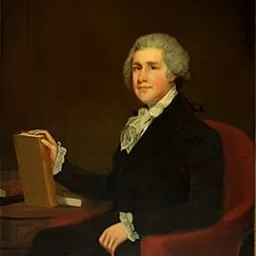
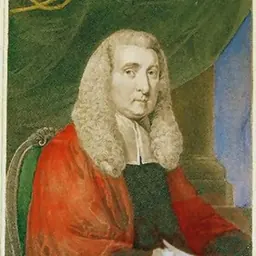
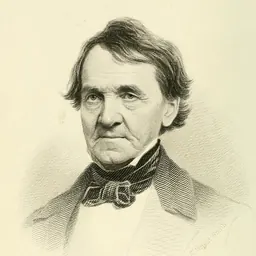
Contemporaries
People whose lives overlapped John Logan's




Frequently asked questions
Who was John Logan?
Pioneer and first state treasurer of Kentucky
When was John Logan born?
John Logan was born in 1747 in Virginia.
When did John Logan die?
John Logan died on 1 July 1807 in Frankfort.
What was John Logan's occupation?
John Logan was a lawyer, politician and judge.
What nationality was John Logan?
John Logan was American.
Sources & further reading
· DBpedia: John Logan (pioneer)
Cite this page
APA: Biography.guide. (2026). John Logan. https://biography.guide/john-logan-lawyer/
MLA: "John Logan." Biography.guide, https://biography.guide/john-logan-lawyer/.
Chicago: "John Logan." Biography.guide. https://biography.guide/john-logan-lawyer/.
Data last updated: 2026-09-20 · Spot an error? Report a correction.
Page generated 2026-09-27 05:32 UTC