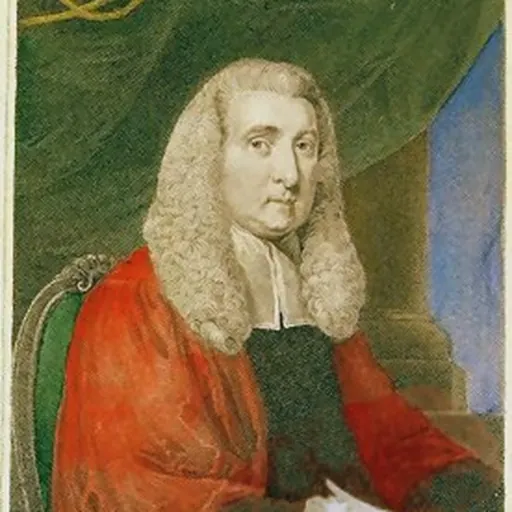
About Daines Barrington
Lived 1728 – 1800 (aged 71–72). Daines Barrington was a British lawyer, ethnologist, publisher, translator, historian and ornithologist, known for Gilbert White.
Daines Barrington, FRS, FSA (1727/2814 March 1800) was an English lawyer, antiquary and naturalist. He was one of the correspondents to whom Gilbert White wrote extensively on natural history topics. Barrington served as a Vice President of the Royal Society and wrote on a range of topics related to the natural sciences including early ideas and scientific experimentation on the learning of songs by young birds. He designed a standard format for the collection of information about weather, the flowering of plants, the singing of birds and other annual changes that was also used by Gilbert White. He was a proponent of the theory that the Arctic region is free of sea ice, and influenced several polar expeditions, including the 1773 Phipps expedition towards the North Pole. He also wrote on child geniuses including Mozart, who at the age of nine had visited England.
Early life and legal career Barrington was the third son of John Barrington, 1st Viscount Barrington. He matriculated at The Queen's College, Oxford, in 1745, but never graduated. In the same year he was admitted to the Inner Temple, and was called to the bar in 1750.
He subsequently held various legal offices, including marshal of the High Court of Admiralty, 1751–3; a judge of Great Sessions for North Wales (Anglesey, Caernarfonshire and Merionethshire) from 1757; Recorder of Bristol and King's Counsel from 1764; and second justice of Chester from 1778. Though considered by some (including Jeremy Bentham) to be an indifferent judge, his Observations on the Statutes, chiefly the more ancient, from Magna Charta to 21st James I (1766), had a high reputation among historians and constitutional antiquaries, and ran through five editions down to 1796. He resigned all his legal offices in 1785, retaining only that of Commissary General of the stores at Gibraltar, which continued to provide him with a substantial income until his death. had begun a fugue and left off abruptly, that little Mozart hath taken it up, and worked it after a most masterly manner. Witness as I was myself of most of these extraordinary facts, I must own that I could not help suspecting his father imposed with regard to the age of the boy, though he had not only a most childish appearance, but likewise had all the actions of that stage of life. For example, whilst he was playing to me, a favorite cat came in, upon which he immediately left his harpsichord, nor could we bring him back for a considerable time.
Other studies include Experiments and Observations on the Singing of Birds and an essay on the language of birds. He however dismissed the idea of long-distance migration in birds, and supported the ancient view that swallows went to sleep underwater during winter.
Letters to Barrington from the parson-naturalist Gilbert White form a large part of White's 1789 book The Natural History and Antiquities of Selborne; Barrington's half of the correspondence is not included. Barrington established the format of the Naturalist's Journal for "keeping a daily register of observations on the weather, plants, birds, insects, &c" based on Benjamin Stillingfleet for collating information from across England. This format printed by Gilbert White's brother Benjamin was used from around 1769 to serve the study of the natural history of Selbourne. Very few of his log books are extant but Barrington has been considered as a pioneer of the study of phenology.
Barrington met the Cornish speaker Dolly Pentreath and published a report of the encounter. This report is the main source for the claim that Dolly was the last speaker of the Cornish language. A year after Dolly Pentreath died in 1777, Barrington received a letter, written in Cornish and accompanied by an English translation, from a fisherman in Mousehole named William Bodinar stating that he knew of five people who could speak Cornish in that village alone. Barrington also speaks of a John Nancarrow from Marazion who was a native speaker and survived into the 1790s.
The plant genus Barringtonia is named in his honour.
Theories of the North Pole
At a time when England continued to seek a Northwest Passage across North America, Barrington was intensely interested in the topic of navigation across the northern polar regions, and wrote a number of tracts on the subject. He maintained mistakenly that seawater cannot freeze, and that ice in northern regions was the result of frigid freshwater from rivers emptying into the ocean. By this theory, the polar regions should be free of ice, that previous attempts to find the Northwest Passage had failed because captains had followed routes too close to land, and therefore it would be possible to navigate to the Far East by crossing the North Pole. He lobbied for an expedition to test this theory, which was undertaken by Captain Constantine John Phipps in the summer of 1773. The Phipps expedition disproved his theory when both ships became stuck in sea ice near Norway's Svalbard Islands and with difficulty survived to return to England. Barrington's theories of the Northwest Passage influenced the route of the third voyage of James Cook in 1776, in that an attempt was made to find the passage from the western side of North America (present day Alaska), which Barrington believed would be fruitful.
Notable works
Don’t just read it —
keep it.
Full-length biographies made to live with: read them, listen on the way to work, watch them tonight.
- E-book
- Audio
- Video
Instant download · yours to keep · every purchase keeps this site free
Important facts
People in Daines Barrington's life
Named in this biography and alive at the same time
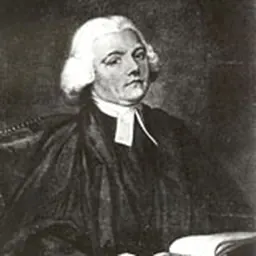


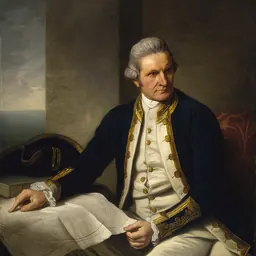
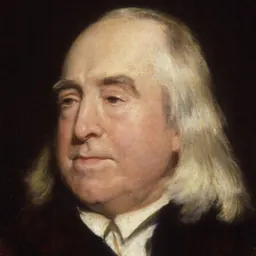

Related people
Same field, nearest in time


Contemporaries
People whose lives overlapped Daines Barrington's





Frequently asked questions
Who was Daines Barrington?
British lawyer, antiquary and naturalist
When was Daines Barrington born?
Daines Barrington was born in 1728 in Beckett Hall.
When did Daines Barrington die?
Daines Barrington died on 14 March 1800.
What was Daines Barrington's occupation?
Daines Barrington was a lawyer, ethnologist, publisher, translator, historian and ornithologist.
What was Daines Barrington known for?
Daines Barrington was known for Gilbert White.
What nationality was Daines Barrington?
Daines Barrington was British.
Sources & further reading
· Wikipedia: Daines Barrington
Cite this page
APA: Biography.guide. (2026). Daines Barrington. https://biography.guide/daines-barrington/
MLA: "Daines Barrington." Biography.guide, https://biography.guide/daines-barrington/.
Chicago: "Daines Barrington." Biography.guide. https://biography.guide/daines-barrington/.
Data last updated: 2026-09-23 · Spot an error? Report a correction.
Portrait: Wikimedia Commons · author & licence
Page generated 2026-09-27 05:05 UTC