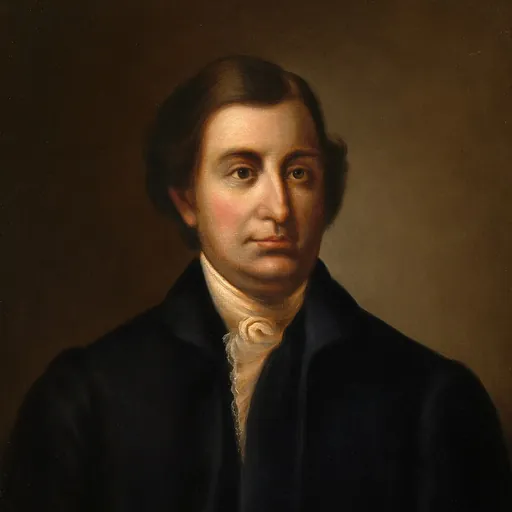
About Edmund Randolph
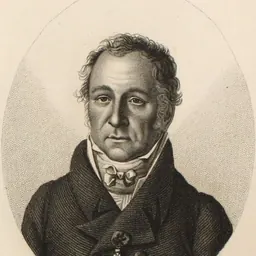
Lived 1753 – 1813 (aged 60). Edmund Randolph was an American politician, lawyer, diplomat, governor, jurist and mayor.
Edmund Jennings Randolph (August 10, 1753 September 12, 1813) was an American Founding Father, attorney, and the seventh Governor of Virginia. As a delegate from Virginia, he attended the Constitutional Convention and helped to create the national constitution while serving on its Committee of Detail. He was appointed the first United States Attorney General by George Washington and subsequently served as the second Secretary of State during the Washington administration.
Early life
Edmund Jennings Randolph was born on August 10, 1753, to the influential Randolph family in Williamsburg in the Colony of Virginia. He was educated at the College of William and Mary. After graduation, he began reading law with his father John Randolph and uncle Peyton Randolph.
In 1775, with the start of the American Revolution, Randolph's father, an active Loyalist, fled with his family to Britain. Son Edmund stayed in America, where he joined the Continental Army as an aide-de-camp to General George Washington.
Upon the death of his uncle Peyton Randolph in October 1775, Edmund Randolph returned to Virginia to act as executor of the estate and, while there, was elected as a representative to the Fourth Virginia Convention. He was later mayor of Williamsburg and then attorney general of Virginia, a post he held until 1786.
Political career Early political career
Randolph was selected as one of 11 delegates to represent Virginia at the Continental Congress in 1779 and served as a delegate until 1782. He also remained in private law practice, handling numerous legal issues for Washington and others.
Constitutional Convention George Washington witnesses Gouverneur Morris sign the constitution as Benjamin Franklin attends (at left; glasses) and Edmund Randolph and Alexander Hamilton look on (far right), in John Henry Hintermeister's 1925 painting, Foundation of the American Government. The following year, as a delegate from Virginia to the Constitutional Convention, at 34, Randolph introduced the Virginia Plan as an outline for a new national government. Although an enslaver himself, he argued against the further importation of enslaved people from Africa and for a strong central government and advocated a plan for three chief executives from various parts of the country as he was fearful that a single powerful executive would produce an autocracy. The Virginia Plan also proposed a bicameral legislature, both houses of which would have delegates chosen based on state population. Randolph proposed and was supported unanimously by the convention's delegates "that a Nationally Judiciary be established" (Article III of the U.S. Constitution would establish the federal court system). The Articles of Confederation lacked a national court system for the United States.
Randolph was also a member of the "Committee of Detail," which was tasked with converting the Virginia Plan's 15 resolutions to a first draft of the Constitution.
Randolph ultimately refused to sign the final document, one of only three members who remained in the Constitutional Congress but refused to sign (the others were the fellow Virginian George Mason and Elbridge Gerry of Massachusetts). Randolph thought the final document lacked sufficient checks and balances and published an account of his objections in October 1787. He thought that the federal judiciary would threaten state courts, and he considered the Senate too powerful and Congress's power too broad. He also objected to the lack of a provision for a second convention to act after the present instrument had been referred to the states.
When Jefferson resigned as Secretary of State in 1793, Randolph succeeded him. The primary diplomatic initiative of his term was the Jay Treaty with Britain in 1794. However, Hamilton devised the plan and wrote the instructions, leaving Randolph the minor role of signing the papers. Hostile to the resulting treaty, Randolph almost gained Washington's ear for his concerns but was overridden in the wake of the Fauchet scandal (see below). Near the end of his term as Secretary of State, negotiations for Pinckney's Treaty were finalized.
The Fauchet scandal and resignation A scandal involving an intercepted French message led to Randolph's resignation from Washington's cabinet in August 1795. As Secretary of State, Randolph was tasked with maintaining friendly relations with France. concluded that France did not bribe Randolph but that he "was rather a pitiable figure, possessed of some talents and surprisingly little malice, but subject to self-absorbed silliness and lapses of good sense."
Randolph's published response, Vindication, illustrates his concerns about public and private perceptions of his charactersuch concerns for reputation holding great value in the 18th century. In the event, Randolph secured a published retraction from Fauchet.
After his resignation, Randolph was held personally responsible for losing a large sum of money during his administration of the state department. He was eventually adjudged to owe the government more than $49,000, which he paid.
They married on August 29, 1776. Their marital relationship was close and so free of friction that his daughters could not forget one singular instance of misunderstandingMrs. Randolph having related some particular incident, and her husband hastily exclaimed: "That is mere gossip." The lady repaired to her room and did not answer her husband's gentle knock. Then Randolph said, "Betsey, I have urgent business in town, but I shall not leave this house until permitted to apologize to you." In part, Randolph wrote, "My eyes are every moment beholding so many objects with which she was associated; I sometimes catch a sound which deludes me so much with the similitude of her voice; I carry about my heart and hold for a daily visit so many of her precious relics; and, above all, my present situation is so greatly contrasted by its vacancy, regrets, and anguish, with the purest and unchequered bliss, so far as it depended on her, for many years of varying fortune, that I have vowed at her grave daily to maintain with her a mental intercourse."
Death and legacy
Randolph lived his final years as a guest of his friend Nathaniel Burwell at Carter Hall, near Millwood, Virginia, in Clarke County. He suffered from paralysis in his final years and died at 60 on September 12, 1813. He is buried nearby at the Burwell family cemetery adjacent to "Old Chapel."
Randolph County, Virginia (now West Virginia) was formed in 1787 and named in Randolph's honor. Randolph County, Illinois was also named after him. Randolph, who was the governor of Virginia when the state ceded what was then sometimes called Illinois County, Virginia (a title disputed by Pennsylvania and others) to the new federal government, which created the Northwest Territory. Randolph County's motto is "where Illinois began" because it was one of the first two settled counties in the territory. It contains Kaskaskia, the first seat of Illinois County, which later became the Illinois Territory's capital and ultimately the state's first capital.
The town of Randolph, Vermont is also named after him.
The Edmund J. Randolph Award is the highest award given by the US Department of Justice to persons who make "outstanding contributions to the accomplishments of the Department's mission."
Don’t just read it —
keep it.
Full-length biographies made to live with: read them, listen on the way to work, watch them tonight.
- E-book
- Audio
- Video
Instant download · yours to keep · every purchase keeps this site free
Important facts
Family & relationships
People in Edmund Randolph's life
Named in this biography and alive at the same time

Related people
Same field, nearest in time



Contemporaries
People whose lives overlapped Edmund Randolph's





Frequently asked questions
Who was Edmund Randolph?
American attorney (1753-1813)
When was Edmund Randolph born?
Edmund Randolph was born on 10 August 1753 in Williamsburg.
When did Edmund Randolph die?
Edmund Randolph died on 12 September 1813 in Millwood.
What was Edmund Randolph's occupation?
Edmund Randolph was a politician, lawyer, diplomat, governor, jurist and mayor.
What nationality was Edmund Randolph?
Edmund Randolph was American.
Sources & further reading
Cite this page
APA: Biography.guide. (2026). Edmund Randolph. https://biography.guide/edmund-randolph/
MLA: "Edmund Randolph." Biography.guide, https://biography.guide/edmund-randolph/.
Chicago: "Edmund Randolph." Biography.guide. https://biography.guide/edmund-randolph/.
Data last updated: 2026-09-23 · Spot an error? Report a correction.
Portrait: Wikimedia Commons · author & licence
Page generated 2026-09-27 05:04 UTC