
John Alexander Harvie-Brown
Scottish ornithologist and naturalist
About John Alexander Harvie-Brown
Lived 1844 – 1916 (aged 71). John Alexander Harvie-Brown was a British naturalist, ornithologist and zoologist.
John Alexander Harvie-Brown (27 August 1844 – 26 July 1916) was a Scottish ornithologist and naturalist.
Biography Harvie-Brown was born near Larbert in central Scotland, the only son of John Harvie-Brown and his wife, Elizabeth Spottiswoode, who was the daughter of Thomas Spottiswoode of Dunipace (entitled "Thomas Spottiswoode, 6th of Dunipace"). He inherited approximately 2100 acres near Dunipace.
Harvie-Brown was educated at Merchiston Castle School, and then attended both the University of Edinburgh and Cambridge University.
As a wealthy landowner, he could dedicate himself to ornithology and other naturalistic studies without pursuing a profession. He made ornithological visits to Norway, Russia, Finland and Transylvania. Perhaps his most famous expedition was with Henry Seebohm to the lower reaches of the Pechora River in 1875, when the eggs of the grey plover and the little stint were discovered. For many years Harvie-Brown cruised each summer among the islands of the Scottish coast in his yacht the "Shiantelle" (built in 1887 in Fraserburgh). He, with H. W. Feilden, collected many eggs and birds' skins from the Hebrides, Orkney, the Faroes and even the island of Rockall (no eggs but birds' skins in the case of Rockall). However, in January 1897 a fire almost totally destroyed the collection.
Harvie-Brown died in 1916, after a number of years of ill health. His burial was at Dunipace Old Cemetery. His publications in the scientific literature number close to 250 items. He was elected an Honorary Life Member of the American Ornithologists' Union. In 1912 the University of Aberdeen conferred upon him the honorary degree of LL.D.
Bird migration and the British Association In 1880 Alfred Newton persuaded the British Association to sponsor a committee for the study of bird migration all over the world but especially along the coasts of England and Scotland. Harvie-Brown, John Cordeaux, and W. Eagle Clarke were among the most important contributors to the committee's effort to recruit the keepers of lighthouses and lightvessels to make and record observations of bird migration.
Between 1879 and 1887 the reports of the Committee on the Migration of Birds, worked out by Eagle Clarke, and presented in 1896, involved information from many lighthouses of Great Britain and Ireland, but none from the south coast of Great Britain, between Varne Lightvessel in the east and Start Point Lighthouse in the west. For this reason Harvie Brown wrote a paper, addressed to "the lighthouse keepers of the English Channel, and to the local ornithologists of the counties abutting thereone." He was especially keen on filling in the blank, that could support conclusions concerning the so-called east-to-west migration line.
Selected works Report on the migration of birds (1879–1887) (9 vols.)
(120 pgs.) (99 pgs.) (106 pgs.) (129 pgs.) (186 pgs.) (173 pgs.) (174 pgs.) (175 pgs.)
A vertebrate fauna of the outer Hebrides (1888) (with M. Forster Heddle, William Anderson Smith, & Thomas Edward Buckley) A vertebrate fauna of Argyll and the inner Hebrides (1892) (with Thomas E. Buckley) A fauna of the Moray basin (1895) (with Thomas E. Buckley) alt=wikisource logo (He is wrongly named "J.A. Harvie Brown" here) The wonderful trout (1898) On the avifauna of the outer Hebrides, 1888-1902 (1902), in the Annals of Scottish Natural History: A Quarterly Magazine ... The red-necked phalarope in Ireland, the Outer Hebrides, and Shetland as a nesting species (1903), in the Irish Naturalist Travels of a naturalist in northern Europe, Norway, 1871, Archangel, 1872, Petchora, 1875 (1905)
Don’t just read it —
keep it.
Full-length biographies made to live with: read them, listen on the way to work, watch them tonight.
- E-book
- Audio
- Video
Instant download · yours to keep · every purchase keeps this site free
Important facts
People in John Alexander Harvie-Brown's life
Named in this biography and alive at the same time

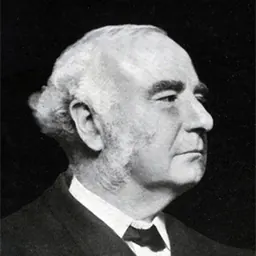



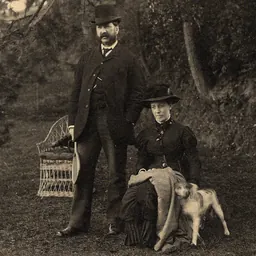
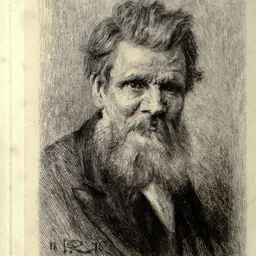

Related people
Same field, nearest in time
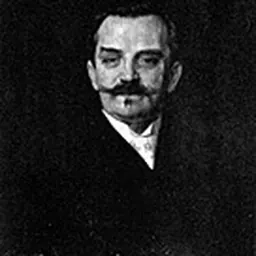

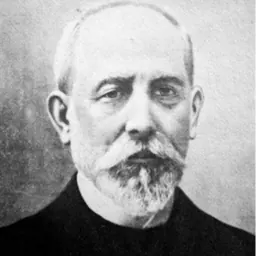
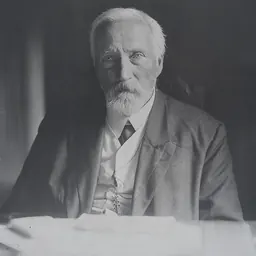
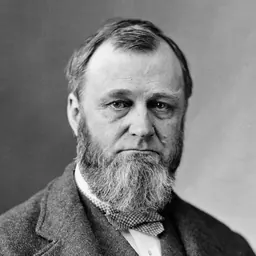
Contemporaries
People whose lives overlapped John Alexander Harvie-Brown's
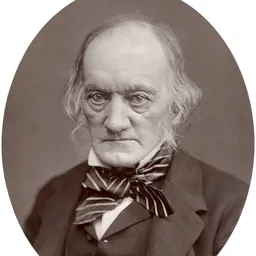
Frequently asked questions
Who was John Alexander Harvie-Brown?
Scottish ornithologist and naturalist (1844-1916)
When was John Alexander Harvie-Brown born?
John Alexander Harvie-Brown was born on 27 August 1844 in Larbert.
When did John Alexander Harvie-Brown die?
John Alexander Harvie-Brown died on 26 July 1916 in Dunipace.
What was John Alexander Harvie-Brown's occupation?
John Alexander Harvie-Brown was a naturalist, ornithologist and zoologist.
What nationality was John Alexander Harvie-Brown?
John Alexander Harvie-Brown was British.
Sources & further reading
· Wikipedia: John Alexander Harvie-Brown
· DBpedia: John Alexander Harvie-Brown
Cite this page
APA: Biography.guide. (2026). John Alexander Harvie-Brown. https://biography.guide/john-alexander-harvie-brown/
MLA: "John Alexander Harvie-Brown." Biography.guide, https://biography.guide/john-alexander-harvie-brown/.
Chicago: "John Alexander Harvie-Brown." Biography.guide. https://biography.guide/john-alexander-harvie-brown/.
Data last updated: 2026-09-26 · Spot an error? Report a correction.
Page generated 2026-09-27 05:16 UTC