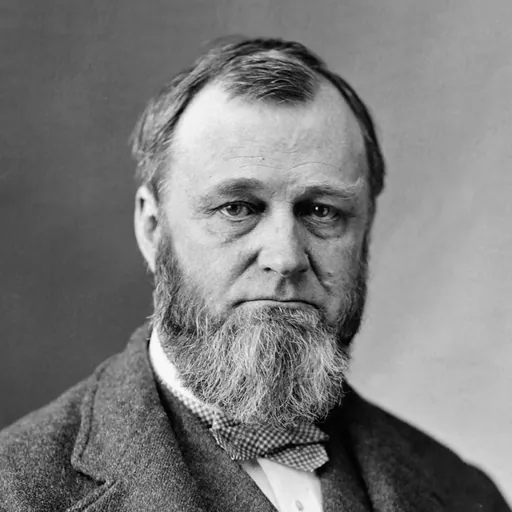
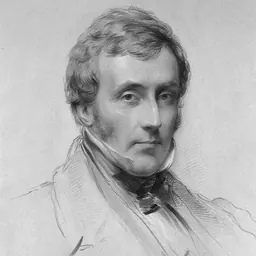
Spencer Fullerton Baird
American naturalist, ornithologist, ichthyologist, museum curator, and the 2nd Secretary of the Smithsonian
About Spencer Fullerton Baird
Lived 1823 – 1887 (aged 64). Spencer Fullerton Baird was an American naturalist, curator, ornithologist, zoologist, ichthyologist and university teacher.
Early life and education Spencer Fullerton Baird was born in Reading, Pennsylvania in 1823. His mother was a member of the prominent Philadelphia Biddle family; he was a nephew of Speaker of the Pennsylvania Senate Charles B. Penrose and a first cousin, once removed, of U.S. Senator Boies Penrose and his distinguished brothers, Richard, Spencer, and Charles. He became a self-trained naturalist as a young man, learning about the field from his brother, William, who was a birder, As a young boy he attended Nottingham Academy in Port Deposit, Maryland and public school in Carlisle, Pennsylvania. He returned to Carlisle two years later. He taught natural history at Dickinson starting in 1845. It was during this time that he met Smithsonian Secretary Joseph Henry. The two became close friends and colleagues. Upon his arrival in Washington, he brought two railroad box cars worth of his personal collection. Baird created a museum program for the Smithsonian, requesting that the organization focus on natural history in the United States. His program also allowed him to create a network of collectors through an exchange system. In order to balance the collection, Baird sent duplicate specimens to other museums around the country, often exchanging the duplicates for specimens the Smithsonian needed. During the 1850s he described over 50 new species of reptiles, some by himself, and others with his student Charles Frédéric Girard. Their 1853 catalog of the Smithsonian's snake collection is a benchmark work in North American herpetology. Baird also was a mentor to herpetologist Robert Kennicott who died prematurely, at which point Baird left the field of herpetology to focus on larger projects.
Eventually, he became the Assistant Secretary, serving under Joseph Henry. As assistant, Baird helped develop a publication and journal exchange, that provided scientists around the world with publications they would have a hard time accessing. He supported the work of William Stimpson, Robert Kennicott, Henry Ulke and Henry Bryant. In 1855, he was elected to the American Philosophical Society. He received his Ph.D. in physical science in 1856 from Dickinson College. In 1870, Baird was vacationing in Woods Hole, Massachusetts, where he developed an interest in maritime research. He went on to lead expeditions in Nova Scotia and New England.
United States Fish Commission and United States National Museum Baird with his wife and daughter in Wood's Hole, Massachusetts. It was at Wood's Hole that Baird gained interest in ichthyology. On February 25, 1871, Ulysses S. Grant appointed Baird as the first Commissioner of Fish and Fisheries for the United States Fish Commission. He served in this position until his death. With Baird as Commissioner, the commission sought opportunities to restock rivers with salmon and lakes with other food fish and the depletion of food fish in coastal waters. Baird reported that humans were the reason for the decline of food fish in these coastal areas. The Albatross research vessel was launched during his tenure, in 1882. He was highly active in developing fishing and fishery policies for the United States, and was instrumental in making Woods Hole the research venue it is today. Owing to the large number of objects collected, in 1879, Congress approved construction for the first National Museum building, which is now the Arts and Industries Building. That year, he was made a member of the Order of St. Olav by the King of Sweden. In 1880 Baird was elected a member of the American Antiquarian Society He oversaw the building of the new National Museum building, which opened in 1881. During the February 1887, Baird went on leave due to "intellectual exertion".
Death and legacy
Spencer Fullerton Baird died on August 19, 1887. John Wesley Powell spoke at Baird's funeral. Baird is buried at Oak Hill Cemetery.
Baird's sparrow, a migratory bird native to Canada, Mexico and the United States, is named after him. A medium-sized shorebird known as Baird's sandpiper is also named after him.
Baird Auditorium in the Smithsonian National Museum of Natural History is named in his honor. It is located on the National Mall side of the first floor of the museum.
Baird's wife, Mary, donated his stamp collection to the National Museum. His papers are held in the Smithsonian Institution Archives.
In 1946, Baird was one of four Smithsonian Secretaries featured in an exhibition about their lives and work curated by United States National Museum curator Theodore T. Belote. In 1922, the Baird Ornithological Club was founded and named after Baird. Spencer Baird Road in Woods Hole is named for him.
Eponymy
Natural world The genus Bairdiella of drumfishes was named after him by Theodore Gill in 1861. Baird's smooth-head, Alepocephalus bairdii Goode and Bean, 1879. Lancer dragonet, Callionymus bairdi Jordan, 1888 Mottled sculpin, Cottus bairdii Girard, 1850. Bumphead damselfish, Microspathodon bairdii (Gill, 1862). Marlin-spike grenadier, Nezumia bairdii (Goode & Bean, 1877). Baird's beaked whale, Berardius bairdii Stejneger, 1883. Baird's pocket gopher, Geomys breviceps (Baird, 1855) Prairie deer mouse, Peromyscus maniculatus bairdii (Hoy and Kennicott, 1857) Baird's shrew, Sorex bairdi (Meriam, 1895) Baird's tapir, Tapirus bairdii (Gill, 1865). Baird's sparrow, Ammodramus bairdii (Audubon, 1844). Baird's sandpiper, Calidris bairdii Coues, 1861. Cuban ivory-billed woodpecker, Campephilus bairdii (now C. principalis bairdii), Cassin, 1863. Baird's flycatcher, Myiodynastes bairdii Gambell, 1847. Baird's trogon, Trogon bairdii Lawrence, 1868. Tanner crab, Chionoecetes bairdi Rathbun, 1924. Red lobster, Eunephrops bairdii S. I. Smith, 1885. Baird's rat snake, Pantherophis bairdi (Yarrow, 1880).
Author abbreviation in zoology Baird
Sea vessel M.V. Spencer F. Baird, Ocean-surveying ship.
Locations The Lake Shasta Caverns were formerly named Baird Cave.
Don’t just read it —
keep it.
Full-length biographies made to live with: read them, listen on the way to work, watch them tonight.
- E-book
- Audio
- Video
Instant download · yours to keep · every purchase keeps this site free
Important facts
more
SPENCER F.People in Spencer Fullerton Baird's life
Named in this biography and alive at the same time




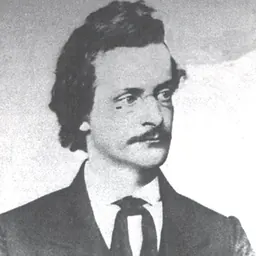
Related people
Same field, nearest in time
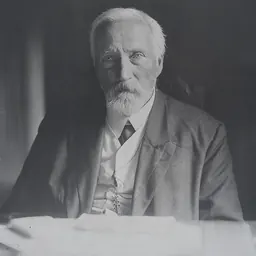

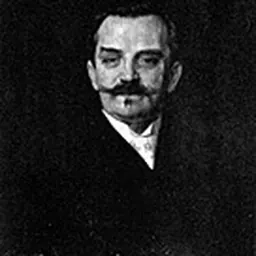


Contemporaries
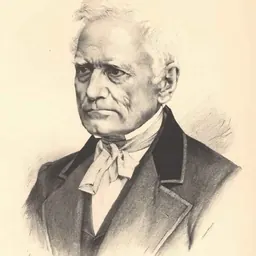
People whose lives overlapped Spencer Fullerton Baird's

Frequently asked questions
Who was Spencer Fullerton Baird?
American naturalist, ornithologist, ichthyologist, museum curator, and the 2nd Secretary of the Smithsonian (1823-1887)
When was Spencer Fullerton Baird born?
Spencer Fullerton Baird was born on 3 February 1823 in Reading.
When did Spencer Fullerton Baird die?
Spencer Fullerton Baird died on 19 August 1887 in Woods Hole.
What was Spencer Fullerton Baird's occupation?
Spencer Fullerton Baird was a naturalist, curator, ornithologist, zoologist, ichthyologist and university teacher.
What nationality was Spencer Fullerton Baird?
Spencer Fullerton Baird was American.
Sources & further reading
· Wikipedia: Spencer Fullerton Baird
· DBpedia: Spencer Fullerton Baird
Cite this page
APA: Biography.guide. (2026). Spencer Fullerton Baird. https://biography.guide/spencer-fullerton-baird/
MLA: "Spencer Fullerton Baird." Biography.guide, https://biography.guide/spencer-fullerton-baird/.
Chicago: "Spencer Fullerton Baird." Biography.guide. https://biography.guide/spencer-fullerton-baird/.
Data last updated: 2026-09-20 · Spot an error? Report a correction.
Portrait: Wikimedia Commons · author & licence
Page generated 2026-09-27 05:23 UTC